




For the first 126 years of collegiate gridiron history, teams could beat each other black and blue for sixty minutes and walk off the grass with an unsatisfying tie on their permanent record. That ended during the 1995 bowl season and 1996 regular season when the NCAA imported the high-school Kansas Playoff tiebreaker, spotting offenses right at the opponent's 25-yard line with the game clock turned off. When seven-overtime marathons started pushing snap counts past 115 plays per defense, rulemakers rewired the late stages into a pressure-packed conversion contest. Across College Football, overtime now escalates rapidly from red-zone drives in the first two extra periods into a sudden-death two-point shootout starting in triple overtime.
How Do College Football Overtime Rules and 2-Point Shootouts Work?
College football overtime gives both teams untimed possessions from the opponent's 25-yard line in the first two extra periods, requires a two-point conversion attempt after any second-overtime touchdown, and switches starting in triple overtime to alternating two-point plays from the 3-yard line until one team leads.
ADVERTISEMENT
| Overtime Period | Starting Yard Line | Scoring Options Allowed | Timeout and Possession Rules |
|---|---|---|---|
| 1st Overtime (1OT) | Opponent's 25-yard line | Touchdown + 1-pt PAT kick or 2-pt try, or field goal | Coin-toss winner picks offense/defense or end; 1 timeout each |
| 2nd Overtime (2OT) | Opponent's 25-yard line | Touchdown + mandatory 2-pt try (PAT kicks banned), or field goal | 1OT second offense goes first in 2OT; 1 timeout each |
| 3rd Overtime (3OT) | Opponent's 3-yard line | Single 2-point conversion play only (2 pts or 0 pts; no FGs) | Possession order alternates; only 1 timeout total for 3OT+ |
| 4th Overtime and Beyond | Opponent's 3-yard line | Alternating single 2-point conversion plays until tie breaks | Order flips every period; no extra timeouts replenished |
Everything kicks off three minutes after the fourth quarter ends with a midfield coin toss called by the visiting team's captain. Unlike the NFL, where overtime still uses a running clock and kickoffs, NCAA extra periods turn off the game clock completely while keeping the normal 40-second and 25-second play clocks active. The captain who wins the toss may choose one of two options, never both: either choose whether to play offense or defense first, or choose which end of the stadium both teams will attack during that overtime period. Whatever option the toss winner picks, the opposing captain chooses the other.
Ninety-nine times out of a hundred, the coach winning the toss chooses defense first. Knowing the exact score you have to match or beat before snapping the ball at the 25-yard line is a massive fourth-down edge. If your defense holds the opponent to a 39-yard field goal on the opening series, your offense knows four downs belong to it whenever a field goal ties and a touchdown wins on the spot. Conversely, if the opponent misses a field goal or coughs up an interception on the opening possession, any makeable chip-shot field goal ends the night.
First Overtime vs Second Overtime: When Extra-Point Kicks Disappear
During both the first and second overtime periods, offenses take over 1st-and-10 at the opponent's 25-yard line with full line-to-gain chains. Pick up ten yards to the 15-yard line, and you earn a fresh set of downs just like regulation. First overtime looks completely normal on the scoreboard: punch a touchdown into the paint, and your head coach can send out the kicking unit for a routine one-point PAT or keep the offense out there to gamble for a walk-off two-point conversion.
ADVERTISEMENT
Notice how possession order flips between periods. Whichever offense went second in 1OT automatically takes the ball first to open 2OT (so the same offense effectively runs two consecutive series back-to-back across the period break), and the team that lost the initial coin toss gets the choice of end zone or order heading into even-numbered periods. Starting in 2OT, the kicking tee stays on the sideline after touchdowns. Score six points in double overtime, and NCAA rules mandate going for two from the 3-yard line. Field goals remain legal on fourth down in 2OT if a drive stalls at the 12-yard line, creating fascinating math whenever the first offense scores a touchdown and misses its mandatory two-point conversion to lead by six, letting the second offense win outright with a touchdown plus a successful two-point play.
What happens on defensive turnovers? Under NCAA Rule 3-1-3, an interception or fumble recovery kills an offensive overtime series the moment the defense secures change of possession, unless a defender intercepts a pass or scoops a loose ball on the opening series of a period with daylight to house a walk-off defensive touchdown on the second series (in practice, once the defense already leads on the scoreboard, falling directly on the football ends the game immediately without risking a strip-fumble on a pointless return). During two-point conversion tries in 2OT and beyond, the ball is blown dead the instant the defense gains possession, meaning a defender can never return an intercepted two-point pass 98 yards the other way for two points in overtime the way he could in the second quarter.
How 3OT Shootouts Replaced Exhausting Seven-Overtime Marathons
Blame LSU and Texas A&M back on November 24, 2018 for blowing up traditional college overtime. That Saturday night in College Station, Texas A&M edged LSU 74-72 across seven exhausting 25-yard overtime periods that dragged past midnight and forced exhausted linemen through more than 170 combined snaps. Athletic directors and team doctors begged the NCAA Playing Rules Oversight Panel to protect player legs before somebody suffered a serious fatigue injury in Week 13 right before conference title weekend.
ADVERTISEMENT
First the NCAA moved two-point shootouts up to the fifth overtime in 2019, and two years later in 2021 they pulled the trigger all the way up to the third overtime. The very first autumn under the 3OT rule produced the longest game by extra periods in FBS history on October 23, 2021, when unranked Illinois stunned #7 Penn State 20-18 in nine overtimes inside Beaver Stadium after both offenses bricked two-point pass after two-point pass from the 3-yard line.
Georgia vs Georgia Tech 8OT and the Updated 3OT Timeout Rule
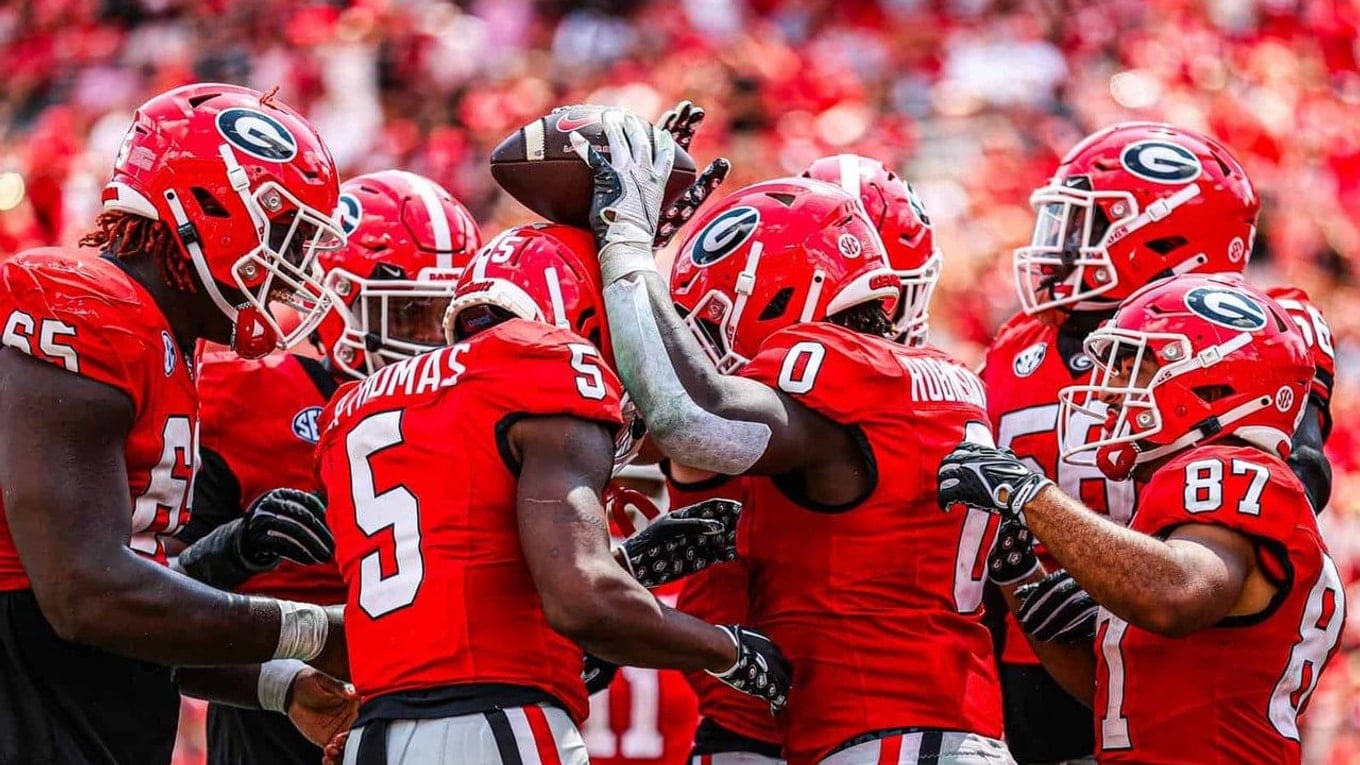
Three years later, Clean, Old-Fashioned Hate exposed one glaring loophole left inside the shootout rulebook. On Friday night, November 29, 2024 at Sanford Stadium, Brent Key's Georgia Tech Yellow Jackets pushed Kirby Smart and the Georgia Bulldogs into an unforgettable eight-overtime war that Georgia survived 44-42 when Nate Frazier plunged across the goal line in 8OT. Because the old rulebook awarded each team one brand-new timeout every single extra period even when each period lasted just two plays from the 3-yard line, Smart brilliantly burned his fresh timeout right before the snap in period after period to see Georgia Tech's exotic formation and dial up a counter call.
That timeout parade stretched a two-play shootout across nearly forty minutes of television time, and rules officials closed the loophole four months later in April 2025. Under current NCAA overtime rules, regulation timeouts still get wiped clean after the fourth quarter, each team receives one timeout in 1OT and one timeout in 2OT, and then starting in 3OT each club receives only one single timeout total to last the entire rest of the game regardless of whether the shootout ends in 3OT or 10OT. Coaches who burn that lone shootout timeout checking a look in 3OT now have to call every subsequent two-point play live off the cuff until somebody finally breaks the deadlock.
Related Official Rulebooks & Guides on VAVEL
- How Does Heisman Trophy Voting Work? Electorate, Point System and Rules Explained
- College Football Early Signing Day Rules, Financial Aid Papers and Calendar
- College Football Clock Rules vs NFL Timing, First Downs and Two-Minute Stops
- College Football Targeting Rule Explained Across Crown Hits, Replay and Appeals
ADVERTISEMENT
