



ADVERTISEMENT
Does Major League Soccer have a fullback problem?
Fullbacks are not as highly sought as centerbacks. The star names playing out wide in the back line in this league include players like Sean Franklin, Chance Myers, Josh Williams, Heath Pearce, Justin Morrow and Seth Sinovic. Meanwhile, centerbacks steal the show when it comes to recognition and accolades; players like Matt Besler, Jose Goncalves and Aurelien Collin are praised for their work week in and week out, while Omar Gonzalez actually earned a Designated Player contract for his services in Los Angeles.
MLS recently released its Best XI, and, like in the All-Star game, three defenders got the start: Goncalves, Besler and Gonzalez. Not a single fullback in a game where most teams – even in Major League Soccer – start one on each side. Does MLS have a fullback crisis? Not necessarily. Fullbacks in this league do an adequate job of defending and while most of the open play and scoring does occur from crosses out wide, MLS fullbacks aren’t pylons, either.
However, there is something to be said about the priority that coaches seem to place on centerbacks when it comes to building a defensive line. MLS coaches see clearing the ball from inside the box as more important than preventing a cross into the box in the first place. Spending money to bolster the middle of the defence is the general strategy of teams around the league; it’s where most of the defensive dollars are spent.
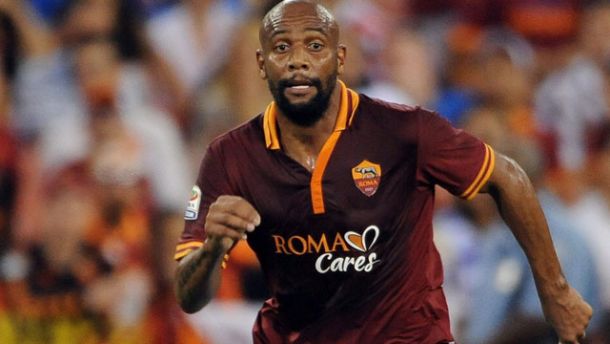
Fullbacks are some of the most important players for major sides around the world; Brazil is a country that has traditionally used fullbacks to great success. Cafú and Roberto Carlos were once the most feared fullback duo in the world; Maicon and Marcelo and Dani Alves and Adriano are the next generation of fullbacks for the nation. Javier Zanetti, Paolo Maldini, Eric Abidal, and Sergio Ramos are just some of the big-name fullbacks from five years ago, but the onrushing fullback is an idea that hasn’t really caught on in MLS.
And, really – it ought to.
The team that invests in a pair of quality wingers and fullbacks is going to be the next MLS Cup champion.
Here’s why:
In the current form of teams in the league, big money is spent on signing centre forwards who can put the ball into the back of the net. Players like Robbie Keane, Marco Di Vaio, Thierry Henry and even the next crop of rumoured players like Miroslav Klose, Jermain Defoe and Alberto Gilardino all require service from out wide in order to convert. Some of the most successful forwards in the league rely on wide service to succeed; Chris Wondolowski, Mike Magee and Kenny Miller require wingers and midfielders to rack up assists in order to put the ball away consistently.
So, if that trend of conversion-based forwards isn’t going to change, then teams should be looking to ensure that the wings are stronger than the body of the formation. Yet, teams like Sporting Kansas City or New England or Toronto spend money on bolstering its core, signing players like Matias Laba or Benny Feilhaber to large contracts in order to remain unexposed in the middle of the park.
That’s an important part of the field to defend, sure, but a central midfielder’s role is to supply a forward who likes to move around and drop deep. This isn’t really required when the forward prowls around the box and waits for a pass. Rather than investing in central midfielders, teams like Toronto would do well to keep guys like Jeremy Hall and Darel Russell in the middle of the park and invest, instead, on a pair of exceptional wingers and, more importantly, fullbacks. The central midfielder’s job then becomes a practice of simply recovering the ball and passing out wide, instead of pushing forward and exposing empty space.
If the onus on creation falls on the wingers and the fullbacks, it then becomes the job of the opposing team’s fullbacks to stop the supply. As we’ve already seen, MLS teams haven’t done a good enough job of ensuring their flanks are solid; teams are more content with putting non-international American players in their mid 20s into those positions and have told them not to get caught out of position. It keeps the backline connected and, to a certain extent, is a safer option.
But, the team that invests in two wingers and two offensive fullbacks will be the team causing the most headaches out wide. Without adequate defensive options out wide, other teams will buckle to that pressure and especially to the combination of those two. Imagine, if you will, a winger like Alvaro Rey connecting alongside a DP fullback like Maicon. The damage those two could cause on the right wing when pushing up together against a player like Michael Harrington could be severe. Couple that with a forward like Defoe and Bright Dike waiting in the box and you have a deadly combination. Multiple that for both wings, and enemy teams will buckle from the outside in.
This method will only work for a few years, before MLS teams begin to reinforce their fullbacks and instruct central midfielders to assist in defending. However, this is an option that a team like Orlando should look to expose. Already, the fledging expansion side has boldly stated its intention to sign a Brazilian star DP. Kaká is the idea; Maicon ought to be the reality. Signing a pair of fullbacks and wingers would instantly make Orlando a unique team in the league, and expose the one weakness most teams in MLS share.
It requires a few moving pieces, but if executed correctly, it can be the bane of existence for many a team in MLS. Its reaction – an increase in quality fullbacks – only improves the quality of the league, too. For too long, MLS has gone without the exhilarating bursting runs of a fullback or the combination of winger and defender – maybe it’s time to change that.
ADVERTISEMENT
