


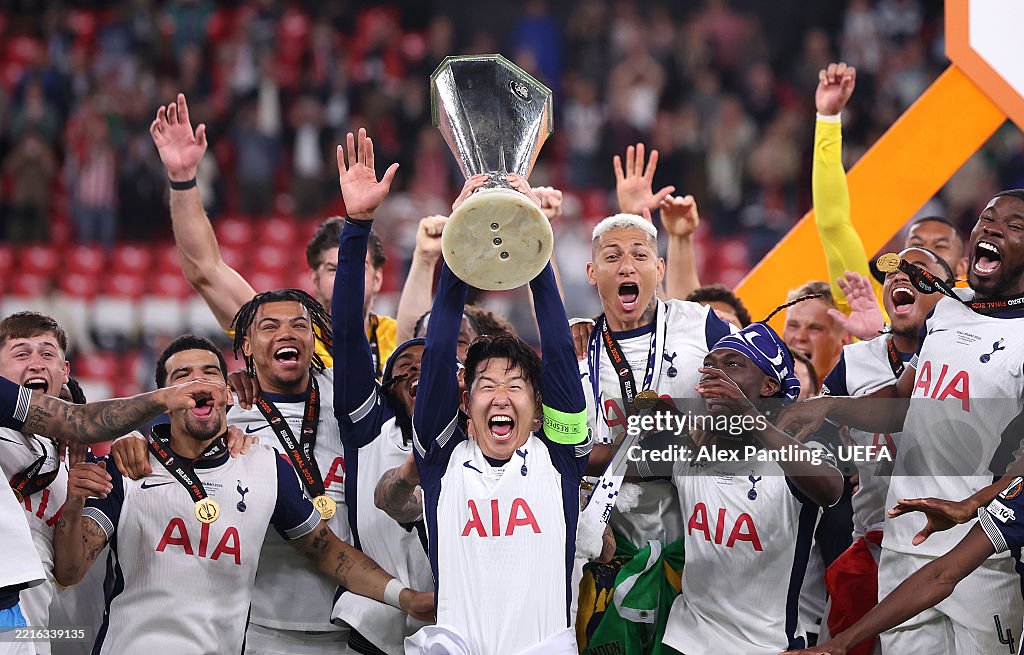

The idea that finals are meant to be entertaining is perhaps a polarizing subject. The UEFA Europa League final between Tottenham Hotspur and Manchester United has been the subject of mockery and disdain. Both teams arrived at the final in the worst possible fashion, 16th and 17th respectively, with Champions League football as the prize.
There were different views on the final, given how poor both clubs have been domestically in the Premier League.
What has ended up as an unfair judgment of the final is the expectations placed on the teams. If the narrative was how bad both teams were, the expectations should equate to that.
These were two teams mired in toxicity, with a season teetering on the brink of disaster. Contrary expectations of both teams going all guns blazing and serving up a final for decades or setting off fireworks were delusions, to say the least.
Finals are never straightforward
The volatile nature of a final makes it extremely difficult to gauge. Especially for teams who have trauma from previous experiences. Jürgen Klopp's Liverpool lost their first three finals, even though they were highly entertaining and played up-tempo football.
The Reds' first trophy came off hard-fought 90 minutes in Madrid, defending like their lives were on the line despite Tottenham's superiority.
It was a final many detested, and it took place with an all-English Premier League clash in the 2018-19. Both scored 42 goals between themselves en route to that final despite scraping through their respective groups, but who would have thought two teams with emphasis on attacking football would turn out that way?
Even the mighty Pep Guardiola tweaked his Manchester City system after scoring against Inter Milan in 2023, surrendering the ball and choosing to suffer as the Italians chased the game.
It was one of the unremarkable finals of the last two and a half decades in the UEFA Champions League. When the stakes are highest, no one cares how you do it. All that matters is the name on the trophy.
The 2003 UEFA Champions League final earned notoriety for two teams who simply refused to play ball. AC Milan and Juventus came into the final as two of the top three giants in Italy, and they failed to deliver.
The biggest highlight of the game was the shootout when Italian goalkeeper Gianluigi Buffon and his Brazilian counterpart Dida traded saves before Milan emerged 3-2 winners.
It was a poor showing as Juventus had never scored more than once throughout the tournament before reaching the final.
Milan failed to score once across 12 group stage matches and then took a turn in the knockouts. They were desperate to keep their European reputation alive at all costs.
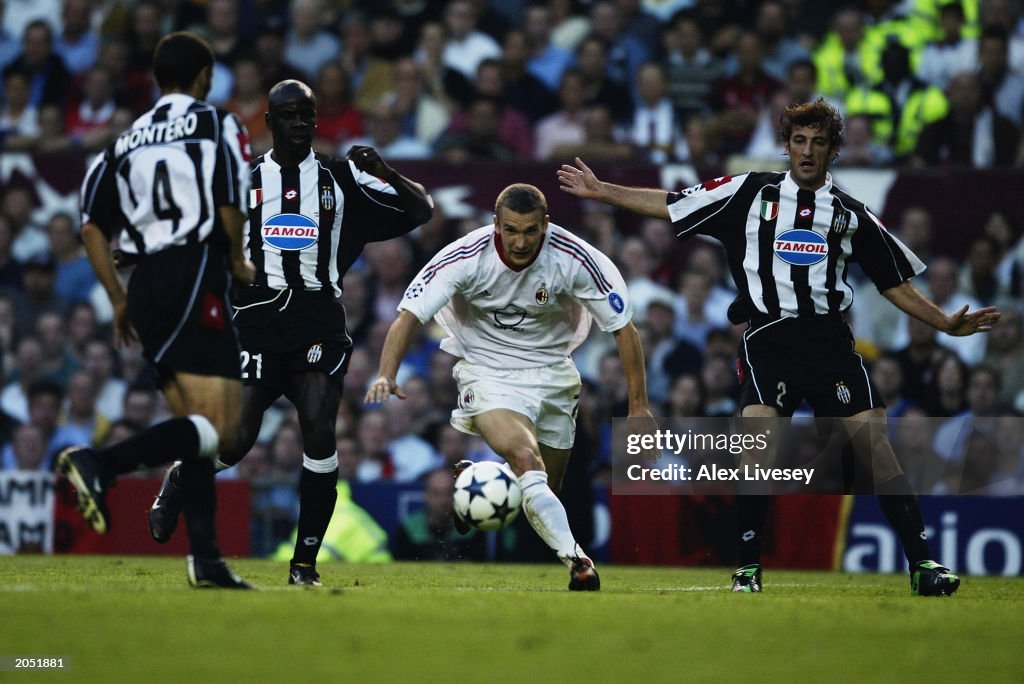
Real Madrid's nervy 1-0 win over Juventus in 1998 was another unremarkable final.
With the Old Lady putting the pressure, they were just unable to break down the Madrid stronghold despite concerted efforts. It was a final to remember for the Los Blancos fans, the neutrals not so much. Finals have always been tense, with little to no margin for error. The fear of defeat loomed larger than the joys of victory.
Finals can be the make-or-break for clubs.
Regardless of how bad a season goes, a European Cup final has the chance to bring out the worst in a team, especially when the trauma of performances persists.
For example, the 2022 UEFA Champions League final, where Liverpool hammered Thibaut Courtois' goal with. It was as one-sided any final could get, but Real Madrid emerged victorious.
That season, Real Madrid scored 12 more goals than Barcelona and had the best defensive record in La Liga. In fact, during the Champions League run, they scored three, five, and six goals in each of their knockout rounds, failing to score just once.
They averaged three goals every other game. When the stakes are high, no one cares about aesthetics. Form must follow function.
The idea that it is supposed to be cute is far from the reality. No Champions League final has seen more than two goals since 2018.
Only two UEFA Europa League finals since 2020 have seen more than two goals scored. The 2023 UEFA Conference League final was the only final with more than one goal scored.
Teams are not inclined to attack when the stakes are higher. The introduction of the prize of qualification to the Champions League or Europa League for the winners of the second and third tier competitions have even raised the stakes higher, making teams rethink strategy.
No UEFA Conference League final has seen an xG of more than 1.5. Outside of Arne Slot's Feyenoord, no team has averaged over 75% passing accuracy.
In the Europa League, only Jose Mourinho’s Roma have exceeded the 1.5xG mark since 2020.
The chances will always be few and far between. Excitement is relative. For fans of the club who are in the final, it's two hours of pulsating, nerve-wrecking football. Backsides are tight, and nail-biting drama.
For the winner, it is a fairytale, and for the defeated, it's unbearable anguish. There is simply no way of dealing with a losing result.
The tension is palpable amongst the actors, where there is little to no margin for error.
In 2011, Andre Villas-Boas' all-conquering Porto went from magical and phenomenal to cautious and reserved to see out a 1-0 win over domestic rivals Braga.
In the Europa League, this is not the exception rather than the rule, especially in finals where both teams have come from the same nation.
Since 1990, three of those finals have been European humiliations: Inter Milan's 3-0 hammering of Lazio, Atletico Madrid's 3-0 thrashing of Athletic Club, and Chelsea's 4-1 demolition against rivals Arsenal in 2019.
However, four of those same nation finals have been equally close. Inter edged Roma 2-1 on aggregate in 1991, whilst Parma impressively beat Juventus 2-1 in 1995, and those games were not the beauty many had expected. Sevilla's 2-2 draw against Espanyol went to a shootout and was the exception.
The human psychology alters its natural instincts when survival is the primary objective. It happens to the best of teams.
How much more two teams who have been disastrous all season and could see the next two years at the very least defined by the game?
Expectation is the mother of disappointment. Finals are not for the faint-hearted, not especially after a season where teams have played more than 50 matches this season. The spirit is always willing, but the body will most likely be weak.
