


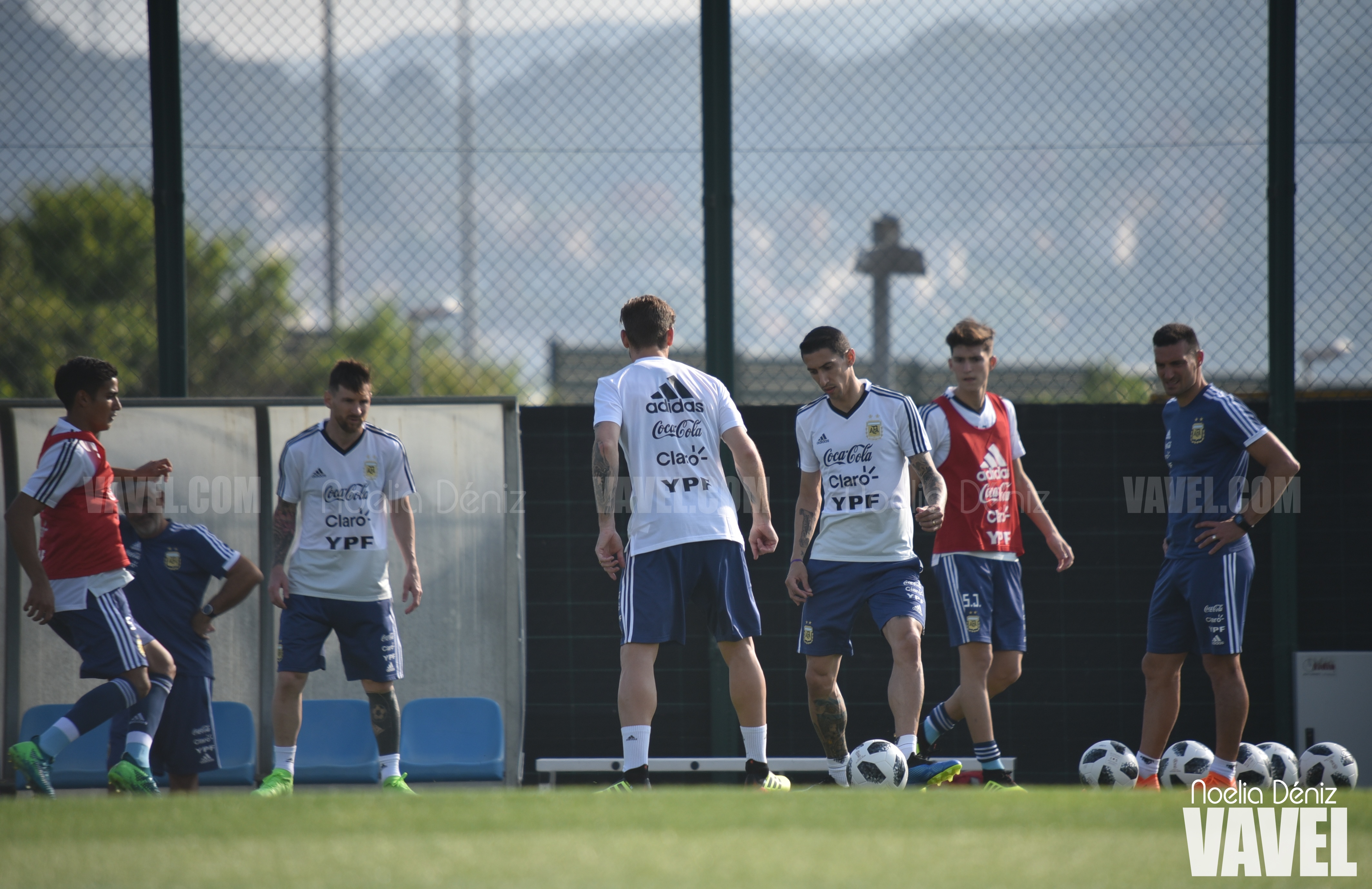

Lionel Messi and the defending champions are back in action today, and the buildup inside Argentina's camp has been just as compelling as the match itself. With a Group J showdown against Austria set for Dallas Stadium, Argentina have spent the past several days fine-tuning fitness, tactics, and mentality under head coach Lionel Scaloni. Here's a closer look at how the Argentina national team prepared for what could be a tournament-defining 90 minutes.
A Strong Start Raises the Stakes
Argentina opened their World Cup defense in emphatic fashion, cruising past Algeria 3-0 thanks to a Messi hat-trick in Kansas City. That result didn't just hand them three points — it set the tone for everything that followed in training camp. Coaches and players alike have been careful not to let the early win breed complacency, with Scaloni repeatedly stressing that Austria represents a different kind of test entirely.
Where Algeria sat back and absorbed pressure, Austria — under the management of Ralf Rangnick — play an aggressive, high-press system built on intensity and structure. That tactical contrast has shaped almost every training session Argentina has run this week.
Tactical Preparation: Countering the Press
A major focus of Argentina's preparation has centered on breaking Austria's press. Rangnick's side beat Jordan 3-1 in their opener and are known for compact defensive blocks combined with relentless pressing triggers higher up the pitch. In response, Argentina's coaching staff have reportedly drilled:
- Quick combination play through midfield to bypass the first wave of pressure
- Positional rotations between fullbacks and wingers to stretch Austria's back line
- Rehearsed patterns for playing out from the back under pressure
Assistant coach Pablo Aimar addressed this directly, noting that Austria poses a physical, well-organized challenge unlike anything Argentina has faced so far in the tournament. The coaching staff have used video analysis sessions alongside on-pitch work to prepare players for Austria's pressing triggers and set-piece routines, given that Marko Arnautovic's penalty proved decisive in their opening win.
Managing Messi's Workload
At 38, and playing his sixth World Cup, Messi's fitness management has been a quiet but central part of Argentina's preparation. After a demanding 90 minutes against Algeria — and personal stress off the pitch related to his father's health — the coaching staff have balanced rest with targeted training to keep him sharp without risking burnout.
Recovery protocols this week reportedly included lighter individual sessions, controlled gym work, and extra recovery time, allowing Messi to arrive fresh for a match that falls just two days before his 39th birthday.
Fitness, Recovery, and Squad Depth
Beyond tactics, Argentina's medical and fitness staff have been managing a few knocks across the squad. Right-back Gonzalo Montiel has been a doubt heading into the match, prompting contingency planning at fullback. Training sessions this week have included:
- Individualized recovery work for players carrying minor knocks
- Rotation drills to test depth options in defense
- Set-piece repetition, given Austria's threat from dead-ball situations
This squad depth matters because Argentina still has a third group match against Jordan to navigate, and Scaloni has previously emphasized building a system that doesn't rely solely on Messi's brilliance.
Mental Preparation and Team Talks
Beyond the physical work, Scaloni's coaching staff have leaned heavily on mental preparation. Team meetings this week have focused on respecting Austria as opponents rather than underestimating a side ranked 24th in the world. Players have spoken about treating this as their "toughest test yet" in the group stage, a sentiment echoed publicly by Aimar.
This mindset reflects lessons learned from past tournaments, where complacency against lower-ranked opponents has occasionally produced uncomfortable afternoons for heavily-favored teams.
What's at Stake in Dallas
A win for Argentina would all but secure their place in the Round of 32, and potentially clinch top spot in Group J depending on results elsewhere. That context has added extra purpose to this week's preparation — this isn't just about three points, it's about control of the group heading into the final round of fixtures.
Statistically, Argentina enter as heavy favorites, but recent meetings between the sides — including a narrow 1-1 draw in a past friendly — are a reminder that nothing is guaranteed against a well-drilled Austrian side.
Looking ahead to Dallas
Argentina's preparation for Austria has been defined by tactical adjustment, careful man-management of an aging but still-electric Messi, and a deliberate effort to avoid complacency. Whether that preparation translates into a result on the pitch in Dallas will become clear soon enough — but few teams have looked more thorough in their planning so far at this World Cup.
Preparation of this kind rarely shows up directly in a highlight reel. Nobody will point to a video session on pressing triggers or a recovery protocol for a 38-year-old superstar and call it the difference-maker. But these are precisely the details that separate teams capable of winning a single match from teams capable of winning a tournament. Argentina has already shown, in their opening win over Algeria, that individual brilliance can carry a game. Facing Austria's structure and physicality is a different proposition entirely, and it's one that rewards exactly the kind of meticulous, low-noise preparation that's defined this week in camp.
There's also a broader narrative at play. A win here doesn't just bank three points — it pushes Argentina toward control of Group J with a match to spare, freeing up options for rotation and rest ahead of the knockout rounds. That long-game thinking has clearly shaped this week's training sessions as much as the immediate tactical puzzle Austria presents.
Whether all of this preparation translates into a result on the pitch in Dallas will become clear soon enough. But few teams at this World Cup have looked more thorough, more deliberate, or more aware of their own vulnerabilities than Argentina has this week — and that kind of self-awareness, more often than not, is what separates good campaigns from great ones.
