



ADVERTISEMENT
End of the game:
Key moments
Toral Bayramov (Azerbaijan) fired wide; a left-footed shot from outside the box that went too high. Assisted by Aleksey Isayev. There were 5 minutes of stoppage time in Baku. The crowd was cheering on their team, desperate for a win.
Toral Bayramov (Azerbaijan) was shown a yellow card for dangerous play. The visiting team decided to tighten up their lines and hold onto the result; they put in a significant physical shift without appearing to struggle.
Shot missed. Toral Bayramov (Azerbaijan) shot left-footed from outside the box from a direct free kick. Substitutions for Liechtenstein: Andrin Netzer replaced Aron Sele; Emanuel Zünd replaced Alessio Hasler.
Fabio Luque-Notaro (Liechtenstein) fired a shot from outside the box that went high and wide to the right. The chance came from a counter-attack led by Florian Allgäuer. It was the visitors' first real opportunity in a match dominated by the home side.
Substitutions for Azerbaijan: Rüfat Abdullazada replaced Musa Qurbanli, and Ayxan Hüseynov replaced Emin Mahmudov. The first substitution for the visiting team, Liechtenstein: Florian Allgäuer replaced Alessandro Lo Russo.
Emin Mahmudov (Azerbaijan) fired a right-footed free kick from outside the box, but the shot went wide and sailed too high. We had reached the hour mark. The visiting team looked comfortable, despite not having possession.
Shot saved near the right side of the goal. Rüfat Abbasov (Azerbaijan) fired a left-footed shot from outside the box. Assisted by Aleksey Isayev. The visiting manager (Liechtenstein) needed to make substitutions immediately.
Shot blocked from Toral Bayramov (Azerbaijan)—a left-footed effort from the left side of the box. Assisted by Musa Qurbanli. The visitors got a reprieve. The substitutes injected a lot of energy and pace into the game.
Substitution for Azerbaijan. Rüfat Abbasov replaced Tellur Mütallimov. Aleksey Isayev replaced Rahim Sadixov. Alessio Hasler (Liechtenstein) was shown a yellow card for dangerous play. Welcome to the second half!
Halftime:
Folks, we were heading into the break. Azerbaijan had a strong first half; the hosts dominated from start to finish and took the initiative in pursuit of the opening goal. As for the visitors, they defended well.
Shot saved high in the center of the goal. Tellur Mütallimov fired with his right foot from the right side of the box. Assisted by Emin Mahmudov. The visiting manager was speaking with his assistant coach; tactical changes were coming.
Shot by Musa Qurbanli (Azerbaijan) blocked; he fired with his right foot from outside the box. Assisted by Toral Bayramov. Liechtenstein managed to get through the first half-hour of the match, despite their opponent's superiority.
Azerbaijan took the initiative and managed to get shots off at the end of their plays—that was a positive. A wayward shot from Musa Qurbanli; a left-footed effort from the center of the box that went wide to the left. Assist by Mahir Emreli.
Offside against Azerbaijan. Emin Mahmudov attempted a through ball, but Vüsal Isgandarli was in an offside position. Free kick for Liechtenstein in Azerbaijan's half. The visitors were trying to push forward a bit.
Shot blocked. Vüsal Isgandarli's (Azerbaijan) right-footed strike from the left side of the box was blocked. Assist by Mahir Emreli. The visitors survived! That was the first chance of the match.
Azerbaijan regained possession and had a throw-in in their own half. The home side attacked, but Vusal Iskenderli's shot went wide. So far, the attacking intent had come from the team that bore the responsibility of winning on the day.
The game started:
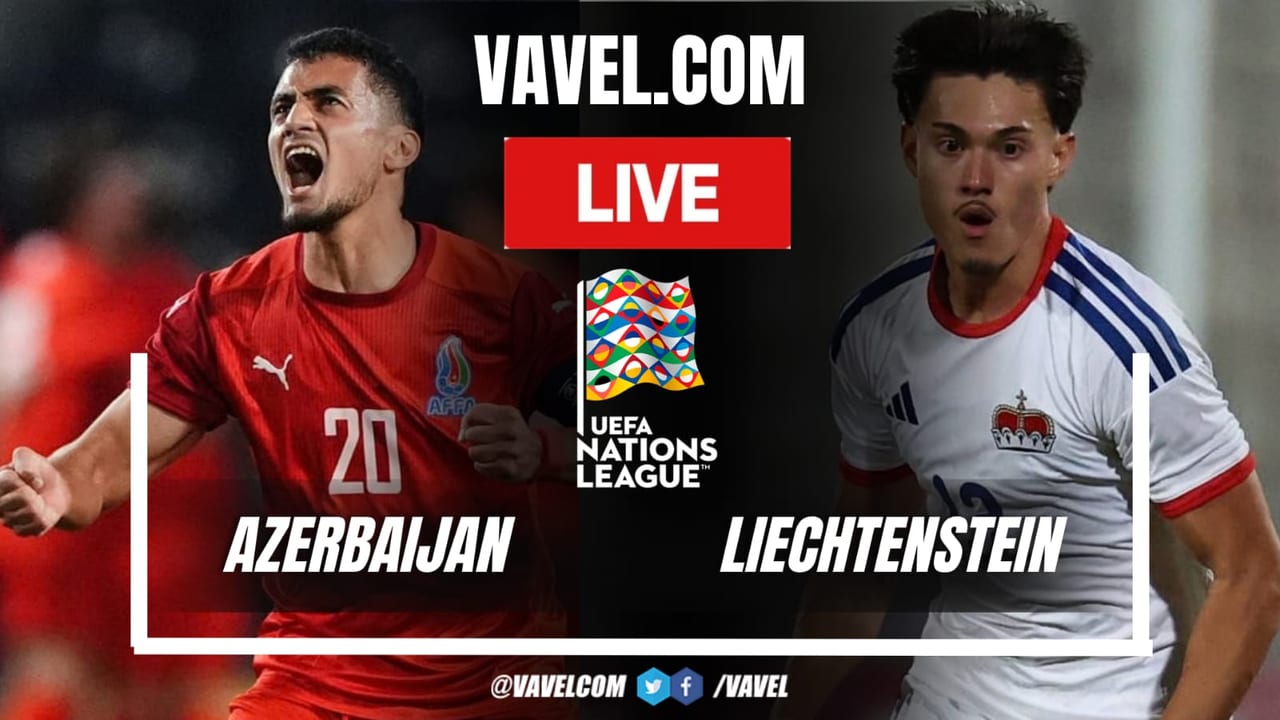
Friends, we were ready for another round of the 2026-27 UEFA Nations League. Welcome! Azerbaijan vs. Liechtenstein. Both teams were fighting to stay in the league. We were expecting plenty of goals and excitement.
The Liechtenstein national team was managed by German coach Konrad Fünfstück, who took charge of the squad in June 2023 with the aim of building a sustainable, competitive program. With an extensive background in German football—having led clubs such as 1. FC Kaiserslautern and the reserve teams of Greuther Fürth and Werder Bremen—Fünfstück also brought experience in youth development. His tenure with the Principality's team focused on strengthening tactical discipline, optimizing defensive play, and maximizing the resources of a limited squad, all with the goal of competing more solidly in both continental qualifiers and the UEFA Nations League.
The Azerbaijan national team was managed by local coach Aykhan Abbasov, who took charge in September 2025 following the departure of veteran Portuguese manager Fernando Santos. A former midfielder with an extensive career in the Azerbaijani top flight—including a stint with Qarabağ FK—Abbasov built his coaching career domestically at the helm of clubs such as Zira FK, Sumgayit, and Turan Tovuz, in addition to a brief spell with the national U-21 squad. His appointment aimed to consolidate a project defined by a distinct identity and the development of local talent, with the goal of bringing greater tactical solidity to the Caucasian side in both the UEFA Nations League and continental qualifying tournaments.
In the UEFA Nations League, the Liechtenstein national team's journey had been defined by the limitations inherent to its small population, as it had consistently competed in League D—the tournament's lowest tier. Throughout the various editions, the Principality had enjoyed its most notable moments against teams of a similar profile, achieving historic victories and brief unbeaten runs against sides like San Marino and Gibraltar during the 2018–19 and 2020–21 seasons. However, a lack of attacking potency and difficulties in maintaining physical intensity across consecutive matches had prevented the team from mounting a sustained challenge for promotion, resulting in a record dominated by defeats and hard-fought draws that reflected its competitive reality within the European landscape.
In the UEFA Nations League, the Azerbaijan national team had experienced a modest yet competitive run, moving primarily between the competition's League C and League D. In the inaugural edition (2018–19), they started in League D and secured promotion to League C following a tournament restructuring; they managed to establish themselves in that tier during the 2020–21 and 2022–23 editions, claiming valuable victories against similarly ranked opponents such as Slovakia, Belarus, and Kazakhstan. However, defensive inconsistency and a lack of cutting edge in away matches led to their relegation back to League D for the 2024–25 season. In the 2026–27 campaign, the Azerbaijani side aimed to return to the third tier of European competition by facing teams like Lithuania and Liechtenstein in Group D2, maintaining a historical record characterized by hard-fought draws and narrow wins against second- and third-tier European nations.
Liechtenstein's footballing history was defined by the unique fact that it was the only UEFA nation without its own domestic league, owing to an insufficient number of clubs within its small territory. Organized football began in the 1930s with the founding of the first clubs and the Liechtenstein Football Association (LFV) in 1934; since 1946, the LFV had organized the Liechtenstein Cup, the country's only official tournament that granted the winner a berth in UEFA's European competitions. Lacking a domestic league, all teams from the principality—led by FC Vaduz, the country's most successful club and the only one to reach the Swiss Super League and the UEFA Conference League group stage—competed within the league system of neighboring Switzerland. Following its affiliation with FIFA and UEFA in 1974, the senior national team played its first official match in 1982; despite limited demographic resources, the team had achieved memorable moments in European and international qualifiers, securing valuable victories and historic draws against national teams with greater continental pedigree.
Azerbaijan's footballing history dated back to the early 20th century, when British sailors and businessmen introduced the sport to the Baku region during the oil boom, leading to the formation of the first clubs in 1911. During the Soviet era, the pinnacle of Azerbaijani football was Neftchi Baku—the republic's only team to compete in the USSR Top League—remembered for its historic third-place finish in 1966. After gaining independence in 1991 and joining FIFA and UEFA in 1994, the national team began competing independently; it overcame the challenges of its early development to secure notable victories against continental powerhouses in European qualifiers. At the club level, the country's football underwent a true revolution in the 2010s thanks to the historic rise of Qarabağ FK, a club that broke new ground by becoming the first Azerbaijani team to qualify for the UEFA Champions League group stage and establishing itself as a regular contender in the latter stages of European competitions.
Azerbaijan succumbed to relegation from League C in the 2024-25 UEFA Nations League. The Azeris began their UEFA Nations League campaign with a 1-1 draw against Lithuania in Kaunas the other day. Liechtenstein were perhaps the weakest team in European international football and they had by then succumbed to four successive 2-0 defeats against Malta, Lithuania, Cyprus and Andorra since being beaten 4-1 by Aruba in March.

Folks, that was a wrap. Azerbaijan did everything they could to win the match, but it wasn't enough. The visitors defended well and didn't end up under undue pressure; in fact, they had one of the clearest chances to open the scoring. It finished 0-0!