
Stadium
Anoeta · Profile

Other languages2
ADVERTISEMENT
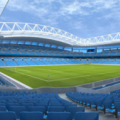
Anoeta Stadium is in the Amara district of San Sebastián, in the Basque province of Gipuzkoa. It sits inside the Anoeta sports complex, at Paseo de Anoeta 1. Real Sociedad have played there since 1993, when they left the Atocha ground. The stadium belongs to San Sebastián City Council. From 2019 to 2025 it carried the commercial name Reale Arena under a deal with the insurer Reale, and it went back to being called Anoeta in July 2025.
Anoeta Stadium is in the Amara district of San Sebastián, in the Basque province of Gipuzkoa. It sits inside the Anoeta sports complex, at Paseo de Anoeta 1. Real Sociedad have played there since 1993, when they left the Atocha ground. The stadium belongs to San Sebastián City Council. From 2019 to 2025 it carried the commercial name Reale Arena under a deal with the insurer Reale, and it went back to being called Anoeta in July 2025.
From Atocha to Anoeta
Real Sociedad played at Ondarreta from 1909 to 1913 and then at Atocha from 1913 to 1993. Atocha eventually became too small and had serious access problems, so the club moved to Amara, where the Anoeta sports complex already stood. The City Council, the Gipuzkoa Provincial Council and Real Sociedad shared the cost, and work finished in the summer of 1993. The build cost about 3 billion pesetas, roughly 21 million euros.
Opening in 1993
The stadium opened on 29 July 1993 with the European Junior Athletics Championships, since it was built with a running track. Its first football match was a friendly against Real Madrid on 13 August 1993, which ended 2-2. Lorenzo Juarros, known as Loren, scored the first goal at the ground. The first competitive game came on 12 September 1993, on the second matchday of the league season: a 2-2 draw with Zaragoza, with Alkiza scoring the first official goal in the opening minute. By the end of the 1990s the capacity was around 32,000.
The 2017–2019 rebuild
The running track kept the stands far from the pitch and was a constant complaint among supporters. In 2004 the City Council turned down a plan to remove it, and in 2015 Real Sociedad presented a rebuild designed by the architect Izaskun Larzabal. Work began in May 2017 while the team kept playing at home, so capacity fell to about 25,000 during construction. In 2018 the track was removed, the lower tiers were moved closer to the pitch and a new south stand went up. The project cost 47 million euros: 33 million from Real Sociedad, 10 million from the Basque Government and 4 million from the Provincial Council. The rebuilt stadium opened on 14 September 2019 with a 2-0 win over Atlético Madrid, and Martin Ødegaard scored the first goal after the rebuild. The work was completed in October 2019, leaving a capacity of about 39,500.
ADVERTISEMENT
Notable matches
Real Sociedad played UEFA Champions League group games at Anoeta in 2003-04, 2013-14 and 2023-24. The stadium hosted Copa del Rey semi-finals in 2014 and 2020. In February 2020 a Basque derby against Athletic Club, won 2-1, drew 36,730 spectators, a club record at the stadium. In August 2013 Athletic played their first home game of the 2013-14 Spanish league season at Anoeta while their new San Mamés was being finished. The 2020 UEFA Women's Champions League final was played here. The Basque Country team has also played at Anoeta, with friendlies in 1993, 1998, 2004 and 2012.
Rugby and concerts
Anoeta has also hosted French rugby. Biarritz Olympique played some European Cup matches here, and since the 2009-10 season both Biarritz and Aviron Bayonnais have used it for home matches in the Top 14. As a concert venue it has hosted Pink Floyd in 1994, U2 in 2005 and 2010, Depeche Mode in 2006, The Rolling Stones in 2007, Bruce Springsteen in 2008, 2012 and 2016, Bon Jovi in 2011 and Rammstein in 2024.
Name and the 2026 expansion
In 2019 Real Sociedad signed a six-year deal with Reale, and the stadium became the Reale Arena. When the contract ended in July 2025, it went back to the name Anoeta. In the summer of 2026 a new expansion began, adding about 2,000 net seats in the corners of the second tier and in new upper sections of the Main and East stands. The target was 42,247 seats, with San Sebastián's bid to host matches at the 2030 World Cup in view.
ADVERTISEMENT
Profile compiled by the VAVEL Editorial Team from historical records and official competition data. · Editorial policy