


ADVERTISEMENT
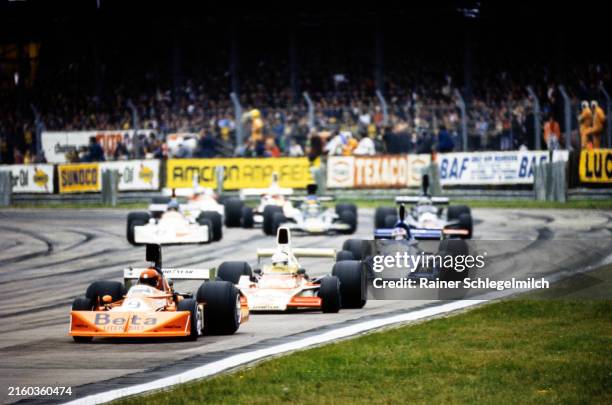
The British Grand Prix is among the most iconic and much-anticipated races on the Formula 1 calendar. The Silverstone track has witnessed not only historic wins by drivers but also chaotic finishes, unpredictable weather patterns, unexpected events, and more. Especially the race in 1975, which has gone down in history as one of the true classics of F1 races.
As we wait for the weekend to watch the five iconic lights go off at Silverstone, let us go back in time and revisit the events of the dramatic 1975 British Grand Prix.
-
Racing Track Updates
In the interest of the safety of drivers, a new chicane was installed at Woodcote Corner. This chicane was added to slow cars down at the high-speed corner. The chicane was installed after the 1973 incident when Jody Scheckter's McLaren lost control after the first lap and hit the pit wall. It was considered the biggest accident ever to take place on a British racing circuit.
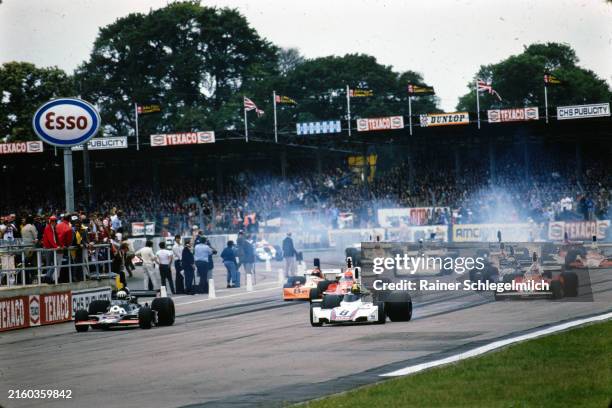
However, many drivers and fans didn't like it. But the old corners were way too fast, and the grandstands and pits were nearby. This made the corners unsafe. The new chicane slowed cars down, adding around four seconds to their lap time. Thankfully, it did not disrupt the overall flow of the race. It was not the change that the drivers wanted, but it was needed.
ADVERTISEMENT
-
Tom Pryce's maiden pole in British GP Qualifying
It was the tenth race on the 1975 F1 calendar. Tom Pryce had a good start to the weekend, claiming his first pole position in qualifying for the Shadow Racing Cars. He shared the front row with Carlos Pace from Team Brabham.
This was the only pole position Pryce had ever secured in his entire F1 career. According to many experts, it was the timely showers that played out in Pryce's favor, helping him clock the fastest lap.
Niki Lauda was on P3 alongside his teammate Clay Regazzoni on P4. Vittorio Brambilla started behind the Ferrari duo in the next row.
-
Clay Regazzoni was having a good day on track... But not for long
Lauda and Regazzoni were making their way through the field, but the latter looked more menacingly strong in attacking than the famous Lauda.
ADVERTISEMENT
Regazzoni, who was known for his inconsistent driving, was having a good day and had a flying start to the race. His Ferrari engine seemingly had more power than his teammate's.
The Swiss driver overtook Lauda at the start. On lap 10, he passed Pryce's Shadow-Ford. He made a great move on lap 13, to pass Carlos Pace's Brabham as the Woodcote chicane and take the lead in the race.
The Ferrari pulled away from the front runners, leading them by 2.2s in 3 laps after taking the lead.
-
The Four-way Battle Royale between Pace, Fittipaldi, Hunt, and Scheckter
The race got interesting after it began pouring. Regazzoni got caught in the rain, which had him slide off the track and damage the front wing of his car, hitting the barrier on lap 18.
ADVERTISEMENT
Pryce took the lead but crashed out on lap 21 after an accident due to the worsening weather. He ran off the track and hit the catch fences. Thankfully, he was safe.
Meanwhile, Pace, Emerson Fittipaldi, and James Hunt took the risk of staying out on slicks. The gamble paid off as the skies began to clear. Scheckter, who had earlier pitted to switch to wets, had to pit again to change tires, only to wait for 43s in the pits to join the race.
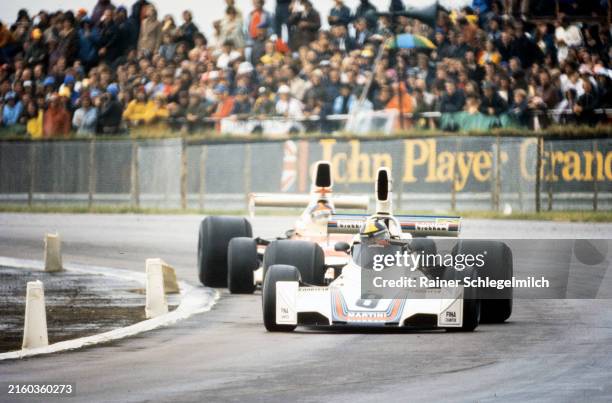
But Scheckter was able to retake the lead in the race for the 27th time as he cruised past the top 3. He managed to create a 30s gap with the three drivers. However, he was not able to maintain the lead for long as he had to pit in lap 32 to change to slicks. This pit stop cost him his lead, and he joined the race from P6.
The race had now become a battle between Pace, Fittipaldi, and Hunt. The British driver managed to hold out his own, creating a 2.5s gap between him and Fittipaldi. But on lap 44, the Brazilian driver got past Hunt on the Hangar Straight to become the new race leader.
ADVERTISEMENT
Hunt's Hesketh also started causing problems as his exhaust was broken, which slowed him down. This also led to hot gases leaking onto a CV joint that greased his rear brakes. Hunt fell back as drivers overtook him, and his hopes of winning his home race were shattered due to mechanical errors.
-
The rains and hailstorms opened the floodgates to a series of crashes
On lap 53, there was a heavy downpour that stopped the race and caused mayhem on the track. Several cars crashed at the Woodcote and Club corners, with debris hitting a marshal and a spectator.
It all began with Hunt whirling out of control on lap 53 which opened a window for Scheckter to overtake him, taking the third position in the race. Brambilla stopped for wets when the rains began to intensify, particularly at Club and Stowe.
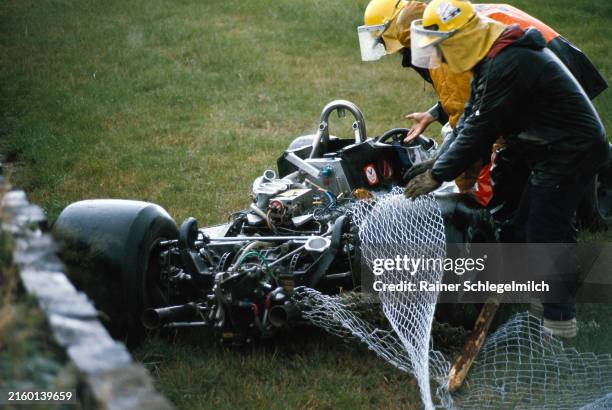
On lap 56, when Pace spun onto the grass at Becketters, he made it back on track behind Scheckter, moments before Jochen Mass, Mark Dohohue, and John Watson crashed into the fences at Stowe.
ADVERTISEMENT
Scheckter and Pace lost control at Club. One thing led to another, and Hunt, Tony Brise, Dave Morgan, Brian Depailler, Wilson Fittipaldi, John Nicholson, and Patrick Depailler hit the fence at Copse.
The race officials called out a red flag at the end of lap 57. The final order of the grid on lap 55 was used to declare the winner of the race.
This result played in favor of Emerson Fittipaldi, as he won the race, despite not having led the race on lap 55. Pace and Schecter finished second and third, followed by Hunt in fourth.
Although everyone involved in the crash was not seriously injured, the entire section of fencing at Club on the circuit was deemed dangerous.
Silverstone had seen one of the worst racing incidents on track in 1975. Fortunately, Formula 1 has not witnessed carnage of this magnitude in Silverstone or anywhere else ever since.
ADVERTISEMENT
