

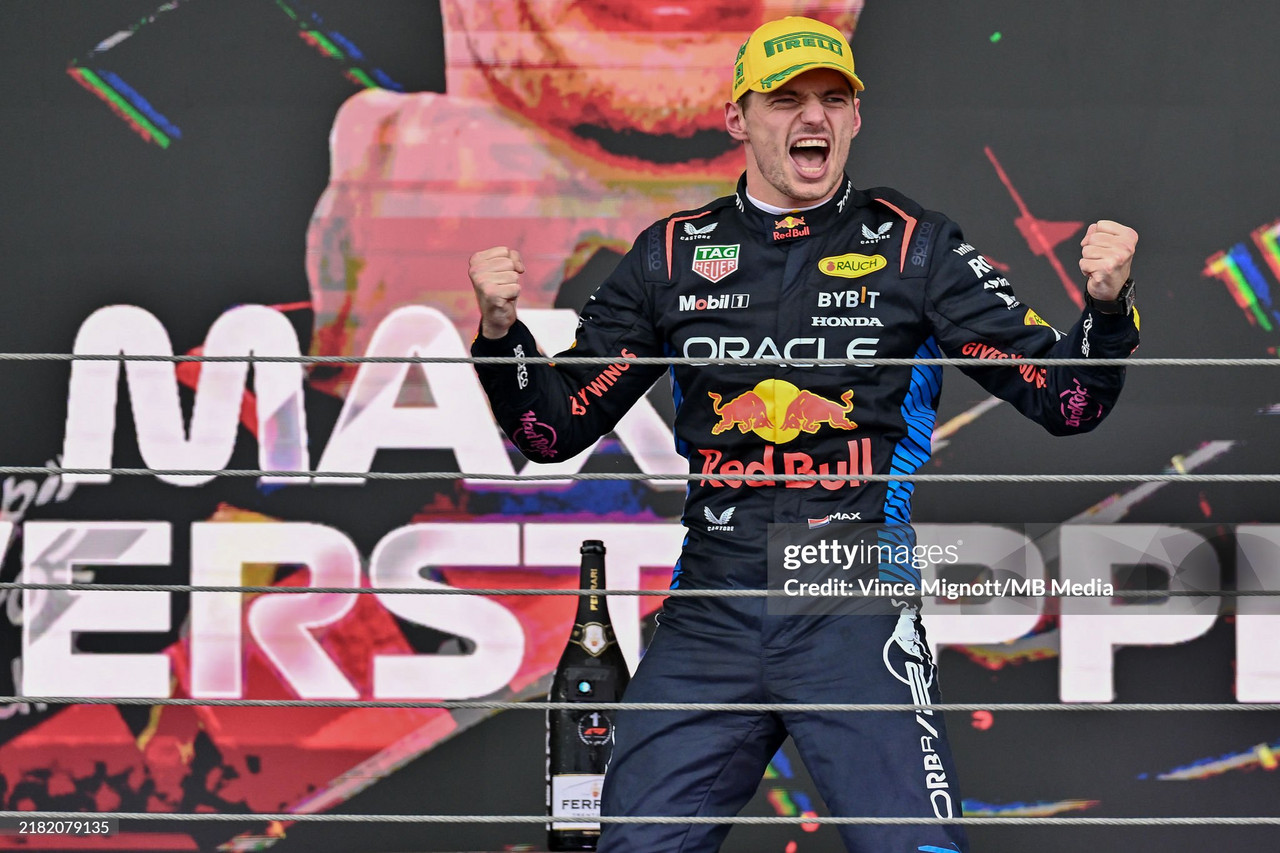

Max Verstappen dominated the recent Formula 1 Brazilian Grand Prix, coming from 17th place in qualifying to claim victory and become the clear leader in the standings.
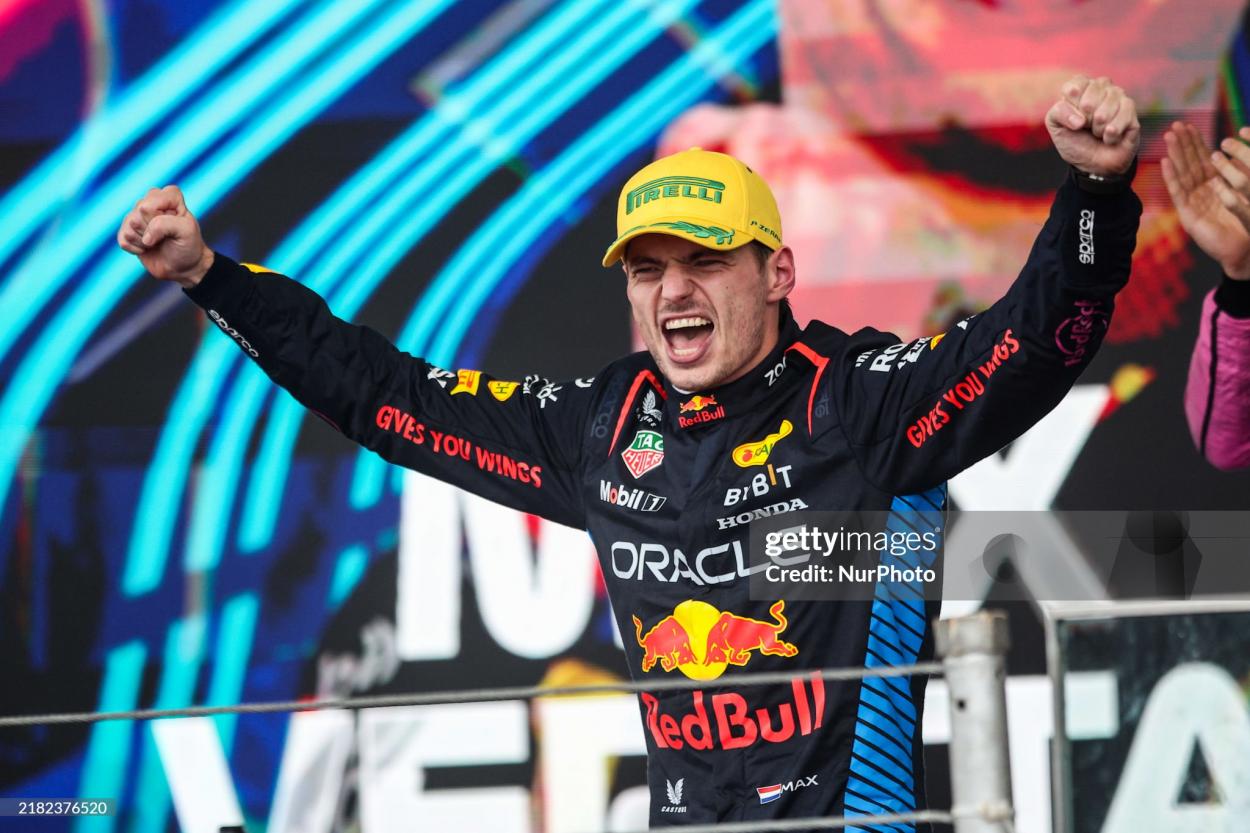
The Dutchman ended a 133-day winless drought to put one hand on 2024 F1 championship trophy heading into the season’s final three races, describing his win as "simply lovely".
The Brazilian Grand Prix has provided multiple wet weather classics over the years, with this year’s edition seeing the three-time champion’s latest victory spinning the title race on its head after a monumental comeback drive.
Wet Brazil weather
After the wet weather saw Formula 1 postpone qualifying till first thing on the Sunday morning, the beauty of motorsport was encapsulated in one day, showing how quick things can turn around in such a short space of time.
After Lando Norris was gifted the Sprint race win thanks to Papaya rules ordering Oscar Piastri to relinquish his lead to gain an extra point, Norris was untroubled in qualifying early on Sunday to claim another pole position.
Verstappen already had a five-place penalty heading into the weekend. However, a controversial decision led to a Q2 exit.
The FIA waited 40 seconds after a Lance Stoll incident before issuing a red flag to close the session, allowing multiple drivers to set quicker lap times in the ever-improving on-track evolution.
The inconsistency of FIA decisions resulted in a disastrous outing for Red Bull as Verstappen and Sergio Perez bowed out in Q2, and the championship fight had its biggest twist yet.
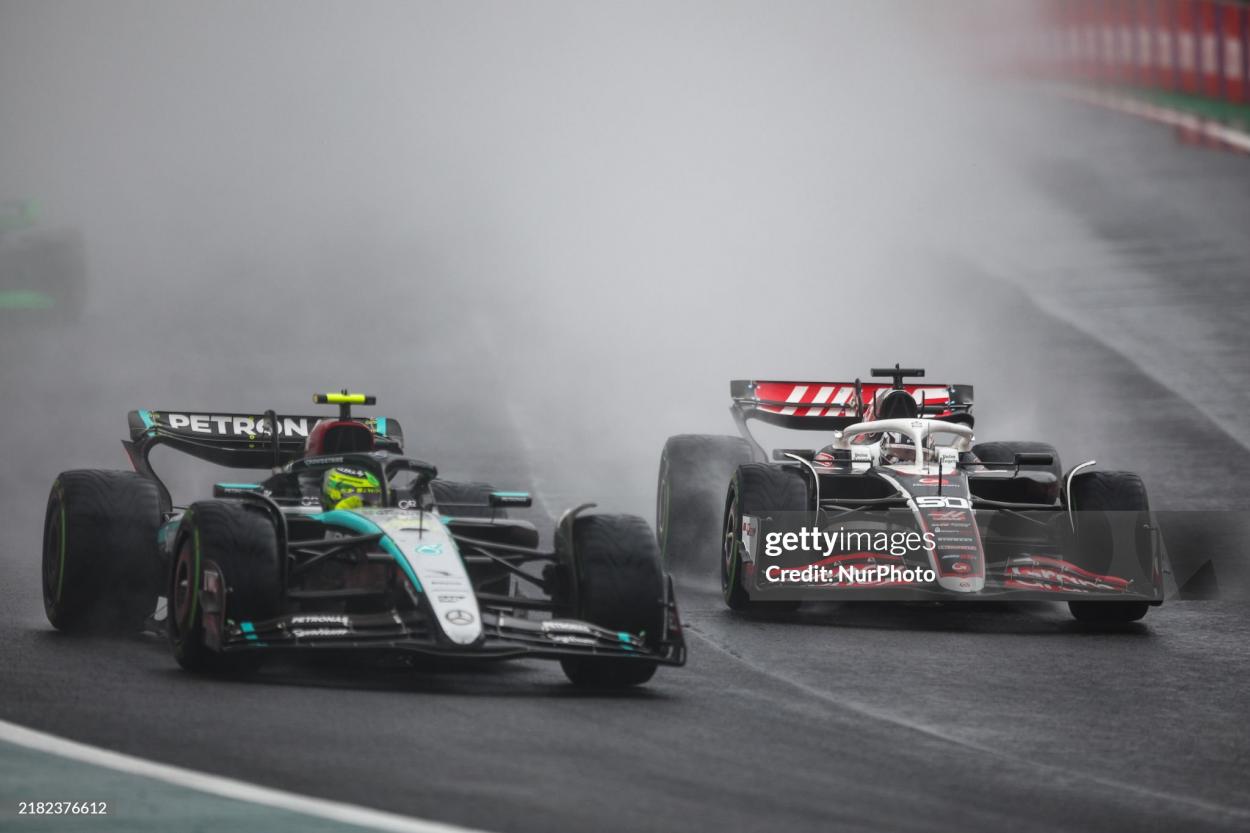
Race day was underway only a few hours later, providing one of the most chaotic races in recent times. Verstappen climbed through the field to be inside the top seven inside the opening ten laps.
His rival Norris trailed George Russell into the opening corner after a lackluster start to the race and was stuck behind him in the first round of pitstops.
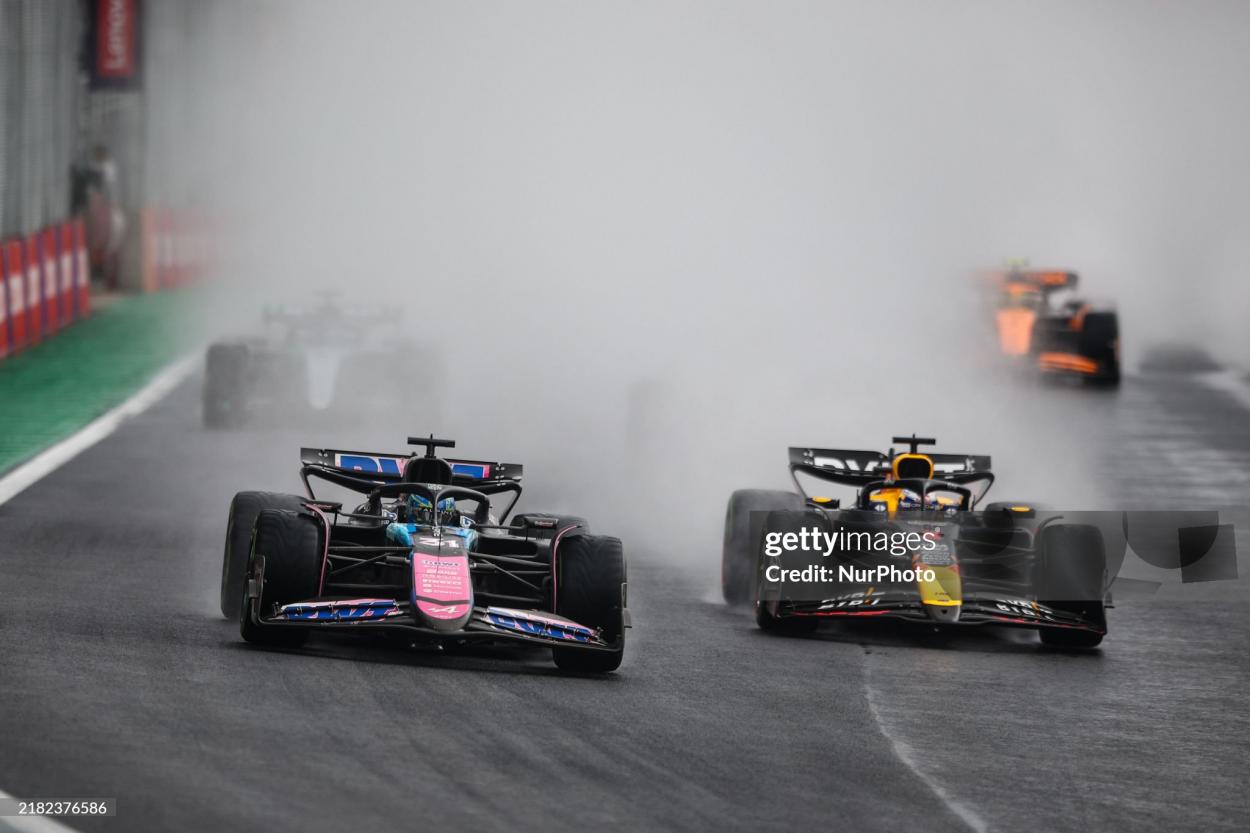
The track was resurfaced ahead of the weekend, which was pivotal. Drivers’ visibility was practically non-existent, and multiple drivers complained about the turbulent sensations they felt inside the car.
Post-race Red Bull boss Christian Horner compared Verstappen’s first lap to Aryton Senna’s 1993 Donington start - where the Brazilian legend rose to first after the first lap, overtaking multiple drivers in treacherous conditions.
“Max’s mental strength and attitude to deal with that is, you know, is outstanding,” he said.
“I thought his start today, you know, was electric. And that first lap was, you know, up there with Donington 93’, around the outside of Turn 3.
“I think he passed, what, six cars on the first lap.
“And then he was the only car that was really making progress, being able to pick cars up so late on the brakes into Turn 1.”
Franco Colapinto lost control of his Williams car as he headed up the hill toward the start-finish straight. This corner is notorious for crashes in wet weather, so the red flag was raised.
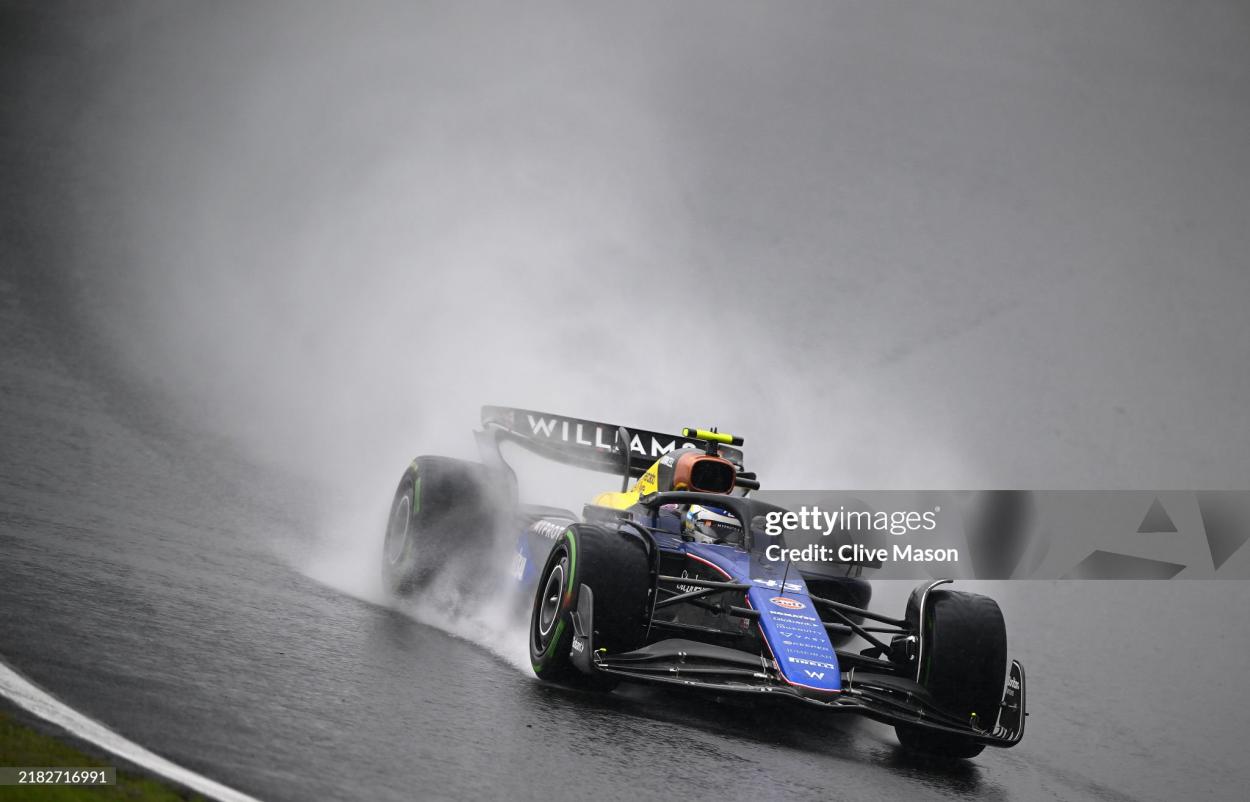
Before this point in the race, Red Bull and Verstappen opted to stay out, while Norris pitted a few laps earlier.
Norris struggled after the restart and went wide into Turn 4, allowing Russell to overtake again after their battle on the first lap.
Carlos Sainz sent out the safety car again four laps later due to a crash of his own accord in sector two.
Verstappen was in the midst of an Alpine sandwich with Frenchman Esteban Ocon in front - but the Dutchman showed his wet weather capabilities to pass at Turn 1 from the restart.
McLaren’s woes continued with a crucial mistake from Norris. The British driver dropped to seventh place after running wide at the restart into Turn 1 but quickly rose to sixth as McLaren ordered Piastri to stand by again.
In twenty-six laps, Verstappen went on to win by over 19 seconds over the Alpine duo and produced nine near consecutive quickest lap times in the final ten laps of the race over the rest of the field.
The Dutchman’s win puts him 62 points clear of Norris at the top of the championship, a scenario that appeared so unlikely after qualifying. He has managed to flip a potential 12+ point clawback from Norris to gaining 17 further points to his championship tally.
Red Bull’s drop-off post its Catalunya victory has been evident with Verstappen’s displays in the car, an unprecedented event given the creation of the RB19, seeing the most dominant car in the sport’s 74-year history just last year.
Post-race press conference
“Yeah, well, I mean, of course, that was important,” he said in the post-race press conference. “I wanted to, of course, win a bit sooner. But yeah, it has been tough for us.
“We always kept pushing. We did not really understand why the others were so fast in the race, especially. Yeah, I have been trying a lot of things to improve the car.
“And I mean, starting P17 this morning, did not look like we were going to win the race again. So yeah, it is an incredible result for us. A massive boost for the team, because honestly, it has been tough.
“But it is also a big strength of the team to stay calm and just try to work on performance and try to improve our situation. And I am confident. I am confident for the last three races that we can fight again, and especially in the race that we will be more competitive.
“I mean, this was now, of course, looking at it, it was incredibly important because in a way I was expecting to lose points today,” he added.
“So from now, I just want clean races to the end. I am not thinking about clinching the championship in Vegas or whatever. I just want clean races.”
The first driver in history
Wet weather always provides a more level playing field. Still, considering the lack of visibility in the hot seat, Verstappen becomes the first driver to win around Sao Paulo from as low as 17th and is the first driver in history to win from 10 different grid positions.
As the 27-year-old edges closer to a fourth consecutive world title, he silenced any doubters when everything surrounding Red Bull on and off track pointed to a potential championship fading away.
