



Ever since Roman Abramovich took over the West London club in 2003, Chelsea have been renowned for their heavy-spending during transfer periods, especially in the January window and most notably in 2011 when Chelsea splashed around £75m for Fernando Torres and David Luiz. However, something that Chelsea have lacked during the Abramovich-era is the departures; Chelsea have never been a selling club, and when the Blues do sell, it's usually not the best piece of business.
However, with Jose Mourinho's second-coming, it is now apparent and clear that the Portuguese manager and the Chelsea board want to transition into being more frugal with their funds, starting with smarter spending and smarter selling. Mourinho set out a 12-year-plan that would see Chelsea become a club that was more economical with a focus on the youth network.
This transfer window was an example of Chelsea's changeover towards thrifty-business as the Blues made several transactions.
Arrivals
IN - Nemanja Matic (22m), Mohamed Salah (11.5) and Kurt Zouma (12.5): Combined fee of around £46m.
Nemanja Matic - The Serbian midfielder joined Chelsea back in 2009 and managed to make three first team appearances under Carlo Ancelotti before being deemed as surplus and being included in the deal that brought David Luiz to Chelsea from Benfica. Ever since he moved to Portugal, Matic caught the eyes of many big clubs including Real Madrid, Chelsea and both Manchester clubs. He’s tall and strong which allows him to shield the ball well and break up the play with well-timed tackles. He works hard when the opposition has the ball, but his main strength lies in his ability to launch an attack from deep, to turn quickly with the confidence to run with the ball himself and beat players or pick out a teammate in space, which has proven key in unlocking the opponent. Jose Mourinho has hopes that the Serbian midfielder can replicate his impressive performances for Benfica at Chelsea.
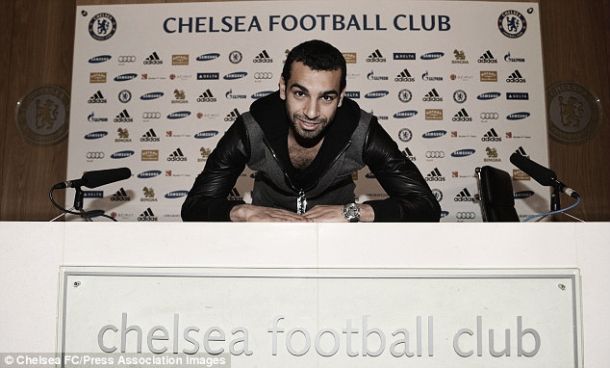
Mohamed Salah - The Egyptian winger has impressed in all outings against Chelsea, where he gave Ashley Cole all sorts of trouble whenever the Blues faced off against Basel. With a direct running style and a composed finish on his left foot, Salah can play anywhere across the front line although his natural home is on the right hand side of midfield. Here, he troubles defences with the pace and trickery to beat any fullback. He also brings versatility and is a tireless runner, who is constantly tracking back and chasing balls. (Courtesy of Huw Saunders). The 21-year-old has also featured 30 times for the Egyptian National Team where he has proved to be one of their main players and at such a young age, the possibilities are endless.
Kurt Zouma - The highly-rated French defender has also attracted the attention of many clubs throughout Europe, but Jose Mourinho pulled off a great deal to secure Zouma's signing. Zouma is a tall, fast, powerful player. On his day, Zouma is relentless and merciless, not letting strikers anywhere the ball, let alone a chance to shoot. He bullies attackers and is skilled in the dark arts of off-the-ball defending. His versatility in partnering up successfully with different centre backs is another benefit to his game. Plus, the youngster is very good on the ball with an average pass success rate of 86% for 37.3 passes per game - an invaluable asset if Mourinho continues the transition to Roman's craving for a total passing game. (Courtesy of Joseph Milner).
Departures
OUT - Juan Mata (37m), Kevin De Bruyne (17m), Michael Essien (costless): Combined fee of around £54m.
Juan Mata - Voted Chelsea's Player of the Year twice (in a row), Juan Mata was exceptional for Chelsea ever since Andre Villas Boas signed him in 2011 from Valencia for £23.5m. The Spaniard was instrumental in Chelsea's FA Cup, Europa League, and Champions League triumphs as the entire team revolved around his play-making ability. Mata rarely missed a match under AVB, Di Matteo and Rafa Benitez and surely expected the trend to continue when Jose Mourinho returned as Mata was in the form of his life. However, it was not to be as Mourinho made it well-known that Oscar was his preferred #10 and that Mata would have to adapt in order to retain the spot he had under previous managers. Mata failed to do such as the season went on and was sold to Manchester United for £37m, meaning that Chelsea posted a profit of around £13.5m for the Spaniard.
Kevin De Bruyne - Also bought during Andre Villas Boas' tenure, de Bruyne was highly influential for Belgian side Genk and impressed in the two matches against Chelsea in the previous Champions League group stage. When Chelsea bought KDB, the likes of Andre Schuerrle, Willian, Oscar and Hazard weren't around which made it look like the Belgian would have a bright future at the club. However, that also was not to be; De Bruyne was overlooked by Roberto Di Matteo after returning from his loan spell at Genk, mostly because Oscar and Hazard had just joined. As a result, De Bruyne was loaned out to Bundesliga side Werder Bremen for the remainder of the season. During his loan spell, KDB caught the eyes of many Chelsea fans as he reigned to an impressive loan spell in Germany. Following the loan spell, De Bruyne returned to Chelsea where it seemed like Mourinho would give him a chance as Jose stated that both Lukaku and De Bruyne would be in contention for a starting spot. After starting in a few matches and posting an assist in the season opener against Hull, KDB never impressed Mourinho and thus was sold for £17m in January to Wolfsburg. Chelsea posted a profit of around £10m for the Belgian.
Michael Essien - The fan-favourite at Stamford Bridge ever since he joined the club in 2005 from Lyon for £24.4m. Being touted as a box-to-box midfielder and an engine, Michael Essien's ability to exert boundless energy in supporting offensive and defensive play was crucial for Jose Mourinho. Essien is also very flexible and versatile as he can play as a central defender and a right back whenever needed. Essien also packed a powerful, yet accurate shot which was demonstrated several times and most notably, against Arsenal and Barcelona. Both of the strikes picked up Chelsea's Goal of the Season awards. Michael Essien also became renowned for his tenacious and physical style of play. However, a series of knee injuries in 2008 and 2010 sidelined Essien for the majority of both seasons as 'The Bison' fell down the pecking order as he continued to age and his injuries becoming a great concern. After recovering from the latter injury, Essien was loaned out to Real Madrid where he featured quite often for Jose Mourinho, who he refers to as 'Daddy'. Once Mourinho returned to Chelsea that summer, it seemed like The Bison would get another chance to impress the Chelsea fans, but just like De Bruyne and Mata, never did. As a result, Mourinho decided not to impede Essien's potential progress/success and sold him on a costless to AC Milan. Chelsea posted a loss of around £24m for the Ghanian midfielder.
Conclusion
All in all, the 2014 January transfer window was a success for the club as Chelsea began the transition towards being a money-savvy club by recording a profit of around £8m during the window. In the process, the Blues offloaded three players who were deemed surplus to requirements and added three highly-rated players including two hot prospects in Salah and Zouma and a midfield anchor in Matic. Some are concerned about a striker not being signed, but I am not concerned in the slightest because no one is really available. Diego Costa doesn't want to leave Atletico until the summer (according to reports), while our usual target Falcao is injured for the remainder of the season, and the rest are either cup-tied or priced too highly at this point. Plus, Mourinho has made it clear that signing a striker is the top priority come the summer window, which is the better time to buy considering the strikers we've signed in January windows have undeperformed (Demba Ba and Torres).
