


Football – the beautiful game as it's often known due to its worldwide popularity. Once seen as the working man's game, it's now being hijacked by billionaires worldwide in an attempt at universalising and monopolising it. It is highly debatable however, whether or not it helps improve football for the viewing millions.
First and foremost, fans are being priced out of their own game. Nowhere is this more evident than in England as ticket prices continue to soar. At Arsenal, a season ticket will cost you £985. And that's just the cheapest.
The old cliché remains that player wages are simply too much. Yes, looking Cristiano Ronaldo use his attacking awareness and quick feet to drift through defences with total ease before letting fly into the top corner is one of football's most beautiful sights; but does the Real Madrid winger really merit £288,000 a week?
It must also be said that transfer fees are blown wildly out of proportion in the modern game. It seems that teams continue to arrogantly pay ridiculous fees for players to show that they have the capability of doing so. Using Real Madrid as an example once more; Los Blancos extravagantly splashed £85m pounds, a world record, on Welshman Gareth Bale last year, topping their own previous record of £80m when they signed Ronaldo in 2009.
Gareth Bale may be another player who is a delight to look, however he just didn't cut the mustard when it came to the recent Ballon d'Or. Bale wasn't voted into the FIFpro team of the year, nor did he make the top three cut for the golden ball itself. He may still only be 24 years old but the money spent on Bale was excessive, if not sickening, considering the global economic plight which has hit Spain harder than most other countries in the developed world.
The capitalist aspect has, in most leagues, killed the competition and ultimately, the excitement. Currently, in Germany, the Bundesliga is as good as won by Bayern Munich who have in recent years spent more than any other domestic opponent. In France, realistically there are only two prospective champions : Paris Saint-Germain and AS Monaco. Both of course, have had recent takeovers and splashed the cash on world class players such as Zlatan Ibrahimovic, Thiago Silva and Falcao to name but a few.
In the Premier League though, it could be argued that capitalism isn't necessarily a bad thing as, particularly this season, the league has proven unpredictable and the competition has been enhanced, mainly due to the benevolence of both mega rich owners and TV companies such as Sky. At the beginning of the season, there were no less than six clubs who looked strong title contenders: Arsenal, Chelsea, Liverpool, City, United and Spurs (the latter of whom reinvested in their squad last summer after the departure of Gareth Bale).
Premier League owners should by no means, however, be treated as heroes. Remember when Fulham became the laughing stock of the league, when former chairman Mohammed Al Fayed built a Michael Jackson statue outside of Craven Cottage? Crazed fan of the “King of Pop”, Al Fayed paid for the statue claiming the late Jackson loved Fulham, when in fact he only attended one game in 1999. The Egyptian businessman then told the club's fans if they disliked the sculpture they could “go to hell”.
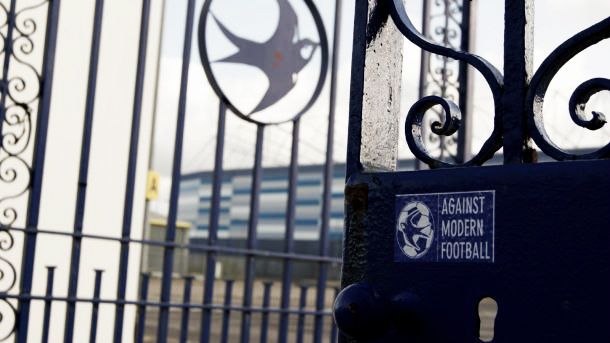
Or what about the omni-controversial Vincent Tan? The Malaysian owner who has single handedly ripped the heart and soul from Cardiff City FC. Firstly by changing the club's blue jerseys and badge in favour of a red number, supposedly because it was a better representation of Wales. If that wasn't enough, he then gave fan favourite manager Malky Mackay, who won the club promotion to the big time, an ultimatum of resign or face the sack. Of course, Mackay, refusing to leave, was later relieved of his duties.
Re-branding is not an uncommon feature of the Premier League as clubs are beginning to follow the American model of "franchises". For example the recent simplistic redesign of Everton's crest in which the club motto of “Nil Satis, Nisi Optimum” was removed and of course Assem Allam has ongoing plans to rename his side the Hull City Tigers.
The modern football club is also over-reliant on sponsorships. The chances are your club's shirt is now plastered with the name of an already high grossing bookmakers, electronics company or even by those generous people who run pay day loan schemes. In one of the most industrialised cities in the pre-Thatcher years, Liverpool FC's famous all red kit is now clad in the name of an international bank. Those iconic green and white hoops of Celtic? They now carry the name of an Irish cider.
Perhaps the most disappointing of these examples is Barcelona, who after 110 years without a sponsor, began to promote UNICEF by using the logo on their shirts and donating to the charity, which was a great touch from the Catalan giants. Fast forward a few years though, and the club who now faced near insurmountable debts, finally succumbed to the glamour of big money sponsorships and it was announced the Blaugrana jerseys would come bearing the name of Middle Eastern airline Qatar Airways.
The sponsorship argument may seem petty, but bare a thought for the Bayern Munich fans who, every home game, wear white overalls which create a mosaic in the stands promoting T-Mobile. Support your club in even more degrading fashion, with new white raincoats, courtesy of the guys who provide you Pay and Go!
The World Cup tournaments scheduled from summer 2014 in Brazil until Qatar 2022 are all controversial for different reasons. Protests in Brazil continue as many of the locals are concerned about the government spending millions upon millions funding stadiums and accommodation for tourists for a tournament that will last a month. Brazil's government has funded the 2013 Confederations Cup and this year's World Cup, along with the 2016 Olympics which are to be hosted in Rio de Janeiro. These investments are taking a huge gamble, considering the rife poverty in Brazil; 6% of the population still live in Favelas.
Meanwhile, there are still feint cries of corruption and bribery as far as the successful Russia 2018 and Qatar 2022 campaigns are concerned. Particularly with the latter as there is still much discussion whether it will be hosted in summer or winter, which would cause havoc for most European leagues.
It is unclear when capitalism became such a powerful force in football, but it's clear that it is slowly but surely killing the game we all know and love.
