



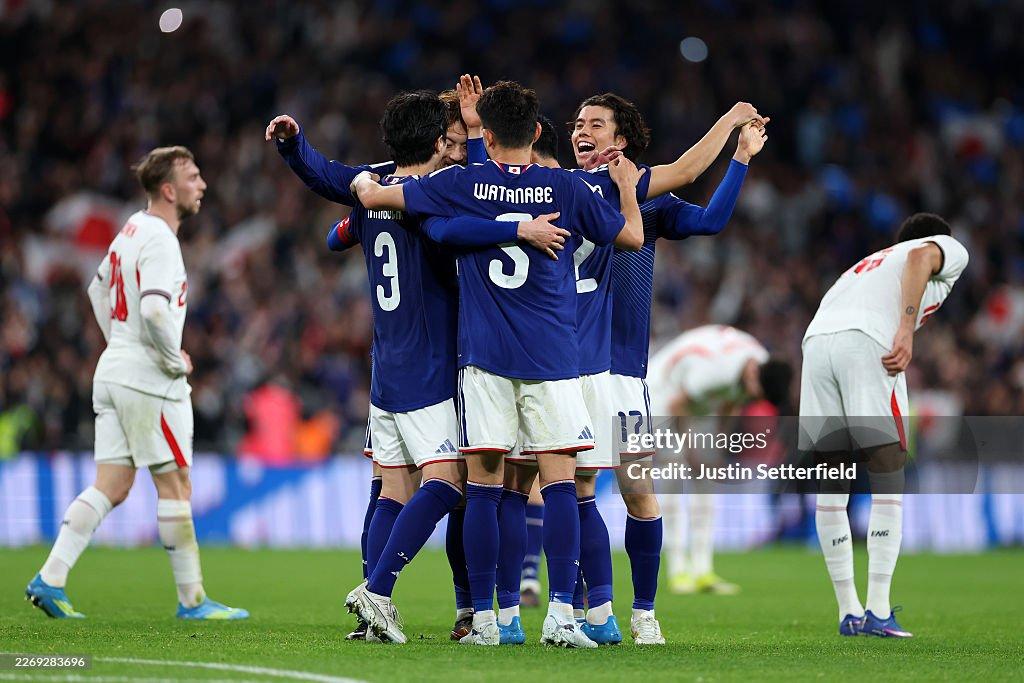

It was Kaoru Mitoma who put Japan ahead midway through the first half, after a move which displayed everything good about the team.
They had a few opportunities to increase their advantage while England struggled to create any big chances for themselves.
Maguire had the best opportunities for the home side as he dominated from corners in the final 10 minutes, but there was ultimately no way through for England.
Story of the match
Veteran goalkeeper Jordan Pickford returned in goal, with Marc Guehi and Ezri Konsa ahead of him at centre-back. Three months out from the World Cup, the three look likely to start at the core of England’s defence.
They would be up against the top scorer in the current Japanese squad, Ayase Ueda, who returned to lead the line. He also leads the way in the Eredivisie scoring charts with 22 goals.
Japan started the match with an extremely intense press as several England players were forced into giving up possession early on.
England began with a good creative presence in the team, and it was clear that Cole Palmer and Morgan Rogers were looking to find killer passes through the defensive line. Phil Foden, meanwhile, played a false nine role as Thomas Tuchel continued to assess his striker options.
Within 10 minutes, England took more control of the game and were able to threaten in wide areas, particularly through Anthony Gordon on the left flank. Palmer was naturally more inclined to take up central positions, which meant Ben White’s overlapping runs were important to provide an option on the right.
Despite the undoubted inventiveness present for England, the lack of runners meant it was difficult to breach the Japanese defence. Most of their forwards typically thrive with the ball at their feet, leaving just Gordon to provide the off-ball threat.
Japan take the lead
For all of England’s possession, however, it was Japan who struck first on a quick counter attack.
The goalscorer Kaoru Mitoma started the move as he pressured Palmer before finding Keito Nakamura on the left. The Brighton winger had continued his run into the box and finished calmly beyond Pickford.
It was their first shot in the match, meanwhile their hosts had X shots in the first half, most of which were blocked.
For the first time since the defeat to Senegal in June 2025, England had conceded and needed to respond. The individual talent on show was evident but the disjointedness was equally so with players continuing to build relationships with each other.
Eventually, Palmer grew back into the game after his mistake. His curling shot from range drew an excellent save from Zion Suzuki.
England back in control
Following Mitoma’s goal, England appeared more dangerous, largely thanks to the impressive performances of both Elliot Anderson and Kobbie Mainoo in midfield.
Both looked strong options in and out of possession with some good passes through the lines as well as reading the game intelligently to win the ball back.
This was certainly made more difficult by the compactness of the game. Japan’s game plan was focused on suffocating England in midfield areas, limiting players like Palmer and Rogers in their ability to create.
Even though England dominated the ball, Japan were still able to create opportunities for their dangerous forwards. Ueda made a clever run and hit the bar as he attempted to chip a shot over Pickford.
From the resulting corner, however, England’s number one was able to demonstrate his excellent distribution as he looked for Rogers at the opposite end of the pitch - a pass which was well read by the backtracking Japanese defence.
Aside from that, however, it was a slow and mostly static first half for the hosts, who had a hard time penetrating their well-drilled opposition.
Second half
With no changes made at half-time, the game resumed at a similar pace with England still looking for a route to goal.
Japan continued to make good defensive interceptions on the edge of their box when the English creators were able to find space. At the other end, Ritsu Doan tested Pickford yet again at his near post.
They made a more purposeful start to the half, creating the better chances through their direct play while keeping England at bay with relative ease.
Kaishu Sano was especially impressive in his defensive work and reading of the game, constantly positioning himself well to win back possession.
Although England rarely looked to play a long ball over the top, it brought a considerable amount of success for Japan. On multiple occasions in quick succession, they were able to find space in behind and, with the England defence in disarray, could have doubled their lead.
Movement from both benches
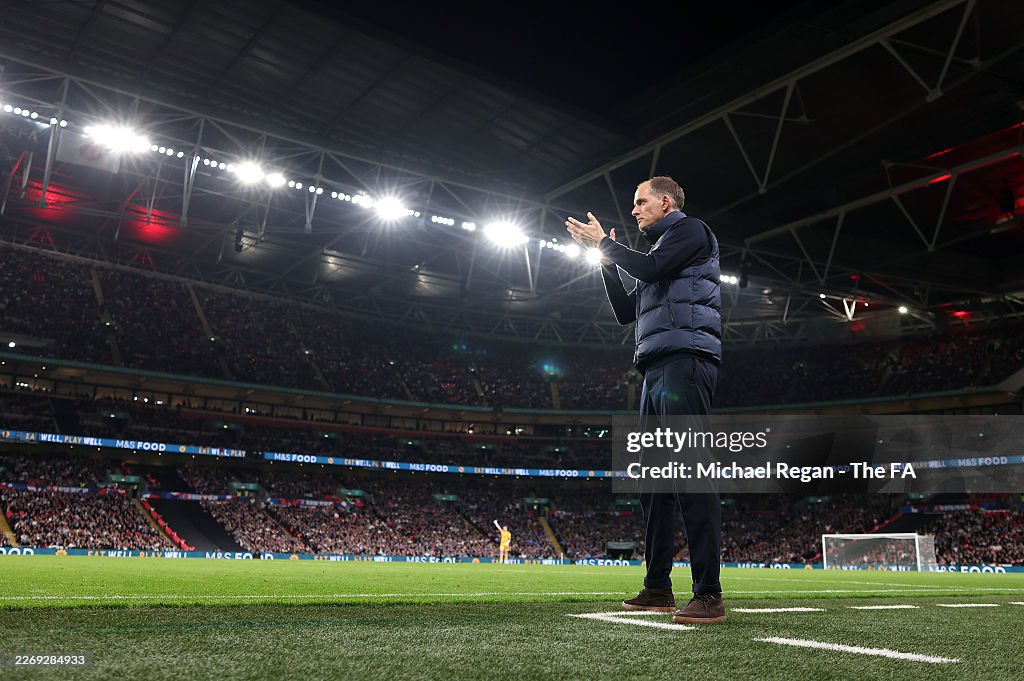
On the hour mark, Tuchel made his first move by introducing four substitutes. One of these was Dominic Solanke, who gave England a more obvious focal point, alongside Jarrod Bowen, a more traditional right-winger than Palmer.
Lewis Hall also took his place at left-back, which saw the versatile Nico O’Reilly move into midfield.
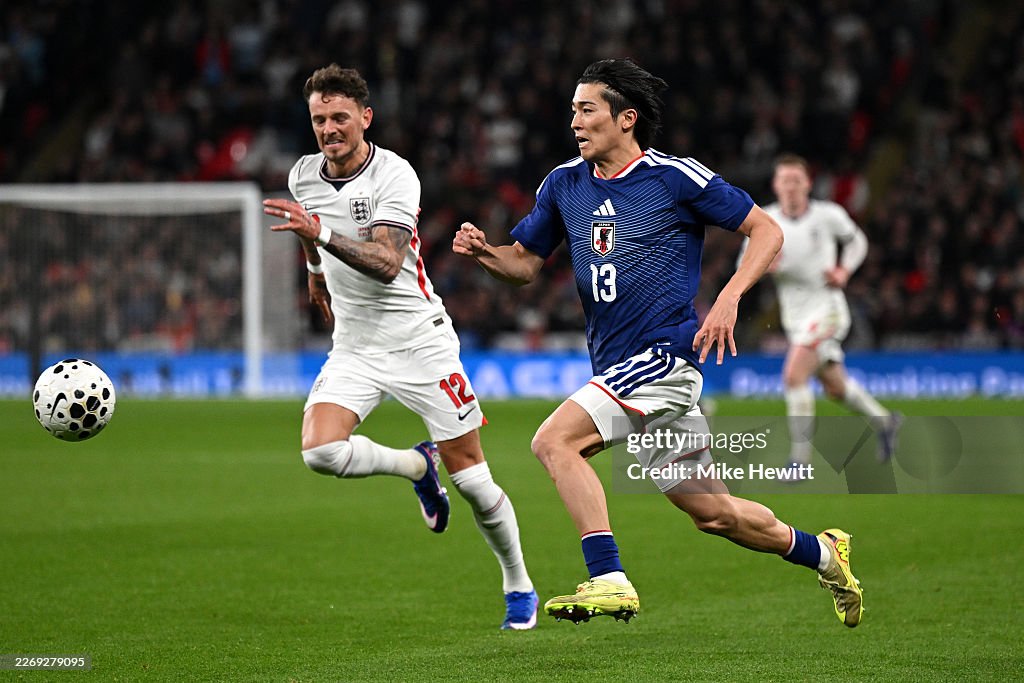
Almost immediately, Bowen was able to cause more problems for Nakamura, playing left wing-back for Japan. He offered a completely different threat to Palmer, sticking to the touchline and looking to beat his man or deliver a cross.
Something which did not change, though, was the Japanese threat on the counter, as it was Nakamura who shot narrowly wide having beaten substitute Tino Livramento.
With eleven substitutions available to each team, both managers continued to alter their lineups, giving different players a final chance to prove themselves before the World Cup squad selection.
Marcus Rashford represented another attacking change for England; a straight swap on the left wing as he replaced Gordon.
In the closing stages, England were able to create noticeably more down the wings, utilising the forward runs of both Hall and Livramento at full-back.
England up the intensity
Rashford provided the biggest test so far for Japan's goalkeeper. Suzuki parried a powerful effort from the Barcelona winger before Bowen shot just wide from an awkward position.
Hall continued to impress in an attacking sense down the left with his pace offering a consistent threat in a different manner to O’Reilly, who prefers late runs into the box.
The final England changes brought a greater set-piece threat to the team, as demonstrated immediately by Harry Maguire. If not for the defenders on the goal line, he would have equalised with his first touch.
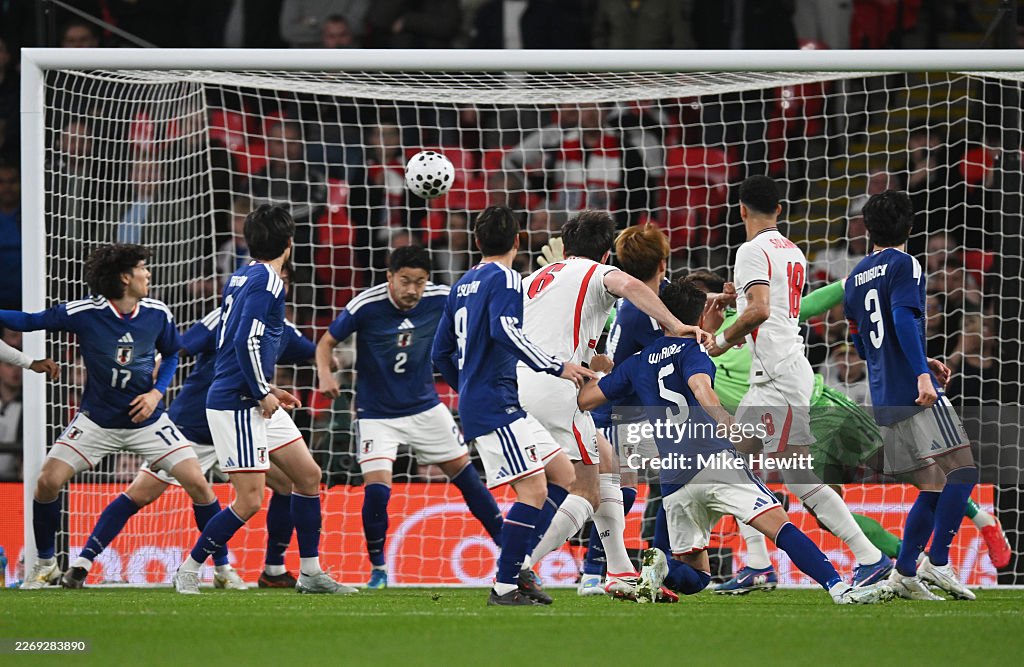
Maguire continued to win aerial battles from corners as England created their best opportunities of the evening from corners, while Japan were committed to defending their lead.
Rogers and Hall also each drove powerful shots towards goal but were unable to trouble Suzuki.
The 1-0 defeat meant England had failed to score for the first time under Tuchel’s tenure. Over the coming months, the manager faces a tough decision over who to include in the 26-man squad for the World Cup.
Player of the match - Kaishu Sano
The fundamentals of the Japanese game plan were to remain compact in midfield and cut out any attempt from England to play through the lines.
This was exemplified by Sano’s performance. His decision-making and positioning were both exceptional, making it extremely difficult for England’s best creators to find a way through.
These interceptions were crucial to their direct attacking style, and Sano was a big reason why his teammates were able to catch the England defence out on so many occasions.
