


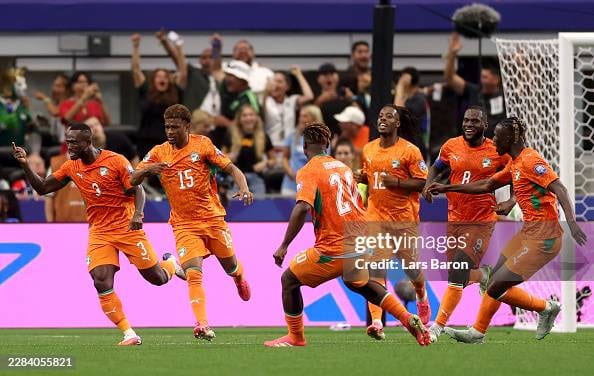

Ivory Coast's 2026 FIFA World Cup campaign came to an end after a 2-1 defeat to Norway in the Round of 32 at Dallas Stadium.
The Elephants had enough opportunities to win with 15 shots and 14 corners, way more than Norway's, yet their inability to convert cost the Ivorians.
Wing Play Creates Early Openings
The wing pairing of Nicolas Pepe and Yan Diomande played a huge role in stretching Norway across the width of the pitch before attacking the spaces left behind.
The wingers hugged the touchlines while the full-backs pushed up high, forcing Norway's defenders out wide. Once those gaps opened up, other Ivory Coast players ran directly into those spaces and created scoring chances.
The plan worked well early in the game because their movement put Norway's defenders in difficult situations and prevented them from joining attacks.
Profligacy Punished by Nusa Stunner
Despite controlling the game with 53% possession, the Elephants struggled to create clear-cut chances. The team's build-up looked great, and getting the ball into the final third was not so difficult.
However, the execution in the attacking third was poor. One major factor that contributed to the issue was the lack of a box dominator to lead the attack.
Ange-Yoan Bonny linked up play and pressed well, but most times, he was isolated against the centre-backs. Bonny is more of a connector who creates space for teammates with his movement.
The profile the team lacked was a penalty-box predator. Norway was able to withstand the pressure due to the unavailability of a clinical presence.
As Ivory Coast failed to capitalise, Norway grew into the game gradually. Martin Ødegaard, who is one of Europe's finest playmakers, started finding space between midfield and defence.
In the 39th minute, Ødegaard delivered a pass to Antonio Nusa. The winger cut in and curled the ball into the top left corner. This highlighted the difference between the two teams. Ivory Coast needed repeated attacks to look dangerous.
Norway, on the other hand, made their few chances count.
Amad Impact Flips the Script
Amad Diallo was subbed on in the 60th minute and changed the game attacking and defensively wise. Ivory Coast looked more dangerous and direct after the Manchester United winger was introduced.
Norway would have doubled their lead in the 68th minute when Torbjørn Heggem fired the ball towards goal after a corner kick, only for Diallo to make a goal-line clearance to keep it out.
Six minutes later, Diallo collected the ball on the right, exchanged a one-two pass with Pepe, and put the ball past Ørjan Nyland to level the score.
Late Collapse Costs Elephants
Unfortunately for Ivory Coast, the urgency Diallo brought when he came on did not last. It was clear in the last 15 minutes that the Elephants showed several weaknesses that cost them a place in the quarter-finals.
Midfielders Franck Kessie and Ibrahim Sangare looked too exhausted to tackle opponents and hold their positions.
As a result, the Ivorians' defence was totally exposed as there were gaps between the midfield and defence for Norway to exploit. Furthermore, the decision to take Christ Inao Oulai off was slammed.
The 20-year-old provided balance in midfield defensively. The absence of Oulai gave Patrick Berg and Oscar Bobb too much freedom to operate, leading to the contribution of the two players to Erling Haaland's goal in the 86th minute.
Diallo almost rescued his country with a free-kick in the 96th minute, but Nyland produced a stunning save to keep his team in the lead.
Ivory Coast were punished because they were not clinical enough in a knockout match. Coach Emerse Fae and his players learned the hard way that teams will punish you instantly if you do not finish your chances.
