


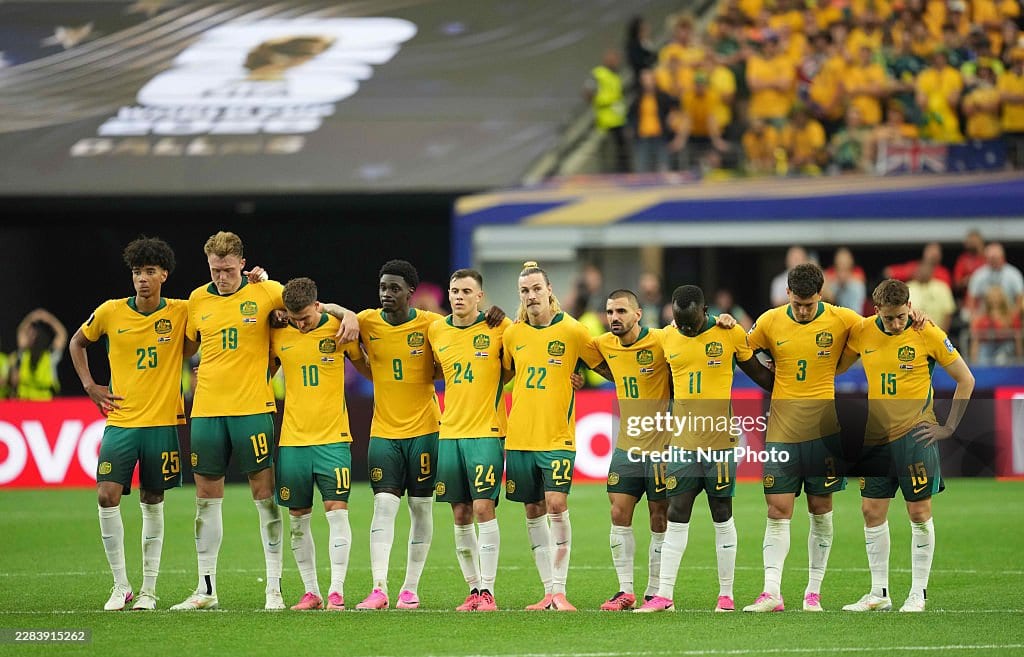

Australia's 2026 FIFA World Cup campaign ended agonisingly, losing 4-2 on penalties to Egypt after 120 minutes had failed to separate the sides. While the shootout will inevitably dominate the headlines, the Socceroos' elimination was not decided from 12 yards.
Instead, it highlighted an issue that has followed Tony Popovic's side throughout the tournament: when faced with an organised defence, Australia still struggle to create enough high-quality chances from open play.
Territory without incision
The statistics will show Australia recovered admirably after falling behind to Emam Ashour's early header. Mohamed Hany's own goal restored parity before the Socceroos enjoyed lengthy spells of possession during the second half and extra time.
However, possession alone rarely translated into genuine danger.
Egypt were happy to defend in a compact mid-block, forcing Australia wide before dealing comfortably with a steady stream of crosses into the penalty area. Harry Souttar became an aerial outlet late on, while Aziz Behich and Jordan Bos repeatedly delivered from advanced areas, but the attacks too often became predictable.
It was pressure rather than penetration.
Australia worked themselves into promising positions but lacked the final pass to break Egypt's disciplined shape. Patrick Yazbek and Connor Metcalfe moved the ball efficiently through midfield, yet there was little creativity between the lines to force defenders into difficult decisions.
Against elite tournament opposition, that difference is often decisive.
A familiar pattern
This was not an isolated performance.
Throughout the tournament, Australia's success had been built on organisation, physicality and defensive resilience. Those qualities deservedly earned them a place in the knockout rounds, but the Egypt match exposed the other side of that identity.
When the game demanded invention rather than resilience, Australia looked short of ideas.
Much of their attacking play relied on crosses, set pieces or moments of individual endeavour rather than carefully constructed combinations. Egypt recognised that pattern quickly, crowding central areas and inviting deliveries from wide positions they were confident of defending.
Even after equalising, Australia never truly looked like the side most likely to find a winner.
The inability to consistently create clear-cut opportunities also increased the pressure on the defence. Every missed chance made Egypt's counter-attacking threat feel more significant, while the game drifted closer towards penalties, a lottery Australia ultimately lost.
Encouraging foundations, but another step required
None of this should overshadow what has otherwise been an encouraging World Cup.
Australia reached the knockout stages through discipline, tactical flexibility and an impressive collective spirit. Popovic has instilled a defensive structure capable of competing with technically superior opponents, while several younger players showed they belong on football's biggest stage.
Yet if the Socceroos are to move beyond being difficult opponents and become genuine contenders to reach the latter stages of major tournaments, they need another layer to their game.
Whether that comes through developing more creative midfielders, finding greater variety in the final third or encouraging greater risk in possession, Australia require players capable of unlocking compact defences without relying so heavily on crosses and second balls.
Penalty shootouts can hinge on fortune, but reaching them is rarely accidental.
Against Egypt, Australia controlled large portions of the contest without ever fully taking command. Their World Cup ended from the spot, but the lessons lie in the previous 120 minutes. Until the Socceroos become more ruthless and inventive in the final third, they will continue to find the margins of knockout football working against them rather than in their favour.
