


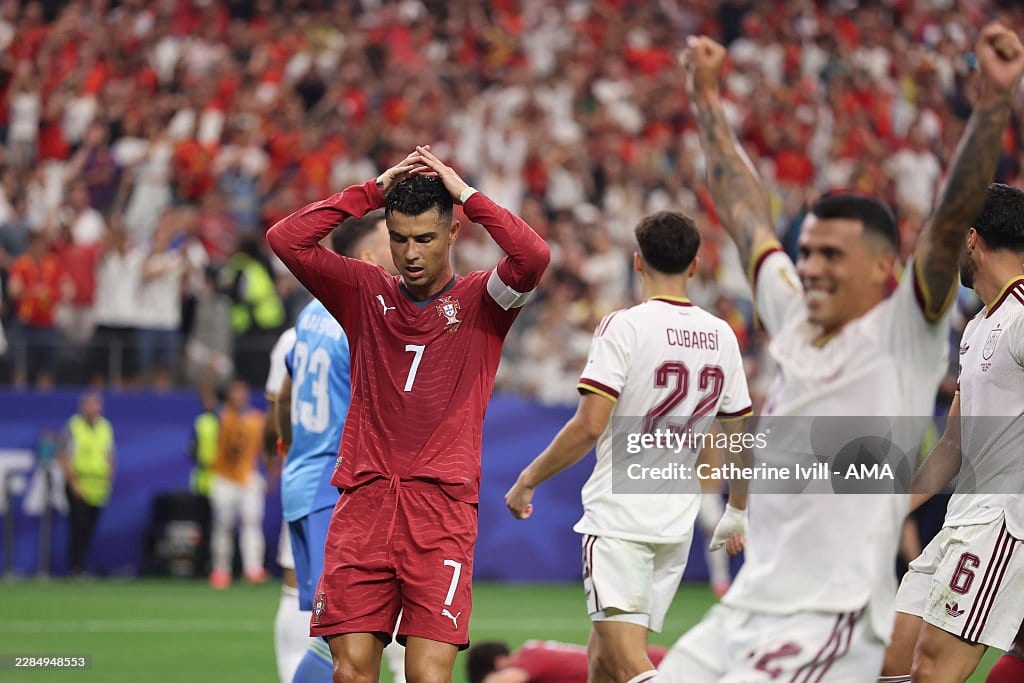

For much of Roberto Martinez's tenure, Portugal's full-backs have been among their greatest attacking assets. Against Spain, however, they became largely decorative.
In a game settled by Mikel Merino's stoppage-time winner, Spain's 1-0 victory was not simply about controlling possession or winning the midfield battle. It was about denying Portugal their most reliable route into the final third. By the time Spain found the decisive moment, Portugal had spent almost 90 minutes searching for width that never truly arrived.
Spain Closed the Doors Out Wide
On paper, Portugal had everything required to stretch Spain. João Cancelo and Nuno Mendes are two of Europe's most adventurous full-backs, while Pedro Neto naturally drifts inside to leave room for overlaps. João Félix also prefers to occupy half-spaces rather than hug the touchline.
The expectation was obvious: Portugal would overload the flanks before delivering crosses or cut-backs towards Cristiano Ronaldo.
Spain refused to allow it.
Possession Without Progress
Rather than aggressively pressing Portugal's full-backs high up the pitch, Spain controlled the passing lanes leading into them. Whenever Cancelo received possession, Spain's nearest winger delayed instead of diving in, while Pedri and Rodri shuffled across to block combinations inside. That forced Cancelo into safe passes backwards rather than progressive carries.
The same pattern emerged on the opposite side.
Nuno Mendes frequently found himself receiving possession with little momentum and an opponent already positioned to show him away from dangerous areas. Instead of attacking the byline at speed, he was repeatedly forced into standing crosses or recycling possession.
It meant Portugal's most dynamic runners became little more than ball recyclers.
That had a knock-on effect across the attack.
The Knock-On Effect
Ronaldo thrives when deliveries arrive early or when defenders are dragged away by overlapping runs. Instead, Spain's back four remained compact because Portugal never consistently threatened beyond them. Pau Cubarsí and Aymeric Laporte rarely had to defend the spaces behind, allowing Spain's defensive line to stay organised throughout the contest.
Even when Portugal enjoyed sustained possession, there was a noticeable lack of unpredictability. Too many attacks became horseshoe football, moving from centre-back to full-back, back inside, across the pitch and out again without ever creating the numerical superiority needed to unbalance Spain.
That represents an interesting tactical question moving forward.
A Tactical Lesson for Portugal
Portugal possesses elite attacking full-backs, but elite opponents increasingly appear comfortable allowing them possession in non-threatening areas. The challenge is no longer getting Cancelo or Mendes on the ball; it is creating the conditions that allow them to receive while already facing forward.
Spain recognised that distinction perfectly.
Perhaps the clearest evidence came in the closing stages. Rather than Portugal pinning Spain back through relentless wide pressure, it was Spain who gradually gained territorial control before capitalising with the late winner after a rare lapse in Portuguese concentration. It was a cruel ending, but not an entirely surprising one given how little sustained pressure Portugal had managed to build through the flanks.
A one-goal defeat will inevitably invite scrutiny of missed chances and individual moments. Yet the bigger lesson may lie elsewhere. Portugal's attacking identity has long depended on their full-backs dictating games. Against arguably the best-structured side left in the tournament, those outlets were neutralised.
Without them, Portugal looked short of ideas.
