



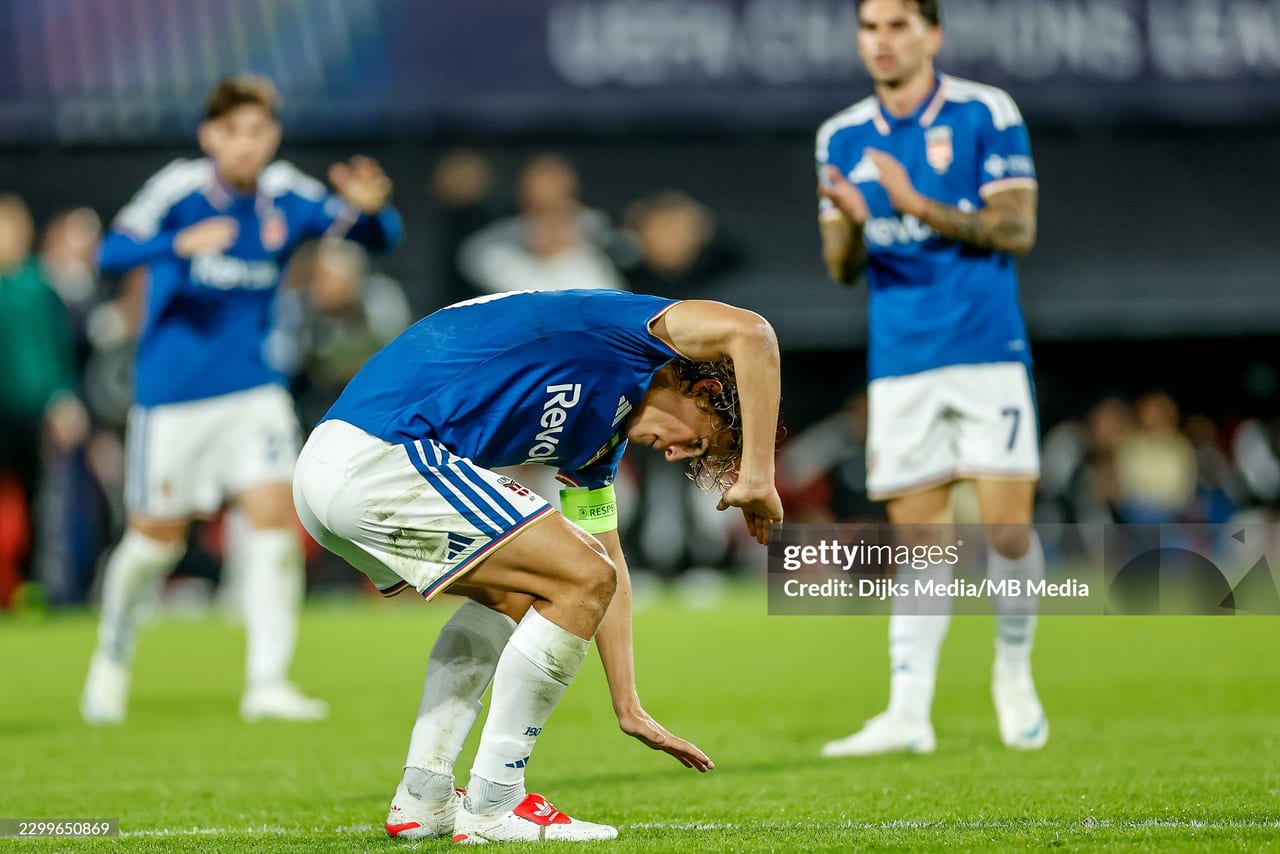



Como arrived in Rotterdam hoping to build on their winning start in Europe, but a daunting challenge awaited them at De Kuip. Backed by their passionate home supporters, Feyenoord were eager to bounce back from a heavy 5-1 defeat to Barcelona in their Champions League opener.
Cesc Fábregas' side made a promising start, pressing high, moving the ball quickly and committing players forward to trouble Feyenoord's defence. Their attacking approach paid off in the 18th minute when Assane Diao raced onto a long ball, held off his defender and beat Tjark Ernst to give the visitors the lead.
However, Como's advantage lasted barely two minutes. Gjivai Zechiël equalised with a powerful strike from the edge of the penalty area, shifting the momentum of a contest the Italian side had started so confidently.
Attacking ambition comes at a cost
Como's willingness to press high and commit players forward has become one of the defining characteristics of Fábregas' approach. Their intensity and quick passing combinations can make them difficult to contain, but that ambition also carries risks.
During the opening stages, Como's aggressive pressing caused problems for Feyenoord, limiting their time on the ball and forcing them to look for ways around the visitor's pressure.
However, as Feyenoord began to find ways through the press, spaces emerged for the hosts to exploit. Como's attacking commitment occasionally left their defensive structure stretched, making it difficult to recover their shape when possession was lost.
The Dutch side became increasingly dangerous in transition, exposing the risks of sending too many players forward without maintaining sufficient defensive cover.
This remains one of Como's biggest challenges. Their attacking philosophy gives them the freedom to trouble opponents, but their ability to protect themselves when possession changes hands still needs improvement.
Learning to control the crucial moments
One of the most important lessons from the defeat was Como's difficulty in managing changes in momentum.
After taking an early lead, the visitors were unable to maintain their initial control. Feyenoord's quick equaliser disrupted their rhythm, and the Italian side struggled to impose the same intensity and authority they had shown during the opening stages.
Although Como continued to threaten, Feyenoord gradually found more opportunities to attack the spaces left behind by Fábregas' players.
Anis Hadj Moussa's goal shortly after half-time, cutting inside from the right before beating Robert Sánchez at his near post, gave the Dutch side a 2-1 advantage and forced Como to chase the game.
However, playing attacking football does not always mean increasing the tempo. Sometimes, maintaining possession, slowing the game down and choosing the right moment to accelerate can be just as important as pressing aggressively.
That is where Como appeared to struggle. Rather than consistently dictating the rhythm of the match, they allowed Feyenoord to influence proceedings during crucial periods.
For a side built around possession and attacking movement, learning to recognise when to take risks and when to regain control could prove essential as their European campaign progresses.
Plenty of ambition, but not enough creativity
As Como searched for an equaliser, their determination to push forward was evident. However, their attacking play occasionally lacked the variety needed to break down Feyenoord's defensive organisation.
Nico Paz and Martin Baturina looked to create openings, while the visitors continued to move the ball across the pitch in search of space.
Como were not without opportunities. Substitute Tasos Douvikas missed a promising headed chance, while Paz came close with an effort from the edge of the penalty area.
Nevertheless, their attacking combinations became predictable at times, with repeated attempts to work the ball into wide areas and deliver crosses offering Feyenoord opportunities to reorganise defensively.
The hosts eventually extended their advantage when another effort from Hadj Moussa struck the post and rebounded into the net off Sánchez, leaving Como trailing 3-1 late in the second half.
Despite the setback, Fábregas' men refused to surrender. Douvikas pulled a goal back in stoppage time after racing onto a through-ball and finishing past Ernst, but the visitors had left themselves too little time to complete the comeback.
Como's persistence was admirable, but their inability to consistently turn possession into decisive attacking situations ultimately proved costly.
The lesson for Fábregas
Como showed enough attacking quality to trouble Feyenoord and created opportunities that could have changed the outcome. Yet their first European defeat exposed areas that will require attention as the competition progresses.
Their ambition is undoubtedly one of their greatest strengths, but it must be accompanied by better defensive balance, greater attacking variety and a clearer understanding of how to manage the different phases of a match.
For Fábregas, the challenge is not to abandon Como's attacking identity, but to refine it.
If the Italian side can learn to combine their attacking courage with greater composure and control, this defeat in Rotterdam may prove to be a valuable lesson in their European development.
