

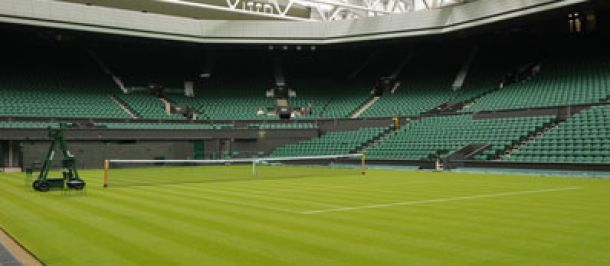
We’re now approaching the end of the second week of the grass-court season. Sadly for fans of the surface, this also means we’re approaching the halfway point of it, seeing as it’s only four weeks long. The biggest excitement is of course still to come at Wimbledon over the next couple of weeks, but it seems a shame that Wimbledon is the only time we’ll see some players in competitive action on grass – you’d be hard pressed to find a top player playing more than one (two at a push) other grass-court events. Next year, Wimbledon will move one week later, and there are two new grass tournaments lined up for their first edition in Stuttgart and Nottingham – a new WTA event in Mallorca will join them in 2016.
Why should we have more grass tournaments?
Variety on the tour
Variety is important – it helps keep things interesting. The start of the grass season can be one of the most intriguing times of the year – look at Nadal’s loss in the first round of Wimbledon last year. Having pulled out of Halle two weeks previously, the man who had been dominant on the tour so far that year, winning titles on both clay and hard courts, hadn’t had time to get used to the new surface and lost early. This is a prime example of a benefit of having variety in the playing surfaces – each presents a new challenge, and switching between them is something that even the very best have to take care to get right. It’s a shame that players have such little time to do so – undoubtedly there must be those that resent having to adjust to play on a surface that doesn’t suit their game, and that they are uncomfortable on, for so short a time. Yes I know Wimbledon’s a big incentive, but it’s not the biggest tournament for everyone – Nikolay Davydenko was quoted earlier in the year as saying that he’d skip it as he has ‘No interest in playing there’ – clearly some don’t relish the grass court major (Davydenko also skipped the tournament last year to prioritise the summer clay events). More tournaments would create more of an incentive for players to make the adjustment, which could lead to lesser grass tournaments being more exciting, as players aren’t just there to try and get used to the surface.
Different courts also present the opportunity for a greater variety of play styles. In recent years there’s been a lot of nostalgia for the days of Serve and Volley tennis being the dominant style, and mourning the reducing importance of the serve, the more frequent long defensive baseline rallies and the decline of the one-handed backhand (although this is seeing something of a resurgence). A longer season on the fast, low bouncing courts would encourage a return to aggressive, net-rushing styles of play for some, while defensive skills and strong returning would retain importance during the clay court season. One of the things people love about the Nadal-Federer rivalry is the contrast of styles it presents. We’d see many more contrasting match ups with a longer grass season.
A more even distribution of ranking points
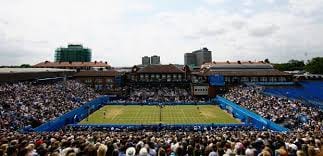
Secondly, it gives the tours, and the rankings, a little more balance. There are just six grass-court events on the ATP tour (including Grand Slams), compared to 20 clay tournaments and 38 on hard courts. This seems to me to be rather unfair to those players whose game suits a faster surface. In fact, when seeding players, Wimbledon goes as far as to implement a formula adjusting players’ ranking points in order to make the seedings a more accurate reflection of players’ abilities on the surface. This rewards those that have had good results there in the last couple of years while at the same time ensures clay-court specialists don’t get seeded above their grass-court ability.
This shouldn’t be needed, however – if there was a grass Masters event, or even a few more 250s and 500s, the rankings would more accurately reflect players’ abilities across all surfaces. Next year will see a step in the right direction, with a new 250 tournament and the existing London and Halle tournaments being upgraded to 500 events, but there’s still a long way to go before the grass season begins to achieve parity with the clay season, with its three Masters events. Tennis isn’t just a sport for clay and hard courts, and the tour should reflect that more evenly.
How could more tournaments be crammed into the calendar?
Of course it won’t be easy to extend the grass season – neither Wimbledon or the French Open will be keen to move their dates much – Wimbledon moving just one week was big news. However this doesn’t mean that more grass tournaments can’t be added – one possibility could maybe be converting some of the summer clay events to grass tournaments. The question of how to fit in a grass Masters is another tricky one – neither Queen’s nor Halle seem good options due to their proximity to Roland Garros and Wimbledon – an extra large scale Mandatory event is the last thing that part of the season needs. Perhaps one of the August hard court Masters events could be converted and perhaps moved a couple of weeks earlier – this would help keep the idea of a grass court ‘season’ as it would be the first mandatory event following Wimbledon and avoid cluttering up the calendar with a tenth Masters event. It’s not a perfect suggestion, but if the grass season is to be extended, sacrifices need to be made elsewhere, and it would make sense to remove one of the six hard court Masters events as opposed to one of the three clay ones.
Grass court tennis is a crucial part of the sport that deserves more prominence on tour. Wimbledon moving back a week next year is a start - let’s hope it’s not the end of the grass expansion.
