
Stadium
Carlos Belmonte · Profile

Other languages2
ADVERTISEMENT
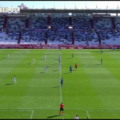
The Estadio Carlos Belmonte opened on 9 September 1960, during the Albacete Fair, with a friendly between Albacete Balompié, then in the Spanish fourth tier (Tercera División), and top-flight Sevilla FC. Owned by the city council and located on Avenida de España, the ground has been the home of Albacete Balompié ever since. The pitch measures 105 by 68 metres and is natural grass. With 17,524 seats it is the largest football stadium in Castile-La Mancha, according to LaLiga.
The mayor who designed it
The stadium is named after Carlos Belmonte González (1921-1998), an architect who served as mayor of Albacete from 1956 to 1960. Belmonte also drew up the plans, so the ground opened in the final year of his term and carried his name from the start. The original structure was modest: 9,230 places, 4,230 seated and 5,000 standing, with an athletics track around the pitch, as was common in municipal grounds of the time.
Early improvements
In the 1970s a roof was added over the main seating area and floodlight towers were installed, allowing evening matches. In 1973 the stadium also hosted a stage finish of the Vuelta a España, won in a sprint by the Dutch rider Gerben Karstens. The big change came with Albacete's promotion to La Liga in 1991: that summer the main stand was enlarged and the scoreboard modernised, raising capacity to 15,000, half of it standing.
The top-flight years
Between 1991 and 1996 the Carlos Belmonte welcomed Spain's biggest clubs every other week. It was the era of Benito Floro's side nicknamed the Queso Mecánico (the “Mechanical Cheese”), which finished seventh in 1991-92, one point short of a UEFA Cup place. In 1994-95 Albacete reached the semi-finals of the Copa del Rey, where they were knocked out by Valencia. The club returned to the top flight in 2003 and spent two more seasons there before being relegated in 2005.
The 1998 redevelopment
The most ambitious works took place in 1998. The athletics track and the standing areas were removed, the stands were brought closer to the pitch and new dressing rooms were built, at a cost of around 900 million pesetas. Smaller projects followed: in 2004 the press rooms and VIP area were updated, and in summer 2017, with the Skyline International group as the club's owner, a cosmetic overhaul covered the stands, directors' box, players' tunnel, dressing rooms and press room.
Spain in Albacete
The Spain national team has played five matches at the Carlos Belmonte, each in front of around 18,000 fans. The first, on 10 October 1999, was a 3-0 win over Israel that sealed qualification for Euro 2000. It was followed by a 3-0 win over Northern Ireland in October 2002, a goalless friendly with Russia on 27 May 2006, a 4-0 win over Armenia in September 2008 and a 2-0 victory over Georgia on 15 October 2013. Andrés Iniesta, born in Fuentealbilla in the province of Albacete, won his first cap against Russia; Bojan Krkić debuted against Armenia and Alberto Moreno against Georgia, the night Isco played his first competitive international. The ground also hosted Spain's Olympic team in 1988 and the under-21 side in 1993, 2016 and 2018.
Other events
Sting played a concert there in 2006 in front of some 12,000 people, and in 2007 the stadium staged the final of the Under-17 Club World Cup. On 15 June 2014 Albacete's women's team clinched their first promotion to the top division at the ground, watched by more than 4,000 supporters. On 5 September 2015 Alejandro Sanz and Pablo Alborán drew 18,000 spectators to a concert marking the 400th anniversary of the second part of Don Quixote. During the pandemic in 2020, Valencia, Cádiz and Alcorcón used it as an alternative venue, and in 2021 the Spanish Rugby Federation chose it to host the final of the rugby Copa del Rey.
ADVERTISEMENT
Profile compiled by the VAVEL Editorial Team from historical records and official competition data. · Editorial policy