
Team
Veracruz · History

Other languages2
ADVERTISEMENT
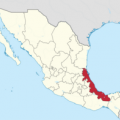
Club Deportivo Veracruz, universally known as the Tiburones Rojos (Red Sharks), was the football club of the port city of Veracruz, on Mexico's Gulf coast, and for almost eight decades the sporting emblem of one of the oldest cities in the Americas. Founded on 9 April 1943, dressed in red and white and forever tied to the Estadio Luis «Pirata» Fuente, Veracruz won two league championships in the 1940s, two Mexican Cups separated by nearly seven decades, and a reputation as a side that was fearsome at home and fragile away from it. Its story ended abruptly on 5 December 2019, when the Mexican Football Federation disaffiliated the club from Liga MX over unpaid debts and breaches of the league's statutes. Since then the Veracruz name has survived as an open wound and as a comeback project that, in 2026, still has not materialised.
Club Deportivo Veracruz, universally known as the Tiburones Rojos (Red Sharks), was the football club of the port city of Veracruz, on Mexico's Gulf coast, and for almost eight decades the sporting emblem of one of the oldest cities in the Americas. Founded on 9 April 1943, dressed in red and white and forever tied to the Estadio Luis «Pirata» Fuente, Veracruz won two league championships in the 1940s, two Mexican Cups separated by nearly seven decades, and a reputation as a side that was fearsome at home and fragile away from it. Its story ended abruptly on 5 December 2019, when the Mexican Football Federation disaffiliated the club from Liga MX over unpaid debts and breaches of the league's statutes. Since then the Veracruz name has survived as an open wound and as a comeback project that, in 2026, still has not materialised.
A club born from a merger in the port
Veracruz emerged in April 1943 from the union of two regional sides, Iberia de Córdoba and Veracruz Sporting Club, exactly when Mexican football was turning professional. The idea behind the merger was straightforward: the port, the country's commercial and customs capital, wanted a team capable of competing with the giants of central Mexico. The city supplied a seafaring identity and a crowd that turned every match day into a celebration with son jarocho playing in the background. The Red Sharks nickname arrived early and settled on the crest, the shirts and the everyday language of a city that simply called the club «el Tibu».
The golden age: two league titles
Veracruz needed no time at all to win. Barely three years after its foundation it was crowned Mexican league champion in 1945-46, and it repeated the feat in 1949-50, a campaign that included one of the most famous routs in Mexican football history, a 14-0 win over Monterrey. In between, in 1947-48, it lifted its first Copa México by beating Guadalajara 3-1. That late-1940s generation turned the port into a feared destination and set a bar the club would never reach again in the league: the titles of 1946 and 1950 remain, more than seventy years later, the club's only top-flight stars.
The Estadio Luis «Pirata» Fuente
The Shark's home is one of the most characterful grounds in Mexico. The Estadio Luis «Pirata» Fuente, named after one of the great figures of football in Veracruz, was completed on 17 March 1967 and formally inaugurated on 19 March 1968, timed to coincide with the passage of the Olympic torch ahead of the Mexico 1968 Games. Built a few metres from the sea, with humid heat that punished every visitor and stands sitting right on top of the pitch, the «Pirata» earned a reputation as a fortress. A refurbishment completed in 2025 left it with a capacity of roughly 28,700, ready to host professional football again even if no longer in the colours of the club founded in 1943.
ADVERTISEMENT
A century of promotions and relegations
Few Mexican clubs have lived through so many swings. Veracruz holds the record for four relegations from the top flight, suffered in 1951-52, 1978-79, 1997-98 and 2008, and as many resurrections from the second tier. That pattern defined its personality: seasons of hope that ended in financial trouble, squads rebuilt every summer and local idols who left at the first decent offer. The club learned to survive through promotions and franchise purchases, a common mechanism in Mexican football that exposed its structural fragility.
The Fidel Kuri era and the 2016 Copa MX
The club's final chapter was defined by the Kuri family, with Fidel Kuri Grajales as owner and Fidel Kuri Mustieles as president. That period delivered Veracruz's only major trophy of the 21st century: on 13 April 2016, at the Pirata Fuente itself, the Sharks thrashed Necaxa 4-1 to win the Clausura 2016 Copa MX under Chilean-Mexican coach Carlos Reinoso. It was a title with a historical flavour, arriving sixty-six years after the 1950 league championship. That night of celebration on the seafront turned out to be the golden farewell of a club already deep in cash-flow trouble.
The collapse and the 2019 disaffiliation
The end came quickly and brutally. Between September 2018 and October 2019, Veracruz went 41 competitive matches without a win, a humiliating run that coincided with unpaid wages, protests on and off the pitch and sporting sanctions. The affair became a national scandal and led to the Mexican Football Federation assembly of 5 December 2019, which approved the club's disaffiliation, froze the franchise and barred Fidel Kuri from Mexican football. The ruling left the port without a professional team and opened years of litigation and unfulfilled promises of a return. Beyond the trophies, Veracruz survives in the memory for what it represented: the red and white, the shark on the crest and the port's habit of following the team with danzón and jarana made the Sharks one of the most recognisable identities in the country, far beyond what their results suggested.
Football in the port in 2026
Professional football returned to the city by another route: Piratas Fútbol Club, founded on 22 April 2026 and based in Boca del Río, joined the Liga de Expansión MX with the refurbished Estadio Luis «Pirata» Fuente as its ground. The name deliberately avoided the «Veracruz» brand to steer clear of legal disputes. The new club's arrival also pushed Racing de Veracruz to announce, in August 2026, its relocation to San Juan Bautista Tuxtepec. In parallel, the state governor Rocío Nahle confirmed in late August 2026 that Fidel Kuri was working on a project to bring the Tiburones Rojos back to the Mexican first division, without federation approval or a guaranteed top-flight place.
ADVERTISEMENT
Profile compiled by the VAVEL Editorial Team from historical records and official competition data. · Editorial policy