



Ask an offensive coordinator preparing a December game plan or a kicker warming up two hours before kickoff, and neither cares much about luxury suites or giant video boards. They care about wind swirls inside open stadium corners, whether a retractable roof is closing ninety minutes before kickoff, and what kind of cleats bite cleanest into the playing surface. Across the NFL, 32 franchises play their home schedules across 30 stadiums, creating wild weekly swings from 72-degree indoor tracks in Inglewood and Arlington to frozen hybrid grass in Green Bay and thin mountain air in Denver.
Which NFL Stadiums Have Domes, Retractable Roofs, Grass, or Turf?
The 32 NFL franchises play across 30 stadiums consisting of five fixed indoor or canopy domes, five retractable-roof venues, and 20 open-air stadiums, split almost evenly between natural grass or hybrid grass fields and modern monofilament synthetic turf after clubs phased out slit-film surfaces.
ADVERTISEMENT
| Stadium Name | Home Franchise(s) and City | Roof Configuration | Exact Playing Surface |
|---|---|---|---|
| Acrisure Stadium | Pittsburgh Steelers (Pittsburgh, PA) | Open-Air Stadium | Natural Kentucky Bluegrass |
| Allegiant Stadium | Las Vegas Raiders (Las Vegas, NV) | Fixed Translucent ETFE Dome | Natural Bermuda Grass on Roll-Out Tray |
| Arrowhead Stadium | Kansas City Chiefs (Kansas City, MO) | Open-Air Stadium | Natural NorthBridge Bermudagrass |
| AT&T Stadium | Dallas Cowboys (Arlington, TX) | Retractable Roof | Hellas Matrix Helix Synthetic Turf |
| Bank of America Stadium | Carolina Panthers (Charlotte, NC) | Open-Air Stadium | FieldTurf Synthetic Surface |
| Caesars Superdome | New Orleans Saints (New Orleans, LA) | Fixed Indoor Dome | Turf Nation S5-M Synthetic Turf |
| Empower Field at Mile High | Denver Broncos (Denver, CO) | Open-Air (5,280 ft Altitude) | Natural Kentucky Bluegrass |
| EverBank Stadium | Jacksonville Jaguars (Jacksonville, FL) | Open-Air Stadium | Natural Tifway 419 Bermudagrass |
| Ford Field | Detroit Lions (Detroit, MI) | Fixed Indoor Dome | FieldTurf CORE Monofilament Turf |
| Gillette Stadium | New England Patriots (Foxborough, MA) | Open-Air Stadium | FieldTurf CORE Synthetic Turf |
| Hard Rock Stadium | Miami Dolphins (Miami Gardens, FL) | Open-Air with Seat Canopy | Natural Paspalum / Tifway Bermudagrass |
| Highmark Stadium | Buffalo Bills (Orchard Park, NY) | Open-Air with Partial Canopy | Heated Natural Kentucky Bluegrass / A-Turf |
| Huntington Bank Field | Cleveland Browns (Cleveland, OH) | Open-Air Lakefront Stadium | Natural Kentucky Bluegrass |
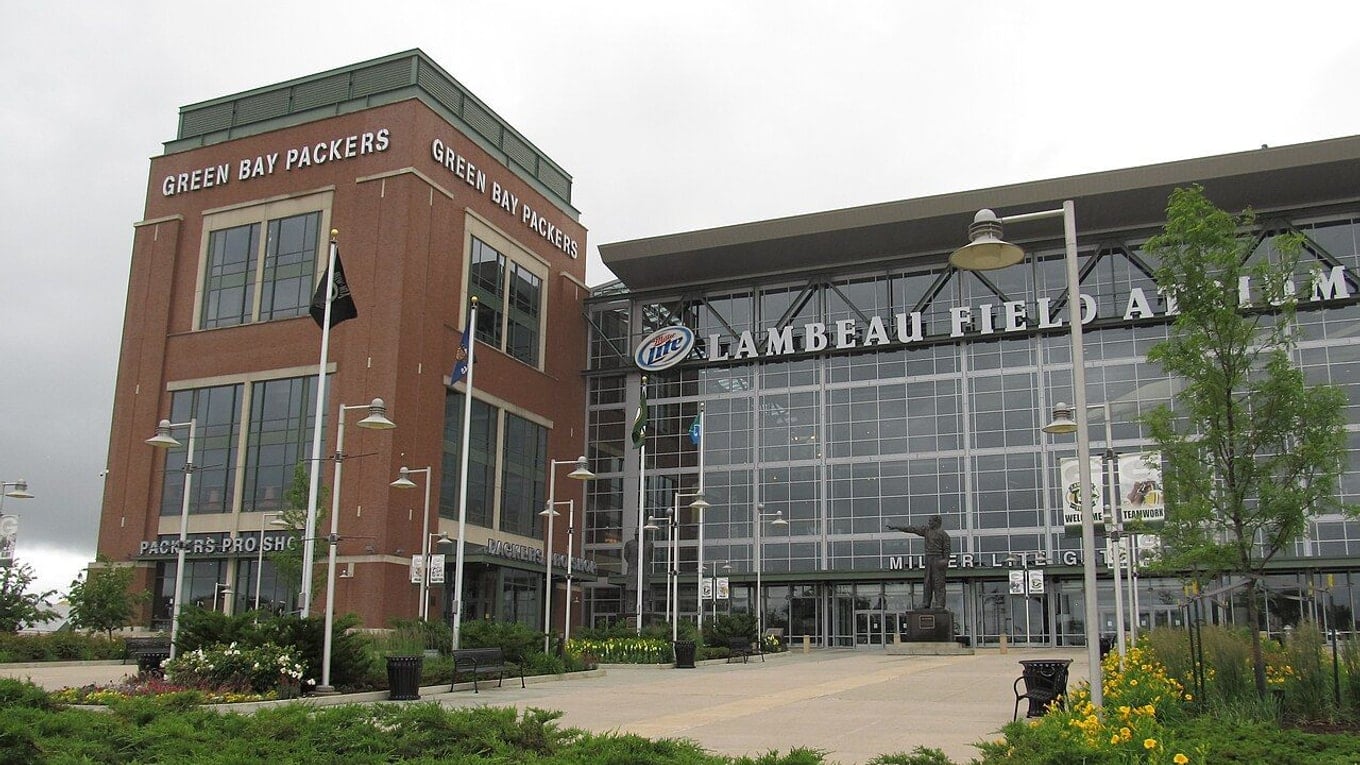
| Lambeau Field | Green Bay Packers (Green Bay, WI) | Open-Air Frozen Tundra | Kentucky Bluegrass with SISGrass Hybrid |
| Levi's Stadium | San Francisco 49ers (Santa Clara, CA) | Open-Air Stadium | Natural Tifway II Bermudagrass |
| Lincoln Financial Field | Philadelphia Eagles (Philadelphia, PA) | Open-Air Stadium | Tahoma 31 Bermudagrass / SISGrass Hybrid |
| Lucas Oil Stadium | Indianapolis Colts (Indianapolis, IN) | Retractable Roof | Hellas Matrix Helix Monofilament Turf |
| Lumen Field | Seattle Seahawks (Seattle, WA) | Open-Air with Wide Roof Overhangs | FieldTurf CORE Synthetic Turf |
| M&T Bank Stadium | Baltimore Ravens (Baltimore, MD) | Open-Air Stadium | Natural Bermuda / Perennial Ryegrass |
| Mercedes-Benz Stadium | Atlanta Falcons (Atlanta, GA) | Retractable Pinwheel Roof | FieldTurf CORE Synthetic Turf |
| MetLife Stadium | NY Giants and NY Jets (East Rutherford, NJ) | Open-Air Shared Venue | FieldTurf CORE Multi-Layer Turf |
| Nissan Stadium | Tennessee Titans (Nashville, TN) | Open-Air Stadium | Matrix Helix Turf with Organic Infill |
| Northwest Stadium | Washington Commanders (Landover, MD) | Open-Air Stadium | Natural Tahoma 31 Bermudagrass |
| NRG Stadium | Houston Texans (Houston, TX) | Retractable Roof | Hellas Matrix Synthetic Turf |
| Paycor Stadium | Cincinnati Bengals (Cincinnati, OH) | Open-Air Riverfront Stadium | FieldTurf CORE Monofilament Turf |
| Raymond James Stadium | Tampa Bay Buccaneers (Tampa, FL) | Open-Air Stadium | Natural Celebration Bermudagrass |
| SoFi Stadium | LA Rams and LA Chargers (Inglewood, CA) | Fixed Canopy with Open Sides | Hellas Matrix Turf with Helix Technology |
| Soldier Field | Chicago Bears (Chicago, IL) | Open-Air Lakefront Stadium | Natural Tahoma 31 Bermudagrass |
| State Farm Stadium | Arizona Cardinals (Glendale, AZ) | Retractable Roof | Natural Tifway 419 Bermuda Roll-Out Tray |
| U.S. Bank Stadium | Minnesota Vikings (Minneapolis, MN) | Fixed Indoor ETFE Roof | Act Global Xtreme Monofilament Turf |
Why are there 30 stadiums for 32 teams? Two mega-market venues pull double duty every autumn. MetLife Stadium in the New Jersey Meadowlands hosts both the New York Giants and New York Jets, forcing stadium crews to flip end-zone paint and midfield logos overnight when both clubs play home dates on the same weekend. Out west in Inglewood, Stan Kroenke's $5.5 billion SoFi Stadium houses both the Los Angeles Rams and Los Angeles Chargers underneath a sweeping translucent ETFE canopy that blocks rain while leaving the perimeter open to California coastal breezes. That open-sided architecture produced one bizarre quirk back in 2021, when lightning near Inglewood actually triggered a weather delay inside a covered stadium.
Fixed Domes, Retractable Roof Rules, and Roll-Out Grass Trays
Indoor football splits neatly into five fixed-roof venues (serving six teams counting both Los Angeles clubs) and five retractable-roof buildings in Arlington, Atlanta, Glendale, Houston, and Indianapolis. Do not assume a retractable roof means fresh air every sunny afternoon. Under NFL game operations rules, the home club alone decides whether its retractable roof opens or stays shut, and that decision has to be locked in 90 minutes prior to kickoff unless dangerous weather rolls in during play. Because crowd noise bounces right back onto visiting offensive tackles when the lid stays closed, franchises like Houston, Indianapolis, and the Dallas Cowboys leave their roofs shut for the overwhelming majority of home kickoffs.
Dallas built AT&T Stadium on an east-west axis rather than the traditional north-south orientation, creating another famous afternoon quirk: on clear October and November late-afternoon kickoffs, blinding low-angle sunlight pours straight through the giant glass end-zone doors onto receivers tracking passes in the end zone.
Notice too that playing indoors does not automatically force a franchise onto synthetic turf. Two desert franchises engineered massive movable trays so their rosters can play indoors on real grass without starving the sod of UV sunlight all week. Arizona pioneered the concept in Glendale in 2006 with an 18.9-million-pound Tifway 419 Bermuda grass tray that rolls outside through a slot in the south wall on steel rails. Las Vegas copied and upgraded that engineering at Allegiant Stadium in 2020, rolling a 19-million-pound natural Bermuda field across 72 motorized tracks into the Nevada sun between Raiders home games while UNLV plays college games on a separate artificial surface underneath.
ADVERTISEMENT
Natural Grass, Hybrid Stitching, and Why Slit-Film Turf Vanished
Nothing ignites fiercer debate between owners and the NFL Players Association than grass vs artificial turf. Player union injury tracking repeatedly pointed toward higher non-contact lower-extremity injury rates when cleats lock into synthetic fibers without giving way the way natural dirt divots do, and nowhere did players complain louder than over old slit-film synthetic turf.
Slit-film turf used flat, net-like shredded plastic ribbons that trapped cleat studs during hard cuts. By 2022, six NFL stadiums still used slit-film fields, including MetLife Stadium, Paycor Stadium, Lucas Oil Stadium, U.S. Bank Stadium, Ford Field, and Caesars Superdome. Pressure from the NFLPA and the joint NFL-NFLPA Field Surface Safety and Performance Committee triggered a league-wide overhaul across 2023 and 2024. MetLife ripped out its slit-film carpet for heavy-infill FieldTurf CORE in 2023, Detroit and Minnesota upgraded to monofilament surfaces, and Cincinnati and Indianapolis replaced the final holdout slit-film fields ahead of the 2024 season.
Cold-weather clubs committed to natural grass solved late-season mud pits with European soccer technology instead. Both Lincoln Financial Field in Philadelphia and Lambeau Field, home of the Green Bay Packers, weave synthetic SISGrass fibers inches deep into natural grass root zones above miles of underground heating pipes. Even in single-digit January playoff games at Lambeau, the Kentucky bluegrass roots stay anchored without freezing solid like concrete, while Chicago upgraded notorious Soldier Field from chewed-up bluegrass to cold-tolerant Tahoma 31 Bermudagrass in 2022 and Buffalo designed its new Orchard Park stadium around a canopy-shielded heated natural grass pitch.
Altitude at Mile High and Sun Architecture in Miami
Two open-air stadiums weaponize local geography better than anywhere else in American sports. In Denver, Empower Field at Mile High sits exactly 5,280 feet above sea level, where air density drops roughly 17 percent below sea-level stadiums in Miami or Baltimore. Visiting defensive linemen suck oxygen masks by the middle of the second quarter because fewer oxygen molecules reach the bloodstream per breath, while reduced aerodynamic drag adds roughly four to five yards of carry onto every deep kickoff, punt, and 58-yard field goal attempt.
Down in South Florida, Hard Rock Stadium renovated its open-air bowl in 2016 with an angled overhead shade canopy engineered down to the degree of September sun angles. Throughout 1:00 p.m. Eastern kickoffs in September and October, Miami's home sideline sits completely bathed in cool shade while the visiting bench bakes directly in 95-degree tropical sun, regularly creating a 15- to 25-degree surface temperature gap between the two sidelines by the fourth quarter.
Related Official Rulebooks & Guides on VAVEL
ADVERTISEMENT
