



We live in the golden age of the NHL right now in terms of parity. Just looking at the 2014 Playoffs provides a perfect example of this. In the first round alone we saw just how advantageous home ice advantage was in the Colorado-Minnesota series, we saw the that a 3-0 series lead isn’t safe in the LA-San Jose series, in the second round we have seen the NY Rangers climb back from 3-1 in their series with Pittsburgh to force a decisive Game 7, and we continue to see teams jump out to 2-0 series leads, only to be heading into Game 5 with the series all squared up at 2 games apiece.
With this amount of parity around the league it is the little things that become game-changers.
The Little Things
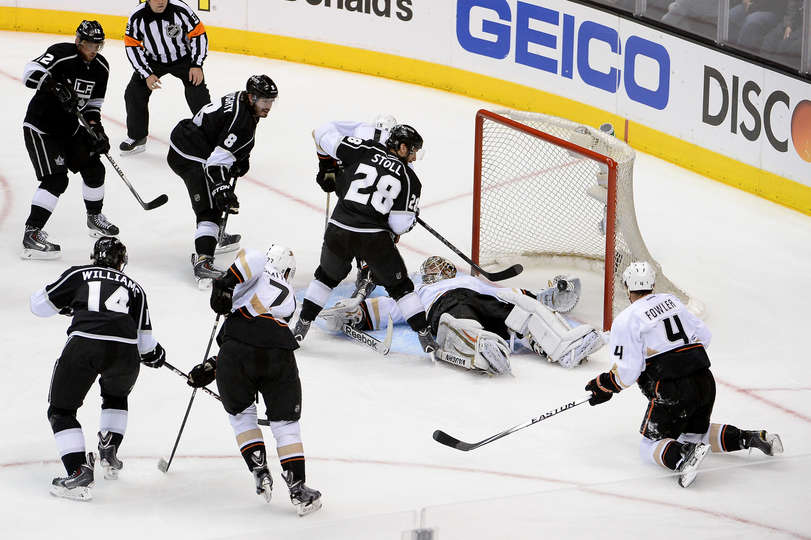
In Anaheim it was John Gibson coming into Game 4 and shutting the door completely on a Los Angeles team that ran roughshod over those Ducks. In the final forty minutes of that game, LA held Anaheim to three shots! Yet it was Anaheim who skated away with a 2-0 victory to send the series back to Anaheim tied at 2-2. That was an incredible performance by LA and subsequently by John Gibson. Because of this performance the Ducks will be playing for the series lead in Game 5 instead of their lives.
In the Pittsburgh-New York series the momentum has swung 100% in the opposite direction in the past two games. Pittsburgh held a 3-1 series lead heading into the weekend, and they appeared to have all guns firing. Then the momentum changed, personal issues surrounding the Rangers led to a rally around one of their most experienced veterans in Martin St. Louis. They have won two straight games, forcing a Game 7 on Tuesday night and will be riding a wave of momentum into that game. Obviously personal tragedy is not the reason New York has battled back, but it is hard to debate that they aren't using it as a rallying point in this series.
In the Montreal-Boston series Boston has been the better team for the most part. Yet they find themselves playing in Montreal tonight in Game 6 with one win still seperating them from the Eastern Conference Finals. On paper this series should’ve been over in 5 games tops, but here we are. Carey Price and P.K. Subban have put the Canadiens on their shoulders and carried them through to a Game 6, with a chance to force a Game 7. In Game 5 we saw just how important Carey Price has been. Price had his worst game of these Playoffs and Boston got their easiest victory of this series.
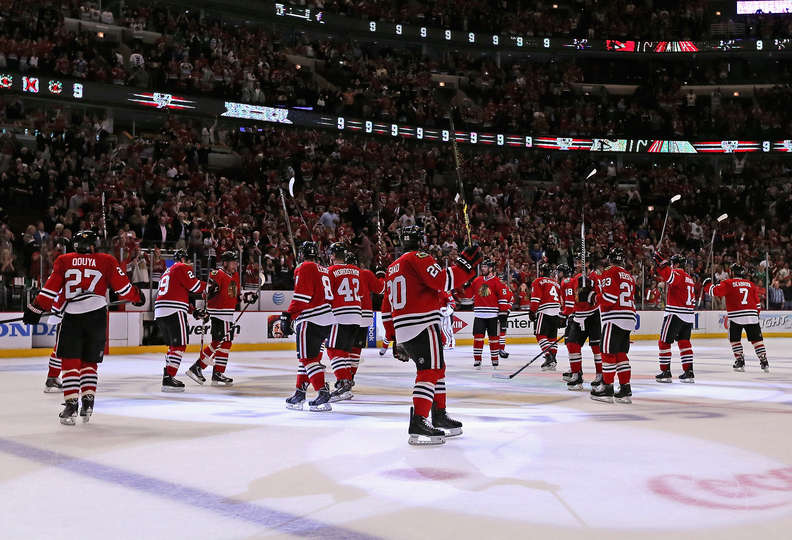
Finally in the Chicago-Minnesota series it has been home ice advantage which has been the difference. Both teams have won on home ice, and been unable to find success on the road. Minnesota is not the team that you would imagine knocking off the defending Stanley Cup Champions. Yet they haven’t lost on home ice, and if that trend continues they will find themselves playing in their second Game 7 of these playoffs.
The point is that right now in the NHL the difference between the top playoff teams and the bottom playoff teams is miniscule. Which means the little things become massively important. Momentum, home-ice advantage, outstanding individual performances, and rallying around teammates in times of need all become factors in the outcome of a game. We can’t with any degree of certainty predict the outcome on any given night in these Playoffs.
It means a rookie goaltender can step into his first career post season game and post a shutout victory, right when his team desperately needs it. It means we can look a goaltender and a defenceman from the Canadiens stop the heavily favorited Boston Bruins from cruising through the playoffs en route to a Stanley Cup appearance. It also means that one second a team can look like they have no hope of winning, and then a three game winning streak happens and they find themselves moving on while the team that was one win away is sent home packing. That is fantastic. It makes for one of the most exciting and unpredictable postseasons in recent memory.
Corsi on the Rise
Corsi and other advanced statistics provide a fantastic tool for evaluating games, players, and trends in hockey. They do not replace looking hockey games, any individual preaching these advanced stats will be the first to tell you this. What they do is they allow us to look the hockey, and research more thoroughly the events of that game. When you are looking a hockey game it is relatively easy to pick out which team is controlling said game. But when you want to know how an individual player the traditional “stats” line isn’t enough. For example, a player can score in a hockey game but still have the worst game of his career. Similarly a guy can be held scoreless but be a huge factor in the outcome of a hockey game. When we look we don’t always pickup on the negative or positive contributions of individual players to the outcome of the game. The advanced stats give us the ability to research more heavily who is contributing positively and who is contributing negatively each and every night.
This will allow teams and hockey analysts to more thoroughly identify just how relevant/irrelevant individual players, team systems, and coaching styles are on the outcome of a game.
Crosby/Stastny Comparison
While half the NHL fans and analysts are touting how “poor” Crosby has been in these playoffs, the advanced stats will tell us a completely different story. He has been the third best possession player in these Playoffs with a 61.1% CF%. So while Crosby is not dominating the “stats” line of old, he is indeed still driving the bus in Pittsburgh. He is outplaying every player he steps on the ice against. While he may not be lighting the lamp consistently, he is pushing the pace, controlling the play, driving the Penguins in a positive direction every time he is on the ice. So while his luck may be down, this is far different from being a “no show”.
Alternatively these stats can point out just how poor/lucky a player may be, no matter how the traditional stats line may appear. Looking at a guy like Paul Stastny, who was all the rage in the first round for his success and chemistry with Nathan MacKinnon, we see that Stastny was consistently losing the possession battles when he was on the ice. Stastny was still scoring and no doubt he sent his stock through the roof for his upcoming costless-agency pay-day. However, he carried a 43.8% CF% through the Avs first round loss to Minnesota. This is a very poor number, but we can delve even deeper than that to identify whether Stastny was truly the problem. In reality, Paul Stastny was performing admirably. The CF% indicates this wasn't the case, but thankfully advanced stats reach far beyond this. He was playing against the best opposition players in Minnesota. His QoC (Quality of Competition) number sits tied for second in the Playoffs at 31.2%. This tells us that while his possession numbers were poor, they were poor while playing against the best players the Minnesota Wild had to offer.
The Avalanche themselves were the worst possession team in these Playoffs. They were bottom six in the entire league this season. This is where CF% Rel comes into play, which gives us an indication of how Stastny compares with the rest of his Avalanche teammates. With a +4.0% CF% Rel in the playoffs, it becomes obvious that Stastny was indeed performing far better than his CF% tells us. It is more evident that the stlye of the Avalanche as a team are bringing down individual Corsi ratings of their players. The advanced stats are not so trifle as to rest on any one measurement. They provide different levels of evaluation which give us the ability to delve deeper into the reasons for success/failures, while measuring the effect of many different factors. We can use these metrics to identify zone starts, player usage, quality of compeition, luck, and much more.
The hockey world is slowly moving beyond the traditional stats line of Goal, Assist, Points. There are more factors going into the success of players and teams. The ability to evaluate players on such an advanced level will mean that false praise and incorrect criticism should eventually move to the back burner. We can evaluate the game of hockey on a deeper level, which will mean better teams, better players, and less of the “intangible tough guy who is good in the room” type players. It will be the teams who embrace these metrics fastest that will have an advantage in the NHL. Teams that refuse to accept this new reality will continue to flounder and employ players who provide no benefit to winning a hockey game.
So look the game, always, but don’t rely on traditional metrics for measuring success. Open yourself up to the advanced stats lines, for it is these metrics that will lead the NHL into a golden age of evaluating players and teams.
They are not the be-all-end-all of hockey. Nobody who uses advanced stats would tell you this. The games still need to be played and anything can happen once the puck drops. That is one of the ageless beauties of Sport. This is why any team that makes the Playoffs has a legitimate shot at winning the Stanley Cup. With such parity around the league these advanced stats that can not be ignored because any advantage, no matter how big or small, can mean the difference between winning and losing.
Images within courtesy of Getty Images. Advanced metrics and information relating can be found at extraskater.com.
