



Sauber driver Zhou Guanyu has battled not only the demands of the sport itself but also persistent abuse throughout his career.
As the first Chinese driver in Formula One and a top performer from the Ferrari academy, Zhou faced unwarranted hostility during his 2022 F1 debut, which often overshadowed his notable successes before his first race.
As noted, racism has unfortunately entered the world of racing, evident from the surge of derogatory comments and tweets targeting the Chinese.
Zhou has never won a Formula 1 race. In 58 races since 2022, he’s yet to even reach the podium. Therefore, Zhou doesn't have a contract for 2025.
As the 2024 season unfolds, Nico Hulkenberg is the only driver confirmed for a Sauber seat, leaving the futures of both Valtteri Bottas and Zhou Guanyu, who currently race for the team, in doubt.
His chances of racing in the competition in 2025 are 50/50, but he is trying to believe that nothing is lost.
Yet, despite all the challenges in the racing world, he frequently faces criticism online, being labeled as a "pay driver" and accused of exploiting the "racism card" when addressing this issue.
The Attitude is Different
With new faces joining the grid, including Oliver Bearman signing his Haas contract and prospects like Kimi Antonelli and Jack Doohan on the rise, Guanyu has observed a noticeable difference in how these racers are treated compared to him.
“It’s quite clear in 2021, when I signed a contract with Alfa Romeo, there was a lot of racist abuse people were giving because they didn’t follow my career,” Zhou told The Race.
“You come around with third place in F2, winning four races that year—and (now) you see a driver (Oliver Bearman) outside the top 10 (in F2) at the moment is getting a seat, and there’s a lot of support for him. It shows (prejudice around) nationality is a reality.''
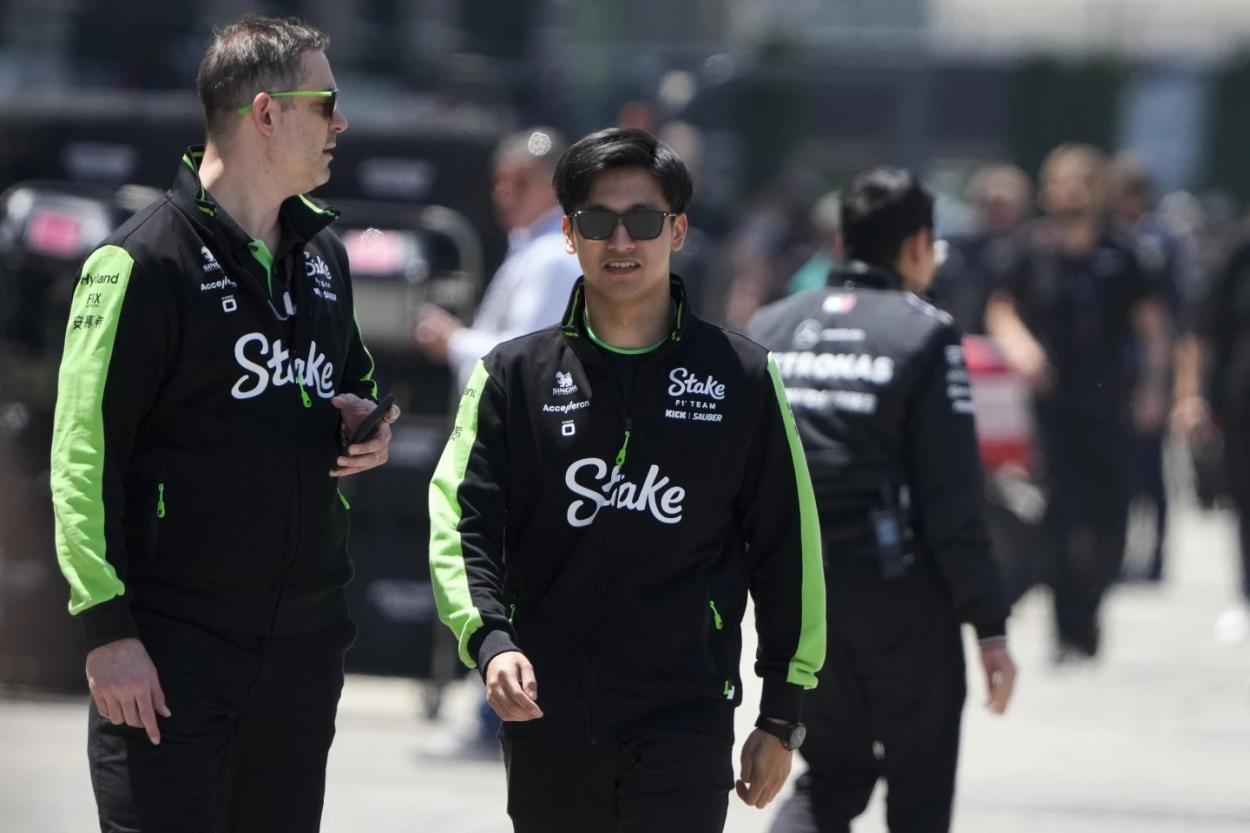
Building a global racing career from Asia has always been a formidable challenge, with one of the largest barriers being the lack of representation.
"I remember when I was racing for my first championship in Europe [the Rotax Max Euro Challenge] and there was no national anthem or national flag on the podium after winning," the 25-year-old said in an interview. "They couldn't imagine that one day there would be a Chinese driver, let alone a champion."
Before joining F1, Zhou had a promising career in junior racing. He started karting in China, moving to Europe in 2012 to further his career. By 2015, he had joined the Ferrari Driver Academy, competing in the Italian F4 Championship, where he finished second overall. He then advanced to the FIA Formula 3 European Championship, achieving multiple podiums.
In 2019, Zhou moved to Formula 2 with UNI-Virtuosi Racing, winning the Anthoine Hubert Award for best rookie. Over three seasons in Formula 2, he secured multiple wins and podiums, finishing third overall in 2021. His consistent performance thus paved the way for his entry into F1 with Alfa Romeo in 2022.
Zhou mentioned that the prejudice of him being ''incompetent'' began to emerge long before he even competed in his first F1 race.
“In November of 2021, when Alfa Romeo announced I’d be in the seat, I knew what people thought of me. It was impossible not to hear it. And it’s hard, because I worked my entire life for an opportunity like that''.
''My family sacrificed a lot. We moved from China to Sheffield when I was 12. It took everything. Some luck, too. And then, before I ever get a chance to race, it’s, ‘he doesn’t deserve it, it should be so-and-so; he’s only there because of money’'.
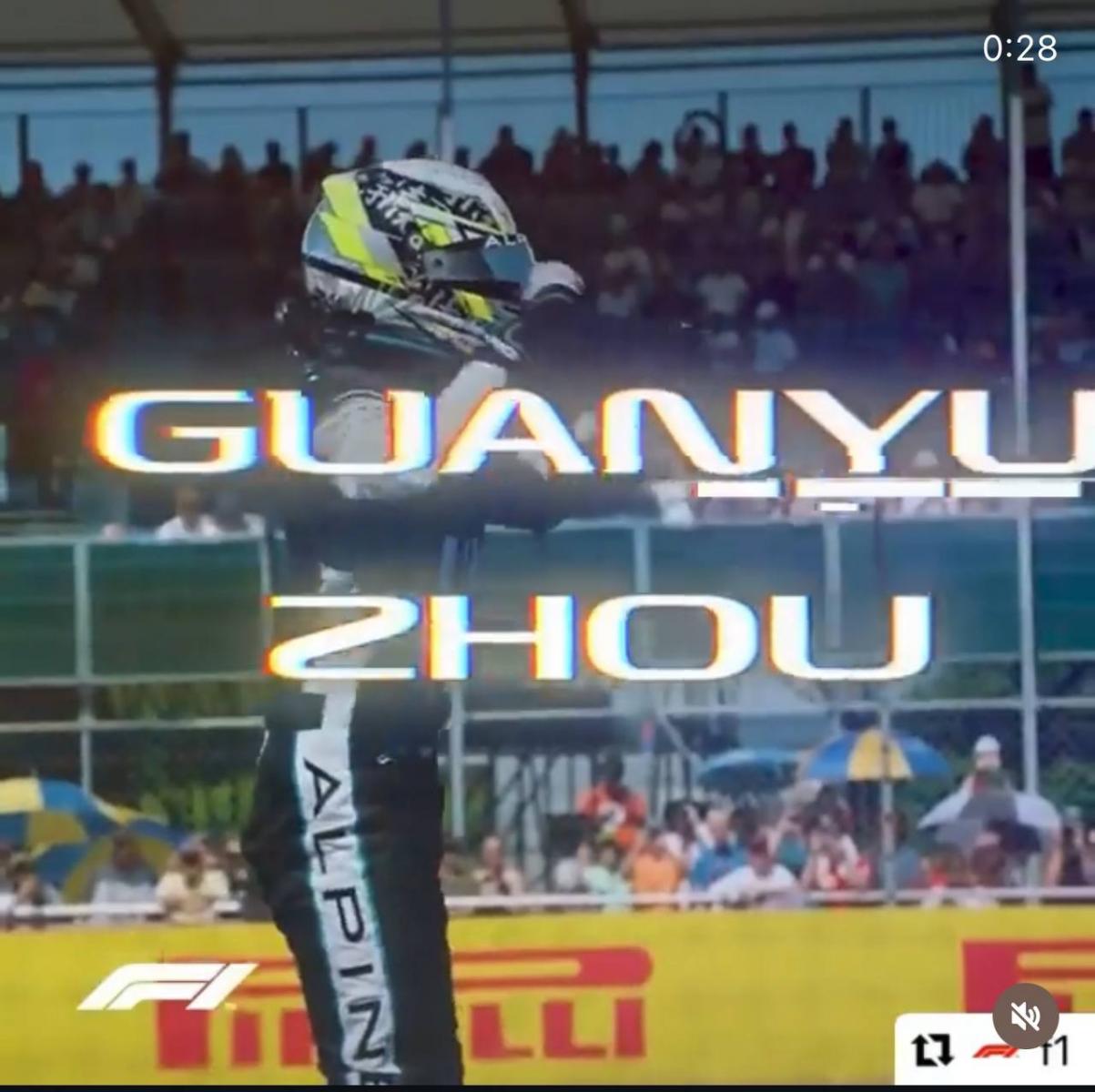
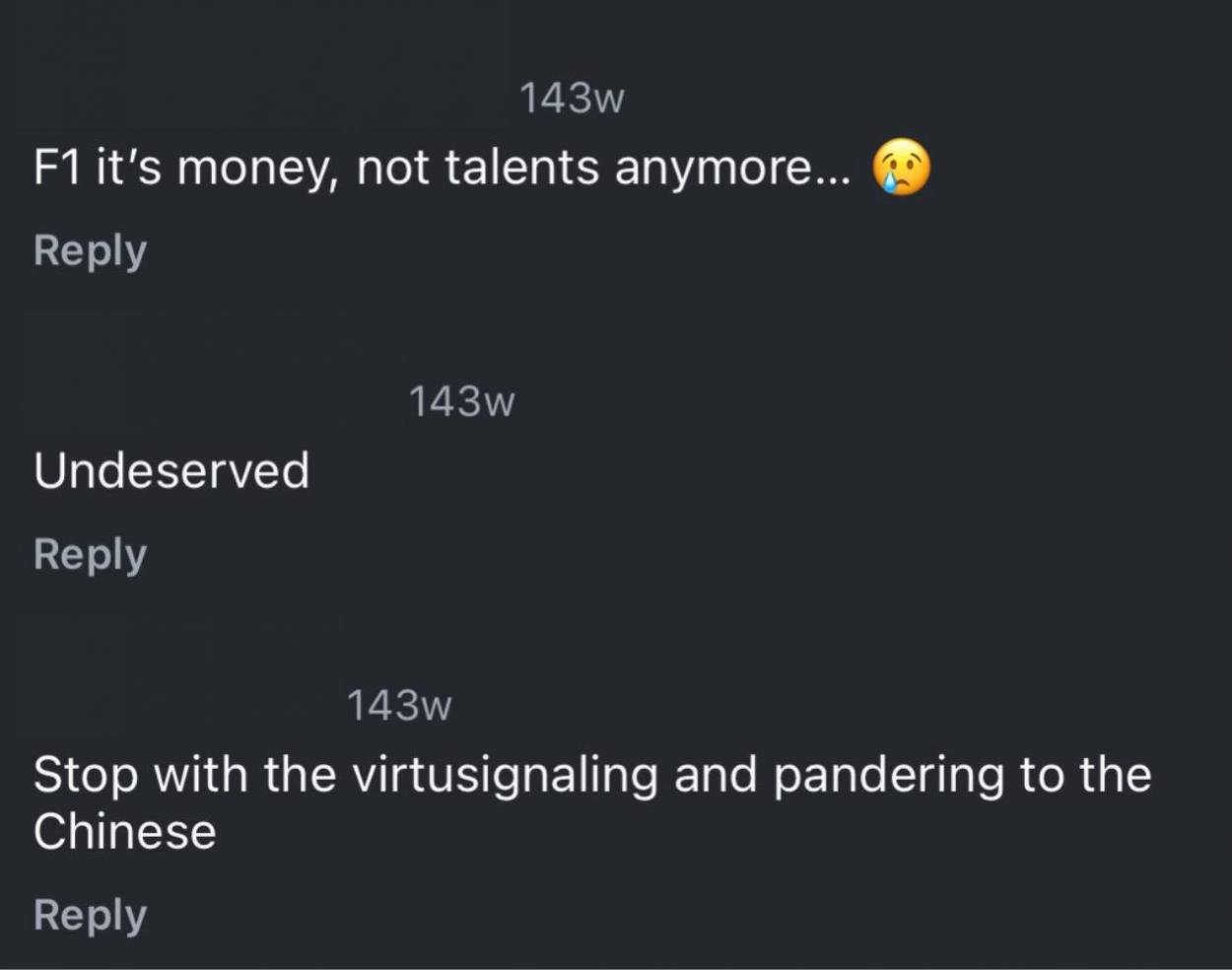
The portrayal of the media isn't always pleasant as well. The Race, an outlet to whom Zhou gave an interview, chose to name the article ''The 'suffering' F1 driver on his slump, racism and his future''. While the goal of grabbing the audience's attention was achieved, the ethical core of writing a news piece—maintaining neutrality and respecting the subject—has been compromised.
''Still just a person, a guy with a phone who can hear the noise''
It is true that drivers from Europe currently dominate Formula One, with only a few exceptions. For instance, with the United States Grand Prix, we have Logan Sargeant representing America, and the Mexican Grand Prix bringing us Checo Pérez.
These drivers are exceptions to the rule, highlighting, on one hand, how difficult (yet possible!) it can be for talent outside of Europe to break into the sport’s upper echelons.
On the other hand, some argue that the inclusion of drivers could be seen as Formula One’s—Liberty Media's—way of making a point: the sport is truly global. Their presence on the grid might serve as a checkpoint, a way to showcase diversity and expand the sport’s appeal beyond its European stronghold.
Regardless of where a driver comes from, it’s essential to recognize their talent and dedication rather than focusing on their ethnicity.
''People are allowed to have their opinions. And there’s a lot of politics in F1, of course. I know that just as well as anyone. From the outside it’s hard to see everything that’s going on. And I’m beyond thankful to be where I am — it’s not lost on me what a privilege it is. But I’m still just a person, a guy with a phone who can hear the noise.''
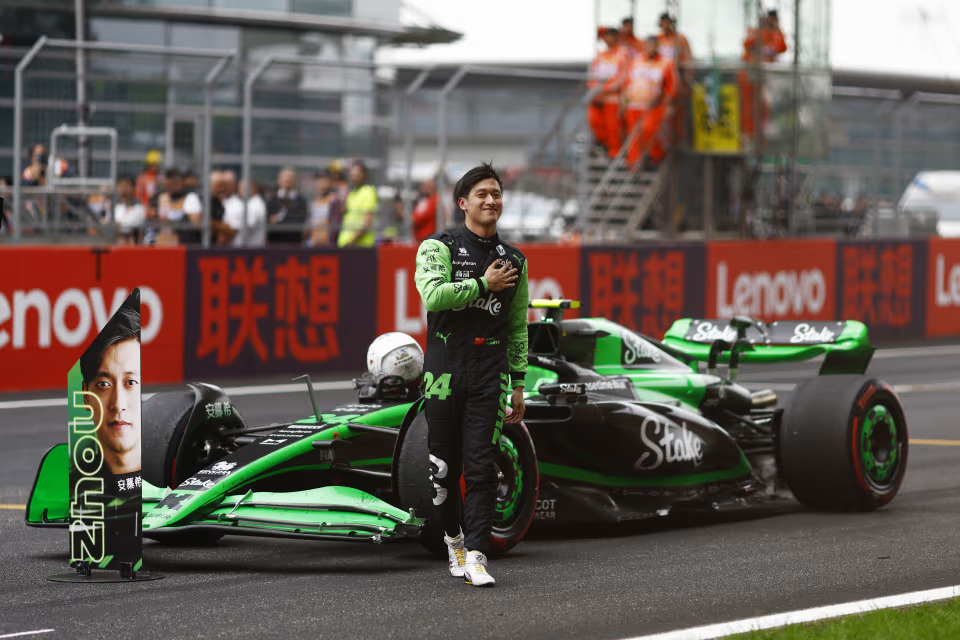
F1 rises above the realm of mere sport, serving as a powerful connection to something much larger. It creates a global spectacle where nations unite, driven by their shared passion for speed, support, and competition. Thus, embodying drivers of different backgrounds is essential for the sport.
This season, for instance, will always remain special for Zhou, as it was the year he made his debut at home during the Chinese Grand Prix in Shanghai. After a four-year hiatus caused by COVID, he finally had the chance to race on the circuit he had dreamed about since he was younger.
It is important to remember that the focus of Formula One should be on the energy and connection the sport provides.
The drivers themselves are not responsible for the sport politics; they are honored to represent their countries on a global stage. Even by not driving the fastest car on the grid, the opportunity to compete is a significant achievement.
Thus celebrating their dedication and the unique spirit they bring to the sport is crucial, as this fosters the excitement and unity that Formula One is known for.
“To be the first Chinese driver in F1 history… it’s everything to me. I’m so proud of where I’m from and the support I’ve received from everyone back home. I race for them. I want to show that, even though we aren’t known for motorsports, we can still be great. That we can be fast. That we are a racing nation.''
