
Coach
Alberto Toril · Biography

Other languages2
ADVERTISEMENT
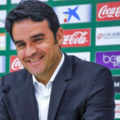
José Alberto Toril Rodríguez was born on 7 July 1973 in Peñarroya-Pueblonuevo, in the province of Córdoba, and came through the Real Madrid academy, which he joined as a youth player. A deep-lying playmaker in central midfield, he spent twelve seasons as a professional between the Spanish first and second divisions. As a coach he took charge of Real Madrid Castilla, Elche and Real Madrid Femenino.
Early years at Real Madrid
Toril played for Real Madrid’s youth side from 1988 to 1991 before stepping up to Real Madrid Castilla, where he made 45 appearances and scored 8 goals up to 1994. In the 1993-94 season he played two La Liga matches for the first team. He was part of the squad that won the 1993 Copa del Rey and the Spanish Super Cup that same year. He also represented Spain at youth level: three caps for the under-16s in 1988-89, four for the under-18s in 1991 and three for the under-21s between 1992 and 1993.
A career between the first and second tiers
In 1994 he joined Celta Vigo on loan and played nine top-flight matches. A year later he signed for Espanyol, where he spent two seasons; 1995-96, with 17 appearances, was his fullest campaign in the top division. In 1997 he moved to Extremadura, the club where he played most often: 74 matches and 5 goals until 2000. He then wore the shirts of Albacete, with 44 appearances and 7 goals between 2000 and 2002, and Racing de Ferrol, with 22 appearances and 2 goals in 2002-03. He finished his professional career at Numancia, who won promotion to the top flight in 2003-04, although he featured in only eight matches. He retired in 2004 with 221 appearances and 22 goals, 44 of those games in the first division.
First steps as a coach
While still playing, he began coaching Racing de Ferrol’s youth team in 2002. In 2004-05 he was assistant coach at Quintanar del Rey. Between 2005 and 2008 he worked in Albacete’s academy, first with the Cadete A side and then with the under-19 team in the División de Honor. In 2008 he returned to Real Madrid to join the club’s technical staff and coached Real Madrid C for half a season. With the Juvenil A side he won Group V of the División de Honor and the Copa de Campeones in 2010.
Castilla and the 2012 promotion
In January 2011 he took over Real Madrid Castilla. In 2011-12 the reserve side won Group 1 of the Segunda División B and, after getting past Cádiz in the play-offs, earned promotion to the Spanish second division. For that season he received the Ramón Cobo award from the coaches’ committee of the Royal Spanish Football Federation in 2012. In 2012-13 Castilla finished eighth in the second tier and stayed up. The following season went wrong. On 19 November 2013, after a 6-0 defeat at Eibar left the team bottom of the table with seven points from fourteen matches, the club dismissed him.
Elche and China
On 28 June 2016 he was appointed head coach of Elche, then in the second division. He led the team in 38 matches and was sacked in April 2017, with the season close to its end. In early 2018 he joined the staff of Chinese club Guangzhou Evergrande, where he worked until 2021.
Real Madrid Femenino and Toluca
On 29 November 2021 he replaced David Aznar as head coach of Real Madrid Femenino. In 2021-22 the team finished third in the league and reached the quarter-finals of the Women’s Champions League. They then finished as league runners-up three seasons in a row, in 2022-23, 2023-24 and 2024-25. He reached two finals and lost both: the 2023 Copa de la Reina, on penalties against Atlético Madrid after a 2-2 draw, and the 2024-25 Spanish Super Cup, against Barcelona. He qualified the team for the Champions League in all four of his seasons, reaching the quarter-finals twice. On 28 May 2025 the club announced his departure after 158 matches and 112 wins. In 2026 he coached Toluca in Mexico’s Liga MX Femenil and left on 7 October 2026, by mutual agreement and for personal reasons, with seven wins, one draw and two defeats in the 2026 Apertura.
ADVERTISEMENT
Profile compiled by the VAVEL Editorial Team from historical records and official competition data. · Editorial policy