
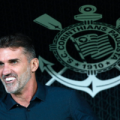
Coach
Vagner Mancini · Biography

Other languages2
ADVERTISEMENT
On the night Paulista drew 0-0 with Fluminense at São Januário in 2005, protecting the 2-0 win from the first leg in Jundiaí, Vagner Carmo Mancini won the Copa do Brasil in his first major job as a coach. The Jundiaí club was then playing in Brazil’s second tier, and the title earned it a place in the 2006 Copa Libertadores, its first international competition. Born on 24 October 1966 in Ribeirão Preto, in the interior of São Paulo state, Mancini spent more than fifteen years as a defensive midfielder before starting a long career in the dugout.
A holding midfielder from São Paulo state
As a player he turned out for Guarani in 1988 and 1989, Portuguesa in 1990 and 1991, Bragantino in 1992 and Botafogo of Ribeirão Preto in 1994. His best year came in 1995 with Grêmio, where he was part of the squad that won the 1995 Campeonato Gaúcho and the 1995 Copa Libertadores, although he played sparingly. He later moved through clubs such as Coritiba, Ponte Preta, Sãocarlense and Ituano. He played for Paulista from 2000 to 2003, spent 2002 on loan at Ceará and won the 2003 Santa Catarina state championship with Figueirense. In 2004 he finished his playing days back at Paulista.
From Paulista to the Emirates
The move to the bench was immediate. In 2004 he replaced Zetti in charge of Paulista and a year later led the Jundiaí side to the 2005 Copa do Brasil, winning 2-0 at the Jayme Cintra stadium and drawing 0-0 in Rio de Janeiro against a top-flight opponent. He then coached Al-Nasr in the United Arab Emirates and returned to Brazil in December 2007 to take over Grêmio. His spell in Porto Alegre lasted two months: he was sacked on 14 February 2008 without having lost any of his six matches.
Vitória and a decade on the move
In March 2008 he joined Vitória, winning the 2008 Bahia state championship. In February 2009 he left for Santos, who dismissed him in July, and in August he returned to Salvador until December. Between December 2009 and March 2010 he coached Vasco da Gama, and that April he took over Guarani, who were relegated at the end of the year. In 2011 he won the Ceará state title with Ceará and in September moved to Cruzeiro, steering them clear of relegation before resigning in May 2012. Short spells followed at Sport, from May to August 2012, and Náutico, from February to April 2013.
Cup finalist with Atlético Paranaense
In July 2013 he took charge of Atlético Paranaense and had one of his strongest seasons: third place in the Brasileirão and a run to the Copa do Brasil final, lost to Flamengo after a 2-0 defeat at the Maracanã in November. Even so, the club did not renew his contract in December 2013. In April 2014 he joined Botafogo, who were relegated to the second tier that same year.
Back to Salvador and a spell in Chapecó
In June 2015 he returned to Vitória and won promotion to Série A that year. In 2016 he won the Bahia state title again and was named best coach of the competition, before leaving in September. For 2017 he signed with Chapecoense, winning the 2017 Santa Catarina state championship and the tournament’s best coach award; he left in July and that same month began a fourth spell at Vitória, which lasted until July 2018.
From São Paulo to Bragantino
In January 2019 he was appointed technical coordinator at São Paulo and coached the team on an interim basis in February. In October 2019 he took over Atlético Mineiro until December, and in 2020 he worked at Atlético Goianiense before arriving at Corinthians in October that year, staying until May 2021. That same year he coached América Mineiro and returned to Grêmio from October 2021 to February 2022. He went back to América Mineiro between April 2022 and August 2023 and then to Ceará, winning the 2024 Ceará state championship. After a brief stint at Atlético Goianiense, he had two spells at Goiás, in 2024 and 2025. On 30 October 2025 he was announced as head coach of Red Bull Bragantino.
ADVERTISEMENT
Profile compiled by the VAVEL Editorial Team from historical records and official competition data. · Editorial policy