


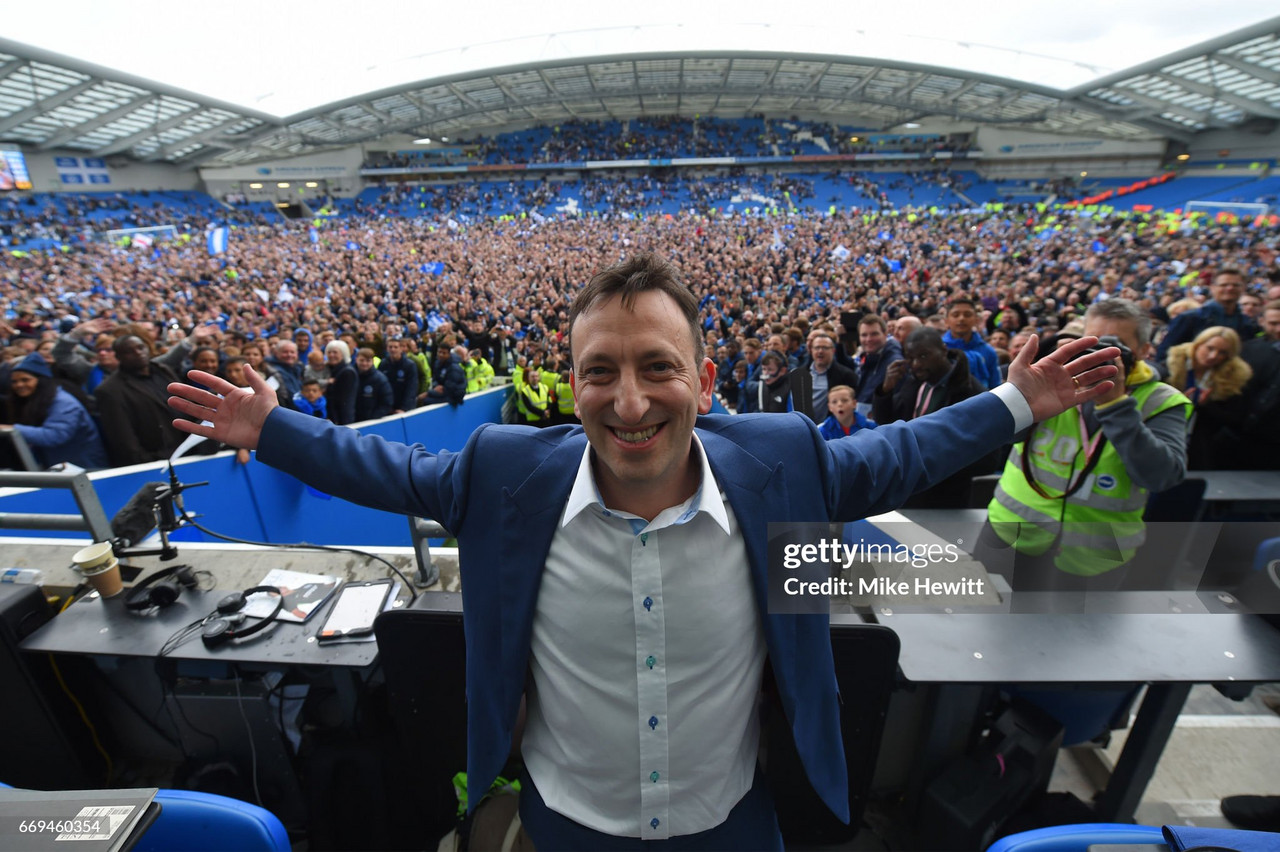

In the summer of 2024, Brighton & Hove Albion made headlines with their aggressive transfer strategy, spending an unprecedented amount of money.
After relatively low spending windows in the last few years, Tony Bloom got his chequebook out this summer.
The Brighton-supporting owner invested a whopping £220 million on a plethora of new signings, aiming to bolster his squad ahead of the new Premier League season.
This placed the Albion second, behind Chelsea, on the most money spent by an English club this window.
Most remarkably, however, Brighton's £170 million net spend placed them first in the worldwide net-spend table. Almost £50 million ahead of second place, Napoli.
This 'pinch-yourself' level of spending was understandably popular with Albion fans, ecstatic with their owner's ambition to see the club back in Europe.
Nevertheless, this transfer approach signals a departure from the conservative, shrewd transfer approach traditionally favoured by Brighton’s ownership.
This spending has sparked discussions about the factors driving this shift in policy, particularly the influence that new manager, Fabian Hürzeler may have had.
This article delves into the reasons behind Brighton's spending spree, the impact of Hürzeler's appointment, and why this strategy, which represents a significant departure from the club's traditional approach, has been adopted.
-
A Historical Overview: Brighton’s Conservative Transfer Model
Tony Bloom and his Albion side have long been admired for their prudent, data-driven transfer strategy.
Under his ownership, alongside the guidance of Chief Executive Paul Barber and Technical Director David Weir, the club focused on identifying undervalued talents, often from lesser-known leagues, and developing them into Premier League-quality players.
In simple terms: buy cheap, sell expensive.
This approach not only helped Brighton establish themselves in the Premier League but also turned a healthy profit through the sale of their newly produced stars.
Most notable of these sales were players like, Ben White (Arsenal, £50 million), Alexis Mac Allister (Liverpool, £35 million), Yves Bissouma (Tottenham Hotspur, £30 million), Moisés Caicedo (Chelsea, £115 million) and Marc Cucurella (Chelsea, £63 million).
This unique, yet highly successful model helped the seagulls announce a record profit of £122.8 million as a club in the 2022/23 financial year.
This type of profit margin provided Brighton with the means to spend big this summer.
-
The Summer of 2024: A Radical Shift
As previously mentioned, the summer of 2024 has marked a clear deviation from their well established transfer policy.
The club spent well over £200 million, a record outlay, on several high-profile players.
This includes the acquisition of talents like Georginio Rutter from Leeds United for a record £40 million, Yankuba Minteh from Newcastle United for £30 million, Mats Wieffer from Feyenoord for £25 million and Ferdi Kadıoğlu from Fenerbahçe for £30 million.
Whilst easily explainable by the huge profit in previous seasons, and the necessity of replacing these talents, such figures are still groundbreaking for a club known for its cautious spending.
But, what other factors may have led to this dramatic shift in policy?
-
Factors Behind the Increased Spending
Fabian Hürzeler’s Tactical Vision:
The new boss, Fabian Hürzeler, who took over as Brighton's manager in 2024, brought a new tactical vision that required specific types of players.
Known for his high-pressing, possession-based football, Hürzeler needed players who could execute his demanding style.
A coach described as "different" by owner Tony Bloom, it is easy to see why the owner may have put his money where his mouth is and backed his new man.
Undeniably, Bloom has provided the financial resources to bring in the talent necessary to implement Hürzeler tactics effectively.
This support is perhaps quite confusing when compared with the resources given to Albion's previous manager.
In stark contrast to this summer's situation, former boss Roberto De Zerbi, who guided Brighton to their first-ever European qualification, left the club at the end of last season, reportedly due to frustrations over the lack of transfer backing.
His exit highlighted the tension between the club’s cautious financial approach and the demands of competing at a higher level.
The subsequent shift in strategy under Hürzeler suggests that the club's leadership may have recognised the need to adapt to the evolving demands of modern football.
Ambition to Compete at a Higher Level:
Brighton’s ambitions have grown significantly in recent years.
After finishing sixth in the Premier League in the 2022/23 season and competing in European competitions, the club’s leadership seem to have a 'ceiling-less' attitude to the level that Albion can compete.
Last season, however, the demands of juggling European football with the Premier League, saw a Brighton squad riddled with injury.
Consequently, it is understandable that the club realised the need for a deeper and more talented squad to maintain and build on this success in the future.
It is obvious that this increased spending was aimed at bolstering the squad to compete not just domestically, but also on the European stage in the years to come.
Changing Market Dynamics:
The 2024 summer transfer window presented Brighton with unique opportunities in the market.
The club capitalised on their fortunate financial situation, as well as many other club's desperation to meet various Financial Fair Play (FFP) regulations.
This comes as the Premier League have cracked down on their FFP standards in recent seasons, as a reaction to the tightening of the UEFA guidelines.
Since subsequent points deductions to Everton and Nottingham Forest last season for not abiding by these financial guidelines, many Premier League clubs were watching their spending this summer.
In other cases, clubs were scrambling to sell key assets to avoid the same fate.
This meant that many young talented players were available this summer, without the usual competition of other Premier League clubs, allowing Brighton to pick them up for a cheaper price than the market would usually demand.
On top of that, clubs like Newcastle United were looking to sell players, like Albion's new recruit Yankuba Minteh, who they would surely not have sold to league rivals, without the need to produce funds and avoid FFP sanctions.
Astutely, the club’s strong financial position, bolstered by previous player sales and Premier League revenues, allowed them to exploit their advantageous situation, and make these investments without jeopardizing their own financial stability.
-
Long-Term Implications
Brighton’s decision to back Hürzeler with significant funds signals a new chapter in the club’s history.
However, this approach also comes with risks. The increased spending raises expectations for fans, and there will be pressure on both the manager and the players to deliver results quickly.
Additionally, the club must balance its newfound ambition with the sustainable, data-driven approach that has served them well in the past.
Time will tell if this new big spending approach will provide the Albion with the results they are hoping for.
Whatever the case, their activity in this summer's window, and ability to do so, underscores the club’s evolving identity as they strive to establish themselves among the Premier League’s elite.
