


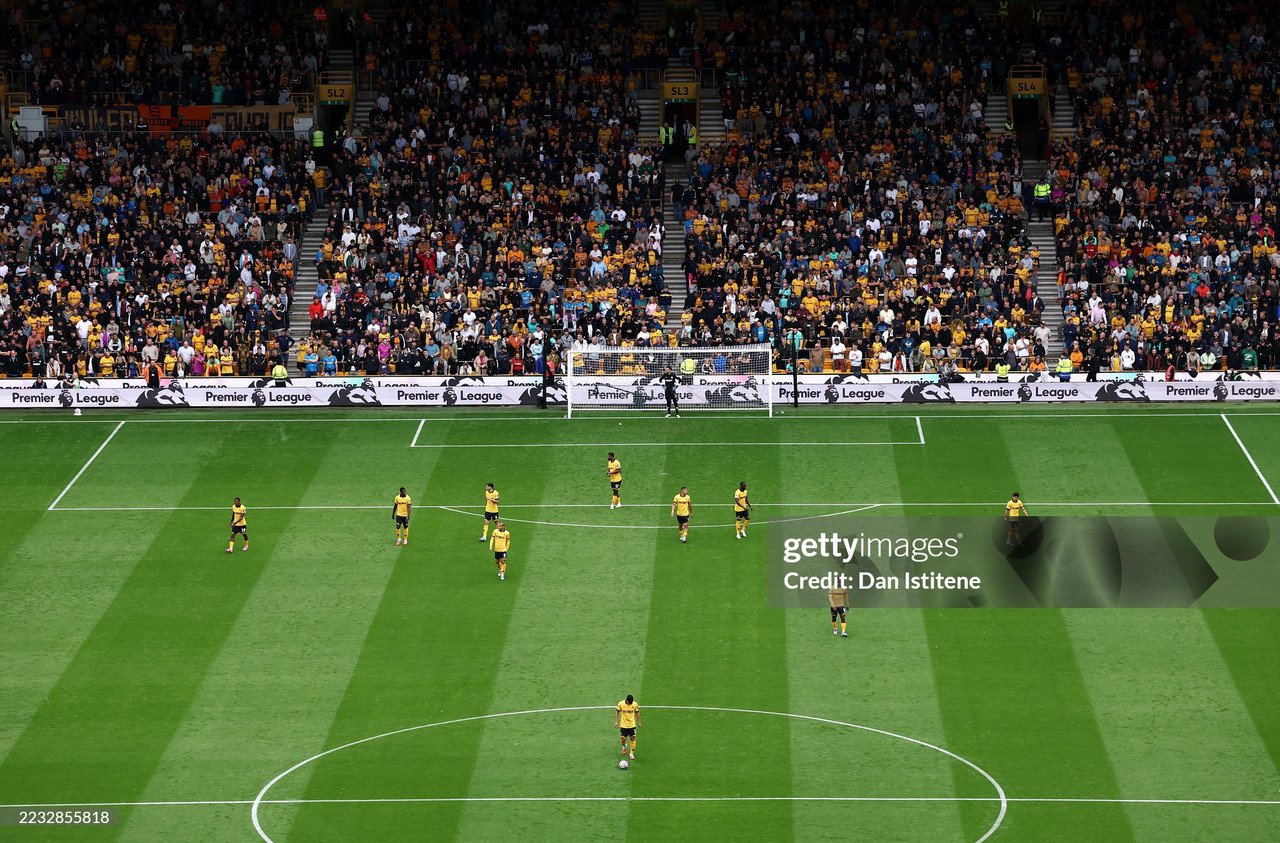

Saturday’s defeat at home for Wolves was a painful reminder of where Wolves currently stand.
The 3-2 defeat is the third straight loss for Wolves in the new Premier League, leaving fans frustrated and overall worried about the rest of league.
For Wolves, this was more than just another defeat and terrible start. It was a snapshot of problems that need solving quickly. Very quickly if Wolves want to avoid the drop once again.
-
Squad depth is very worrying
Squad depth has been a real issue for Wolves since the departure of Matheus Cunha and Rayan Aït-Nouri meaning Wolves have stripped away the attacking invention, width and depth they had in both attacking and defence.
Against Everton, the bench looked short of proven Premier League quality, especially in central midfield and upfront.
Rodrigo Gomes scored a crucial goal against West Ham in the Carabao cup to equalise to give Wolves enough hope to win 3-2. Against Everton, Gomes came off the bench to score again to try and give Wolves some more hope.
Gomes has been crucial in making an impact to the team but, the lack of variety mean that Everton’s defenders were never forced into genuine discomfort until late on.
Injuries will only fuel this issue. Jørgen Strand Larsen was absent due to an Achillies injury and Wolves fans will hope that the Norwegian will be back to full fitness after the international break.
The game against Everton made clear that Wolves are only one or two injuries away from being in serious trouble, unless Wolves manage to strengthen positions before the transfer window ends.
-
Late fightback won't always be enough to save Wolves from trouble
Even after falling behind in the second half, Pereira’s side refused to give up. Rodrigo Gomes’ goal in the 79th minute lifted the Molineux and sparked belief that Wolves could make a comeback. Wolves pressed hard in stoppage time, but the equaliser never arrived.
Although Wolves managed to make a comeback from behind against West Ham in the Carabao cup, Wolves need to avoid putting themselves in the position for a last-minute push.
Wolves won’t want to become too reliant on the last-minute mentality. Good teams start with control and composure whereas the Old Gold instead look like they need adversity to wake up. Starting slow is a dangerous habit and something that other Premier League clubs will take advantage of.
The fans at Molineux did respond brilliantly once Wolves got back into the contest, but fans can only drag the team along so far and for so long. Wolves fans will always be willing to give their all vocally to support the team, but Pereira needs to find a way to instil intensity into the team from the first whistle.
As ruthless as the Premier League is, spirit won’t always be enough to rescue points. Wolves must find a way to set the tone in matches, not react to them.
-
Lack of attacking threat is becoming more and more obvious
Although Hee-Chan Hwang’s equaliser was well-taken and Gomes’ impact was encouraging, across 90 minutes, Wolves lacked a focal point in attack. With the absence of Larsen, the lack of attacking threat was highlighted even more.
Pereira’s system asks a lot of the wide players and attacking midfields to drift in and create chances, but without a natural finisher to convert them, Wolves will always feel one step short.
For much of the game against Everton, promising moves fizzled out before even reaching the six-yard box.
Too many teams in the Premier League have reliable finishers who can turn half-chances into goals. Pereria’s project may depend on a deadline day signing that can score goals or Larsen coming back fit.
-
Defence is still an area of concern
One positive from the game was that Pereira has the willingness to change things up. His substitutions in the second half shifted Wolves into a more aggressive shape, with R. Gomes stretching the play and midfielders pushing higher up. This tactical shift gave Wolves attacking momentum and nearly forced a draw.
The build-up to Gomes’ goal was evidence of what can happen when Wolves play with urgency and width, something that Pereira will expect more of.
Everton’s second goal, however, came from sloppy positioning. Defensive lapses have become a theme across Wolves’ first three league games with individual mistakes punished at the highest level.
Wolves’ season will not be defined by if they can score late goals or not but the main concern will be if they can stop conceding soft goals early on putting them on the back foot straight from the off.
-
The bigger picture
Three games and three defeats to start Wolves’ Premier league campaign. Everton was another reminder that although Wolves have some quality and willingness to fight it currently lacks balance, depth but, also leadership in key areas.
Rodrigo Gomes looks as if he could be a crucial player to Wolves this season and for the future. The spirit is not a doubt and in moments Wolves did create danger for Everton which is a positive.
The next few game weeks for Wolves could prove decisive. Strengthening the squad, keeping hold of Larsen and him remaining fit and tightening the defence must be a priority if Wolves want to push higher up the table and not be fighting to avoid the drop. Pereira will know that points are needed very soon in order to calm nervous as well as gain some momentum.
