


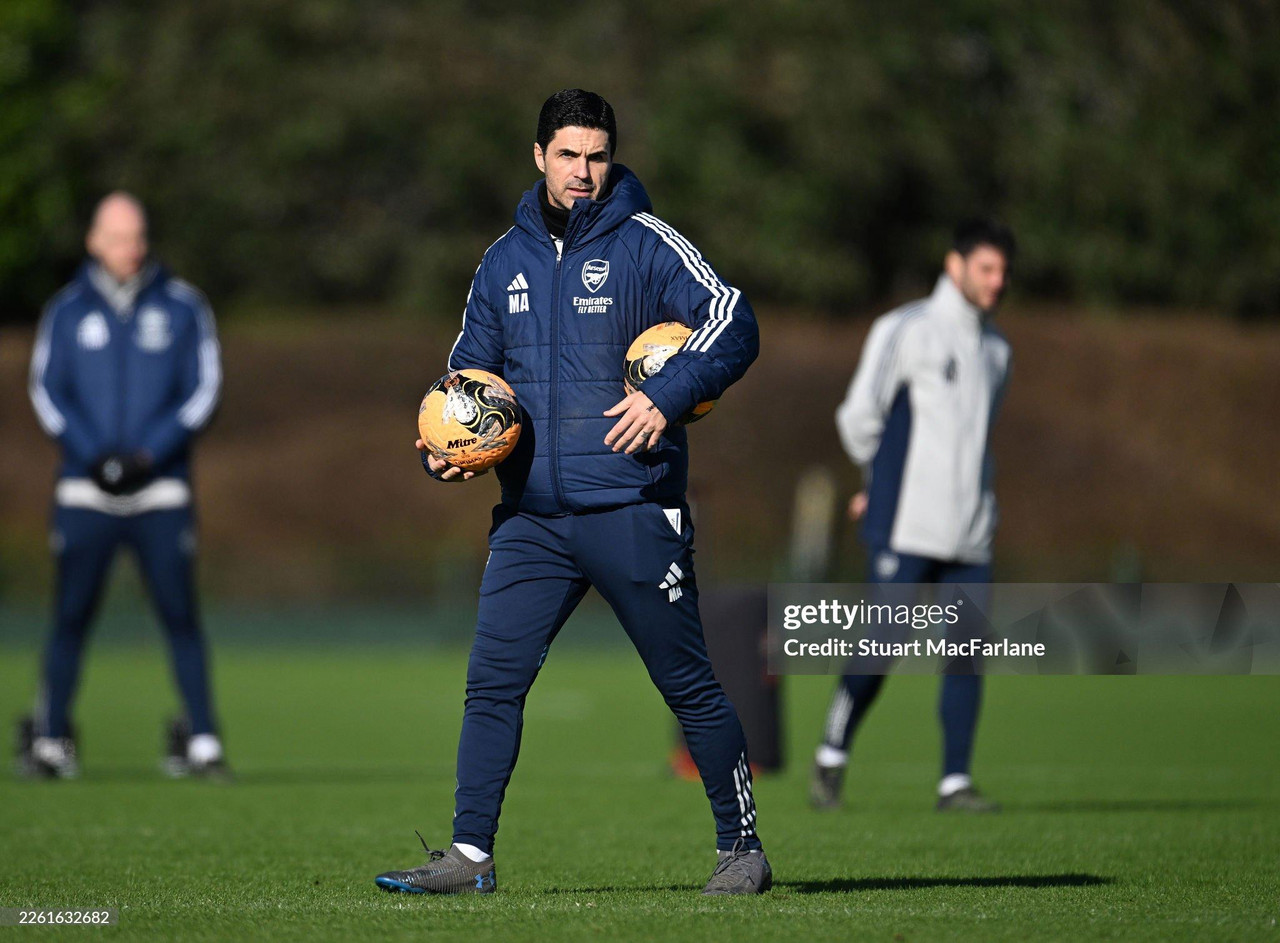

Mikel Arteta reflected on how Arsenal are managing ‘freak’ injuries in their squad.
The niggle for Riccardo Calafiori against Wigan Athletic was the latest example of a setback to the starting eleven just before kick-off. The manager must be prepared to find solutions off-the-cuff, but he also knows that good physical preparation can better position his players to avoid such situations.
“[A late injury] is a moment that is very tricky because when you change Ricky for Bukayo you have to change a lot of things within the game plan, positions, a lot of things that are different and you have two minutes to do that.
“It makes you a better coach because you have to be ‘what-if, what-if’ and there are more and more what-ifs just before the game and then a lot during the game. So, you just need to be more prepared.
“[The injuries in our warm-ups] were very different. The first one was with William Saliba when he rolled his ankle against Liverpool. Then we had two incidents with Riccardo Calafiori in the warm-up in a really similar way. And then one with Bukayo Saka after he rested on midweek and didn't play against Kairat and then against Leeds United. He had that incident. Very unusual. Probably happened once or twice I think in six years that I've been here. And it happened four times there.
“So obviously we are looking into it. On the Wilo one it’s one that’s very difficult to see. Sometimes, you want to try and test a player before making sure that he's ready, and the warm-up is another opportunity to do that. And Bukayo is very random because he never gave any symptoms or signals away that this could happen in the warm-up. But it is what it is. We have to learn.
“[The warm-up is for the players to] be ready, to be at their best mentally, physically, to be activated, to be connected with the teammates. That's what a warm-up is for.
“To start to have the feeling and start to tell the body that the game is coming, the adrenaline is going to start to pick up, the testosterone has to be in the right spots and you're ready to compete.
“We like sets and routines and that's the way you tell your body as well. It's coming, it's coming, it's coming. And to change that sometimes is tricky. It's a really good area to have a look at what will happen if we don't do the warm-up. Because then at half-time, we go at half-time and we sit almost for 15 minutes and then we go full gas again in the second half. Maybe something to think about.”
