


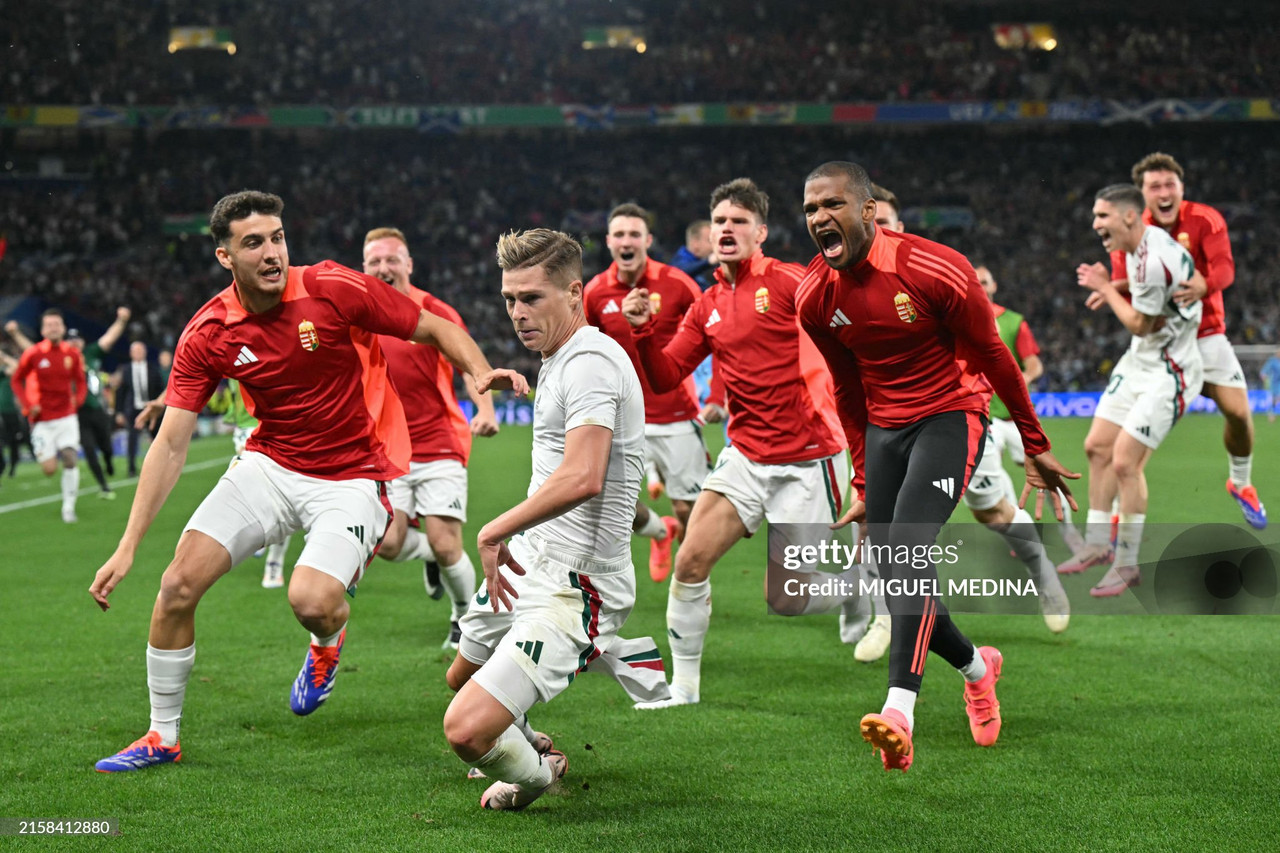

Hungary prevailed in an extremely cagey affair against Scotland at the Stuttgart Arena.
The first 45 minutes saw Steve Clarke’s side control the possession, but that control was sterile as they failed to create any meaningful chances. The Hungarians looked as though they could cause problems on the break, but Angus Gunn was in fine form to make sure they did not.
The second half saw the game’s tempo rise a few notches, with both sides understanding a draw did not benefit either of them.
Despite this, the Scots still played with a slight fear and unwillingness to commit men forward.
It took the Tartan Army 80 minutes to finally throw the kitchen sink at the game, as they began launching balls into the box and shooting from distance.
But Hungary were savvy and waited for their opportunity, which arose in the 100th minute of the game.
Scotland had won a corner late on, so committed men forward, and when Hungary won the ball in their own third, they quickly sprung to life and got the ball up the pitch. It eventually fell to the feet of substitute Kevin Csoboth who finished coolly to give his side a fighting chance of qualification to the last 16.
With Group A coming to a close in dramatic fashion, what did we learn?
-
Scotland were not brave enough
It is no secret that the Tartan Army have never qualified for the knockout phase of a major tournament. They have come close on multiple occasions but have never quite been able to cross the line.
Many Scottish fans saw this as the perfect opportunity to break that curse and free themselves from the shackles of the past.
But they knew if they were to do that, they would have to show courage.
The first half saw Scotland dominate possession like they never have done before. 10 minutes into the game they had 85% of the ball and not only was that a shock to us, the viewers, but it also looked like a shock to Scotland.
They seemed unaware of what to do with the ball and for the most part just passed it around the back; passing off responsibility to one another rather than somebody forcing the issue.
If they had collectively decided to make the most of the possession they had, they could have caused some serious problems for their opponents. Instead, fear gripped them, and they seemed incapable of finding a remedy for that fear.
Even Billy Gilmour – a player who many see as Scotland’s best creative force- seemed unable to do anything other than pass sideways and backwards.
It is a shame because Scotland is a nation built on grit and courage, but the national team could not find the traits of their country on a difficult night.
-
Hungary could still be the dark horses
Before all International tournaments start, members of the media and fans like to try and pick out a team that could potentially upset the apple cart and claim some scalps.
Often this team are labelled as a dark horse.
Turkey were gifted this title in 2021 and fell on their face and embarrassed many who had given them a chance to do well at the European Championship.
This year, it was the turn of Hungary to take the title of a potential dark horse.
But after two games, no wins, one goal, and five conceded, there was a sense of deja vu from some people, with many thinking they had backed the wrong side.
But this win over Scotland has given Marco Rossi’s side a second chance at proving people right.
Their place in the last 16 is far from confirmed yet, but if they do manage to qualify as one of the best third-placed teams, they will fancy their chances at upsetting one or two of the bigger teams in the competition.
-
Steve Clarke’s last dance?
Steve Clarke has been at the helm of his country for over five years now.
In that time, he has qualified for two European Championships and has presided over some of the most famous wins in Scottish footballing history.
He will go down as one of the greatest Scotland’s greatest managers and his place in folklore is secure.
But is it time for a fresh start?
Prior to the 2024 UEFA European Championship qualification process starting, Clarke signed a new deal with the SFA, keeping him in charge until 2026.
But we all know contracts do not mean much in football.
Against Hungary, the Scots looked like a side that did not have plan B; at times seemed lost and even looked like the occasion was too much for them.
It begs the question, does the team need someone new in the dugout?
There is no right answer to the question, but certainly, it is an avenue worth exploring.
It is more than likely that this decision will lie with Clarke himself rather than the SFA. No matter what happens, Clarke should be remembered as one the best to ever manage Scotland.
-
Barnabas Varga incident was a reminder that footballers are human
Midway through the second half there was an incident that saw the Hungarian striker Barnabas Varga on the floor seemingly unconscious following a collision.
Physios and doctors were on the pitch quickly and there was even a screen put around Varga to maintain privacy as the medical personnel conducted their work.
The incident caused many players unrest and visibly upset Dominik Szoboszlai.
It was a stark reminder that while we look at these footballers as something above human and almost God-like figures, they simply are not.
In moments like this, we would all do well to remember who these football players are.
They are Fathers, Mothers, Daughters, and Sons.
As Varga was laid on the pitch, it was a haunting thought to know that he is someone's child, someone's partner.
While we sit here and lament footballers (which we have a right to do sometimes) we must take time to remember these people are not invulnerable. It should not take incidents like this to remind of us that, but it does.
The latest news is that Varga is stable in hospital but will require surgery for a broken cheekbone.
in a nice touch, his teammates dedicated the late win to him.
It is unknown how long Varga will be out, but right now it is not important. The most important thing is that he is okay.
