


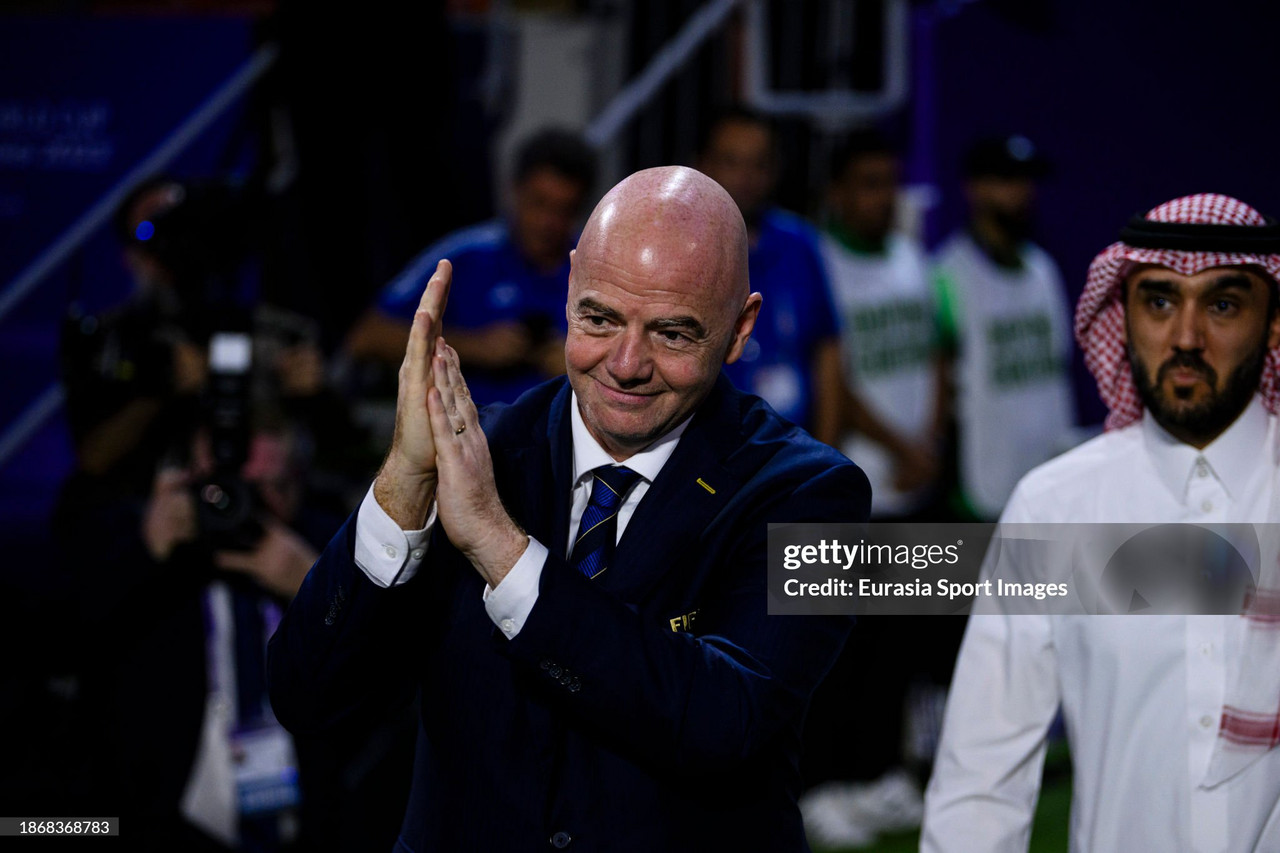

Will it ever stop? Will it become too much for a sport where, to watch your favourite team in the flesh, you’ll have to catch a flight from Manchester to Riyadh? The future of sport, particularly football, is in Saudi Arabia’s hands, and the World Cup, in a decade’s time is just the beginning.
They have very unsurprisingly won the bid to host the 2034 World Cup, which makes it the second time the competition will be held in the Middle East.
There are so many things wrong with the format, logistics, and ethics of this tournament, and the most important is its human rights. People will say it’s good for the game; “growing the game” is the usual PR panic button, but for basic inclusion and equality, it’s an absolute nightmare.
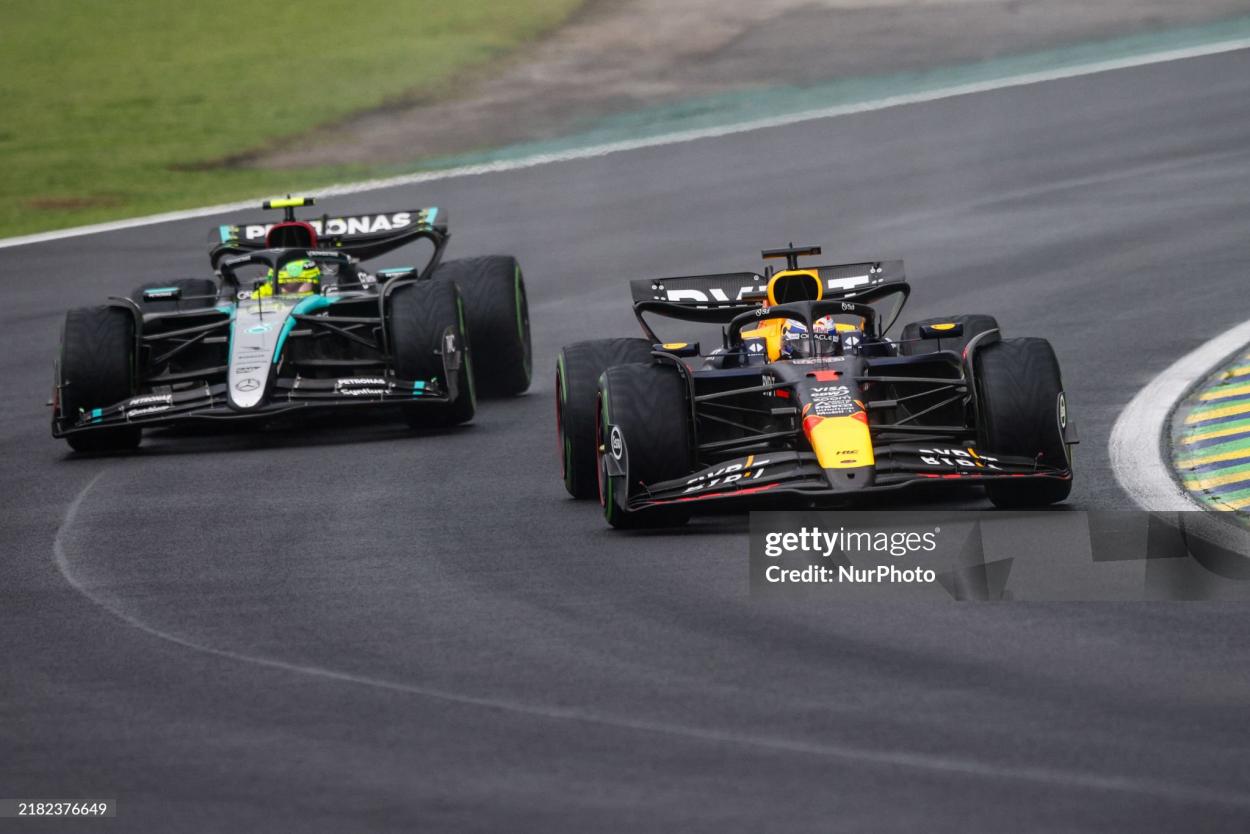
The term ‘sportswashing’ hasn’t surfaced more than ever over the last couple of years for no reason. Formula 1 now has four races in its calendar in the Middle East. The WTA Finals took place in Saudi Arabia—a place where women’s rights are beyond despicable, and the PGA Tour is on its last legs because of a breakaway LIV Golf competition, which uses what the PGA has to offer—exceptional golf entertainment—but pays its players unimaginable wages.
We’re seeing a similar takeover in football, but it’s not as easy for Saudi as it has been in other sports. Golf fans will simply just want to watch golf for four rounds from Thursday to Sunday, walk around a picturesque course, and simply admire the athletes’ ability with no care about Saudi's stance human rights. In football, the Saudi Pro League has made huge changes over its short history, taking on Cristiano Ronaldo, Karim Benzema, and Neymar Jr, which has obviously grown the game massively over there, but this is their method. It’s a method to distract viewership from the country’s disgusting human rights violations, and it’s totally working.
Why, in English football, do we have a governing body in the FA that welcomes the LGBTQ+ community with open arms? It was just last week that we saw the Rainbow Laces campaign in full effect, but then sends a group of some of the best players in the world—which also comes with a huge influence on people who idolise these players—to a country where same-sex marriage is illegal?
In 2010, there was a 27-year-old man in Riyadh who was imprisoned for one year after being charged with the offence of ‘homosexuality,’ and that’s not him being found guilty, just charged. Not only is that execrable in itself, but he was later found guilty, of course, and was sentenced to five years in prison with 500 lashes to top that—as if he had any choice in being gay. The reason I use that example is to illustrate just how scary that may seem for someone of that sexuality to travel to this country; it’s quite literally impossible without punishment.
The Saudi sports minister Prince Abdulaziz bin Salman said, “Everyone is welcome,” but can you believe these three words and think you’re safe? And that’s just one problem that we’ll run into in the build-up to the 2034 World Cup.
The next is logistics, and in particular the construction of stadiums around the Kingdom. The tournament is set to use 15 football grounds across the country with cities including Riyadh, Jeddah—boxing’s new homeland—Abha, Al-Khobar, and Neom. The last one in particular is interesting because it’s a city that will collapse any imagination of modernism with its unique design—a straight line that will expand to 110 miles in decades to come.
The problem we face is that 11 haven’t been built yet; in fact, an entire city hasn’t been built yet, so you can only imagine the challenges that we’ll face when it comes to migrant workers, who will be tasked with creating these “one of a kind” stadiums as described by Mohamed bin Salman, the Kingdom's Ruler.
Concern amongst migrant workers and a potential paywall?
Qatar did well to under-represent their influence on migrant worker deaths in preparations for the 2022 World Cup. The government had said that only three migrant workers had died in “work-related incidents,” whereas 37 had died in “non-work-related incidents.” It’s a complete fallacy. The Guardian reported in 2021 that 6,500 workers from 2010 to 2020 had died, and although not all were from stadium construction, it still raises concerns amongst the cause of the death for the remaining number; it doesn’t help that Saudi has a very closed press where journalists are under heavy surveillance, even when they aren’t working.
To add to that, Qatar had to build eight new stadiums in the build-up to their hosting of the tournament, whereas Saudi will need to build 11 and a new city—how many migrant workers’ lives will we lose this time?
It’s completely avoidable with a change to regional rotation rules. You see, the legislation makes it impossible for one continent to hold consecutive competitions, which works in favour of the entire world and is fair, but fairness here is a very flippant term when mentioning the human rights and the exclusivity of people in the LGBTQ+ community in Saudi Arabia.
Maybe we shouldn't be fair? Maybe it's a good idea to strip the Middle East of any involvement in the World Cup, or sports as a whole, until they amend their laws and actually make the country a safe space for everyone, not just working public relations staff overtime in silly quotes such as “everyone is welcome”.
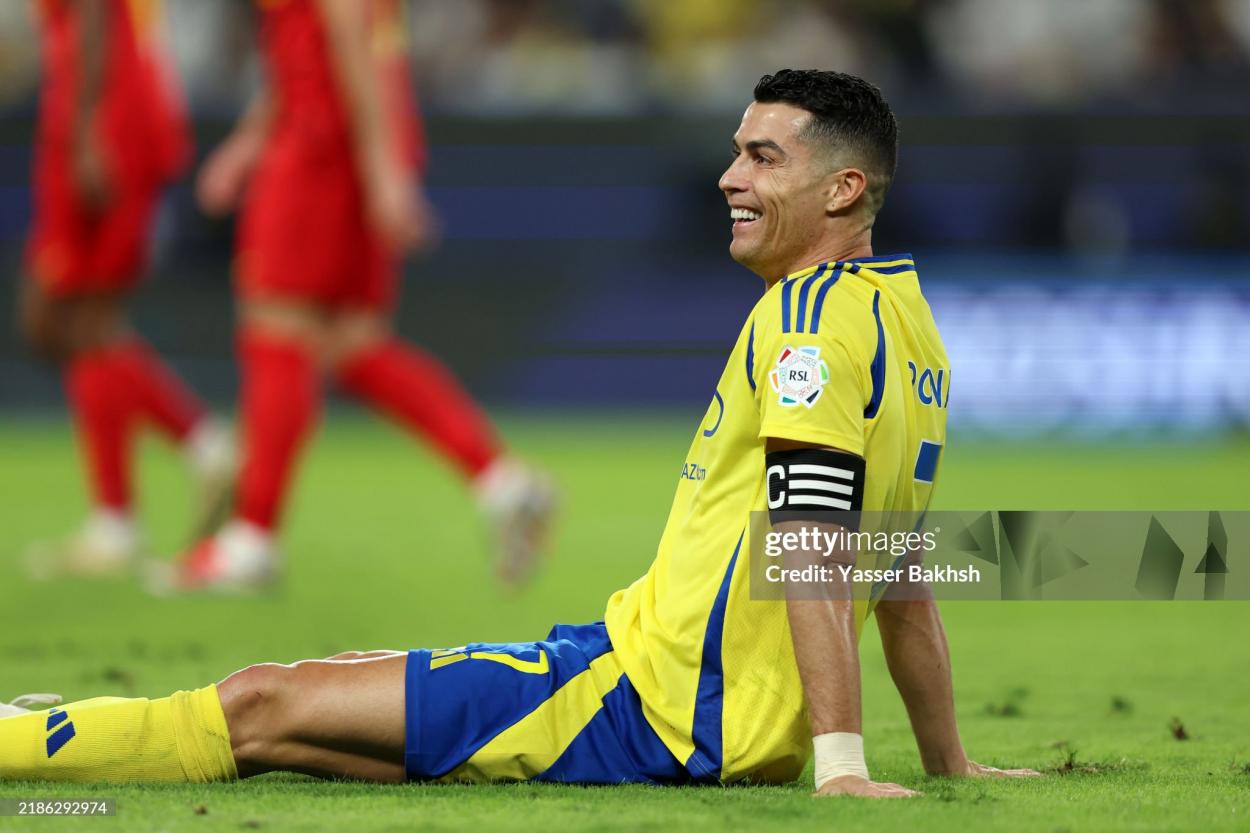
But that’s not realistic; LIV Golf is preparing to take 6% of the PGA Tour, the start of a takeover. Ronaldo certainly won’t budge as long as he stays on his approximated £3.3m per week, including ambassadorial roles, and neither will the rest of sport because that’s what it's about: money.
DAZN is currently a trending broadcaster in sport with a subscription amounting to around £25 per month. The World Cup, since its first television appearance in 1954, has been free to watch in most places across the world. However, the platform is of significant interest for Saudi and with an upcoming bid for the TV rights, it wouldn’t be surprising to see the competition fall behind a paywall for the first time ever.
President of FIFA Gianni Infantino has been a strong supporter of Saudi Arabia’s sports regime, which has rightly been met with criticism, though he simply doesn't care. He said the county’s infrastructure and commercial potential is a “very strong all-round proposition.” Wouldn’t you say that if you were paid millions to speak?
His relation with the Saudi regime is getting too close for comfort, and with FIFA being the biggest football governing body in the world, it makes you think about what could really happen in the future to this sport, which is slowly being pushed away from its tradition and purpose.
