


F1’s return after the summer break at Zandvoort will resume the action of an exciting 2024 season that in recent weeks has brought the field closer together at the front of the grid.
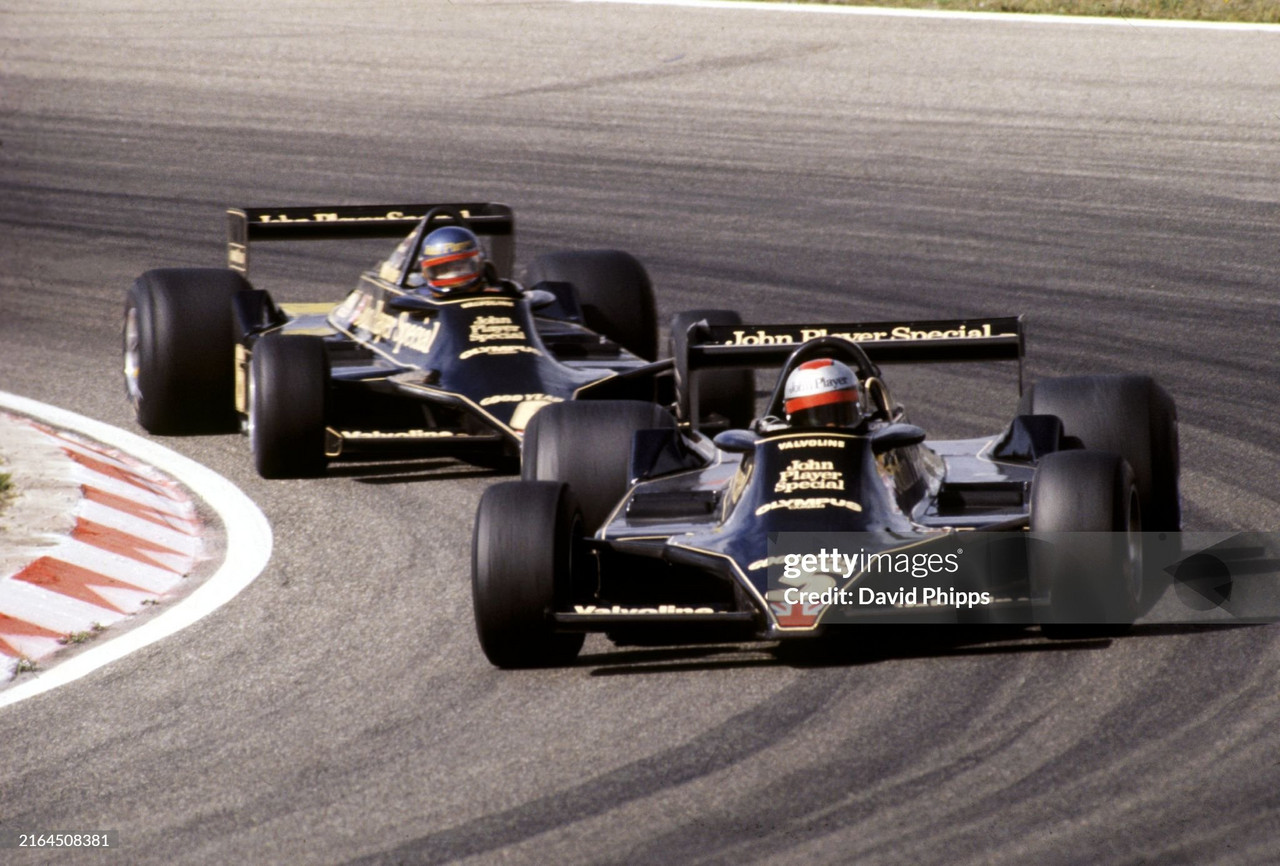
Yet, it will also mark a return to a track that last saw an American Grand Prix winner stand atop the podium, when Mario Andretti clinched his final win in the sport, and the last 1-2 in Lotus’ history, at the 1978 Dutch Grand Prix.
In the 46 years since, some American drivers have come painfully close to victory, while some have failed to score a single point altogether. The question remains: who, if anyone could be the driver that breaks the unenviable record and revives America from its slumber in motorsport’s premium category?
A rich history
Since 1950, 58 American drivers have contested 508 Grand Prix, accruing 33 victories, 129 podiums and 999 points.
It is worth noting that American racers made up a core contingent of F1’s early history. During the 1950s and 1960s, the Indianapolis 500 was included as part of the calendar in order to expand the F1 championship into a “world” series, with all other races in Europe.
During the sport’s excursions Stateside, the field would almost entirely consist of American racers, with European drivers opting to largely sit out of the events. While not recognised officially, if included these races over the decade would consequently increase the tally of American racers in F1 from 58 to 233.
As of today, the USA have also produced two drivers’ champions: Phil Hill (above) in 1961, and the aforementioned Andretti in 1978. At the time, America were at the forefront of open wheel racing, and one of the most successful nations that Formula 1 had ever seen. Yet in the years that followed this early success, American drivers have failed to register a single win. So where has it all gone wrong for American drivers in the sport?
Near misses and the weight of expectation
While Americans in Formula One were a constant fixture on the grid over the 30 years in which they had competed in the sport, post-Andretti, the sheer quantity of American drivers within F1 plummeted. However, the notion that American drivers could not get onto the grid as the nation suffered from a dearth of talent, is simply untrue.
From the drivers that did dare enter motorsport’s elite class, Eddie Cheever enjoyed considerable success. Racing for almost a decade in the sport for an array of constructors, he racked up 70 points and 9 podiums before retiring in 1989.
Michael Andretti, the son of the great Mario was seemingly destined for great things in Formula One too. His showings in IndyCar demonstrated his tremendous potential, as he was tipped to emulate his father’s success and move to F1.
But when he signed for McLaren in 1993, it would prove to be his solitary campaign within F1. He suffered huge accidents and struggled to even finish races, given the intricacies of F1 machinery compared to the simpler cars he was used to racing in America. Andretti also routinely languished behind the great Ayrton Senna, and the growing pressure racing away from his native America (where he still permanently resided), as well as the media's constant comparisons with his father, compounded his woes and seemed to afflict his confidence behind the wheel.
Yet, in his final outing before he was replaced by Mika Häkkinen, while racing at his cultural home of Monza, he finished a respectable third place. Although Andretti failed to live up to the weight of his prestigious surname in the sport, the result to this day, remains the last time an American stood on the podium in F1.
Years in the wilderness
After Michael Andretti’s failure, the desire for American racers to compete in F1 diminished entirely. A barren spell between 1994-2005 would see no Americans on the grid. Despite rumours that Benetton and Jordan were interested in expanding into the American market, no moves for American drivers were realised for either team.
However, the incoming Red Bull team were determined to have an American driver within its expanding ranks and in 2003 they launched the Red Bull Driver Search Program. The brainchild of former Tyrell F1 and Indy 500 winner Danny Sullivan, the search was specifically tailored to unearth the next F1 driver from the new wave of American talents. The project ran adjacent to Helmut Marko’s Red Bull Junior Team, which would go on to unearth the likes of Sebastian Vettel, Daniel Ricciardo and Max Verstappen.
The search in the US was won by Scott Speed, who was backed by Red Bull to the hilt. He would compete in British GP3 and GP2 before signing as Red Bull’s test driver for their debut 2005 season, where he would participate in free practice at the Canadian, and United States Grand Prix. After the acquisition and rebranding of Minardi to Toro Rosso (the first rebranding of many to come), Speed was given a drive for the 2006 season, ending America’s 12-year absence from the sport.
Yet, in 2007 Speed was released from his contract early in only his second season at Toro Rosso, where he would be replaced by one, Sebastian Vettel. In his 28 entries he failed to register a single point in F1, and Americans would not feature in the sport for another eight years.
This change was brought about, when after an impressive finish of 2nd in the GP2 standings, Nevada’s Alexander Rossi was given the opportunity to race in the final five races of the 2015 season for the ailing Marussia outfit. He did a respectable job, consistently beating team-mate Will Stevens, and he even go on to equal the team’s season-best finish of 12th at his home race at the Circuit of the Americas. Rossi would not be offered a drive for the 2016 season but would return to the States competing in IndyCar, where he would win the iconic Indy 500 as a rookie.
After Rossi’s departure from the sport, America would have to wait another eight years for their next driver to grace F1. Texan Logan Sargeant was signed by Williams in 2022, and despite an indifferent first season, he was renewed for the 2023-2024 season where he has shown some signs of improving consistency, despite scoring no points.
However, following Williams’ announcement in their signing of three-time race winner Carlos Sainz, Sargeant looks to be out of a drive with rumours of a return to racing in America heavily mooted. In which case the grid for 2025 will be devoid of American drivers and the continuous cycle of Americans briefly appearing in F1 before returning to their homeland will be set to continue.
Who could be the next American F1 race winner?
In terms of a future American prospect in F1 things are not looking too promising either.
The next American hope
The most likely source of success is perhaps Colton Herta (below). In 2022 he had long been linked with a move to McLaren, but due to Super Licence rules at the time, had not acquired enough points to make the move from IndyCar to Europe. Despite promise earlier in his career, Herta has struggled in recent years, although his win last time out in Toronto looks to have reignited the Californian’s season, and he remains an outside chance of the title, heading into the closing rounds. Now 24, he still has some time on his side but will need to move fast if he is to reach the pinnacle of motorsport. If the Andretti F1 team is realised for 2026, he could breakthrough then.
Elsewhere in America, 22-year-old David Malukas had shown promise in spite of a proclivity for crashing, but injuries sustained from an off-season mountain bike accident saw him released from Arrow McLaren earlier this year. While reigning champion Josef Newgarden is perhaps the most accomplished American outside of F1, at 33 years-old he seems to have missed the boat to get into the sport.
In Europe’s Formula 2 class, the all-American DAMS pairing of Jak Crawford and Juan Manuel Correa have gone well, with Crawford showing particular promise. After being dropped by the Red Bull Academy in late 2023, his performances this season were rewarded by a test in the Aston Martin around Silverstone, although with Fernando Alonso locked in for another two years alongside the immovable Lance Stroll, his pathway to F1 looks incomprable.
In junior categories much was expected of Ugo Ugochukwu, the karting prodigy signed at only 13 years-old by McLaren. Yet after moving into single-seater cars the American has struggled to replicate his karting success on the European circuit. However, at only 17-years-old, there remains plenty of time for Ugochukwu to forge a career in Formula 1.
Ultimately, it seems unlikely that the Mario Andretti’s success at Zandvoort almost 50 years ago will be replicated when F1 returns from its summer break, or anytime soon for that matter. Nonetheless, there still remains glimmers of hope that one of motorsport’s greatest ever nations will once again stand atop the F1 podium in the years to come.
