
Competition
WRC · History

Other languages2
ADVERTISEMENT
The World Rally Championship, known as the WRC, is the global rally series organised by the FIA. Its first round was the Monte Carlo Rally, which started on 19 January 1973. Frenchman Jean-Claude Andruet won it in an Alpine-Renault A110 1800, and two sister cars completed the podium. Since then the championship has visited tarmac, gravel, snow and ice stages across several continents each year, with a calendar of scoring rallies that has changed from one era to the next.
1973: Alpine’s year
In the inaugural season only a manufacturers’ title was at stake. Alpine-Renault became the first champion make in 1973. The A110, a light rear-engined coupé, won most of the events in which the works team entered cars. That format, which rewarded manufacturers rather than drivers, remained in place for the championship’s first years.
From a makes’ series to a drivers’ title
Before creating a world drivers’ title, the FIA ran the FIA Cup for Drivers. Italy’s Sandro Munari won it in 1977 and Finland’s Markku Alén in 1978. The world drivers’ championship was contested for the first time in 1979. Swede Björn Waldegård was the first official champion, one point ahead of Finland’s Hannu Mikkola. From that year the WRC has awarded titles for drivers, co-drivers and manufacturers.
The Group B era and its end
Group B regulations came into force in 1982, opening the way for far more powerful cars with fewer technical restrictions. The era ended after the fatal accidents of 1986, including those at Rally Portugal and the Tour de Corse. FISA, then the FIA’s sporting body, froze Group B development and banned the cars from 1987.
Group A and the World Rally Car
From 1987 the championship was run with Group A cars, more closely derived from road models, and those rules remained the basis until 1997. In that period Lancia won six manufacturers’ titles in a row, from 1987 to 1992, taking its overall total to ten makes’ championships, the highest figure of any manufacturer. In 1995 Scotland’s Colin McRae won the drivers’ title. The World Rally Car formula arrived in 1997, opening the door to more manufacturers with cars built specifically for the series.
Loeb and Ogier
Frenchman Sébastien Loeb won nine consecutive world titles, from 2004 to 2012. His compatriot Sébastien Ogier took over with six straight titles between 2013 and 2018, first with Volkswagen and then with M-Sport Ford, and added the 2020 and 2021 crowns with Toyota. In 2025, in a season in which he did not contest every round, Ogier became champion for the ninth time at Rally Saudi Arabia on 29 November, four points ahead of team-mate Elfyn Evans. He thus equalled Loeb’s nine titles and became the oldest champion in the series. His co-driver, Vincent Landais, won his first co-drivers’ title.
The Rally1 era
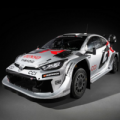
The Rally1 category, with a hybrid powertrain, made its debut in 2022. That year Finland’s Kalle Rovanperä won the title with Toyota and became the youngest champion, beating the mark Colin McRae had set in 1995. Rovanperä retained the crown in 2023, sealing it at the Central European Rally on 29 October. In 2024 Belgium’s Thierry Neuville became champion with Hyundai, the Korean make’s first drivers’ title. The hybrid system was withdrawn for the 2025 season. Toyota won its fifth consecutive manufacturers’ title in 2025, secured at the Central European Rally, and ended that year on 735 points to Hyundai’s 511.
ADVERTISEMENT
Profile compiled by the VAVEL Editorial Team from historical records and official competition data. · Editorial policy