


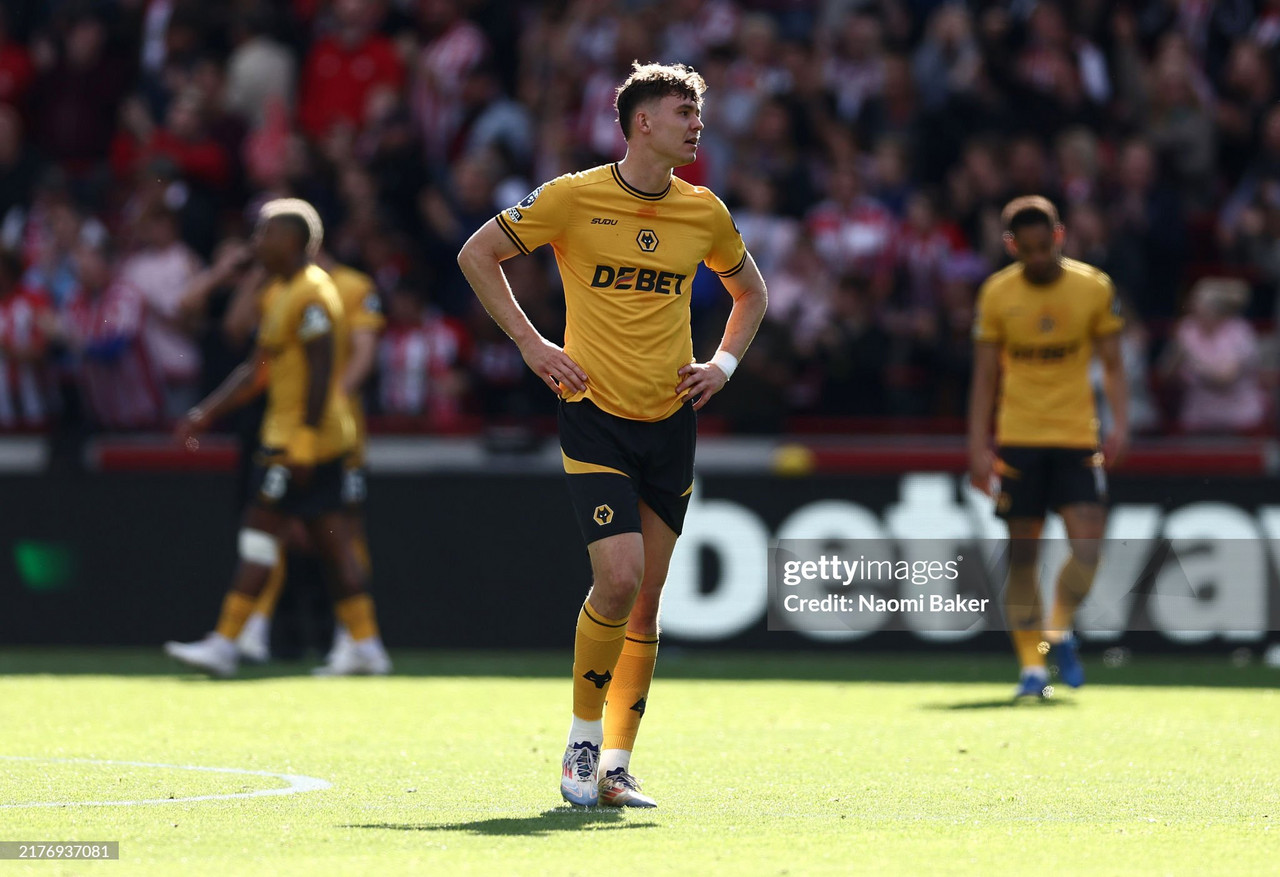

It does not require a cryptic code breaker to understand Wolves have suffered a stagnant start to their Premier League campaign and it begs the question of why and what has gone wrong.
Things such as fixture difficulty and new signings should be mentioned as they affect squad morale and cohesion, for example if Wolves had played the bottom seven in the first seven games, chances are we would not be speaking about a poor start, but instead a hopeful one.
An easier fixture run would have allowed an easier chance of winning games, which increases confidence and that is something Gary O’Neil’s squad lacks right now after a winless start to the season.
Some new players have failed to gel as well as fans would have hoped but time will tell which signings will work and which can be counted as duds.
Despite these underlying factors, no excuses can be made, Wolves have been poor on the pitch and O’Neil has to rectify the poor start quickly.
However, how sustainable has the poor form been and does it look like changing any time soon - should be the optimistic mindset - instead of writing this squad off just a fifth of the way through a marathon of a season.
Attacking performance
Xg has been a modern addition to the beautiful game and as much as old heads disagree with the data it comes with, it does allow to analyse the team’s underlying performance.
Wolves sit third bottom for xg with seven, that is a difference of two compared to the nine scored.
Despite goalscoring not being a huge problem for Wolves so far this season, no team can score too many goals and we can already see they have over-performed with their xg going forward.
The xg shows us how good the attacking areas are the players have got in, the chances created and how the creativity stats also suffer.
They sit third bottom for key passes, second bottom for expected assists, fifth bottom for passes into the penalty area and third bottom for shot-creating actions.
These stats provide evidence of a lack of creativity and attacking output which complements the fact Wolves sit top for shot distance with 19 yards - the team’s average shot so far this season is from outside the box, the only team to do so.
Opting for shots outside the penalty area and hoping to score on the off-chance is not sustainable; the impressive shooting will eventually wear off, creating a problem as the attacking creativity will have to pass it on the charts to improve.
O’Neil has to find a way for his team to create better chances so they can ensure the decent attacking performance so far does not let-up.
Defensive performance
Defense has been a different story this season, Wolves have conceded the most goals in the league with an average of three per game.
Moving back to xg, Wolves have conceded an expected goals against of 15, six less than goals conceded - a disparity of +six.
No team has a higher positive disparity, the closest with +0.6 - a staggering stat which shows the hope that the flow of goals conceded will be stopped soon.
Wolves sit bottom for percentage of shots from the left side of the opposition attacks, meaning the right-side of defence seems pretty sturdy - which was the partnership of Nelson Semedo and Yerson Mosquera.
More of Wolves’ shots have come from the left side opposed to the right which represents the attacking contribution from Rayan Ait-Nouri who is allowed to get forward to show his quality.
Mosquera enjoyed a good start to the season but due to the unfortunate injury, Wolves could be forced to change system to accommodate the blow.
Playing four-at-the-back proves difficult with Ait-Nouri as we have seen with the stats, more shots are allowed down his flank because of his attacking contribution and the rest of the defence fail to deal with the problems.
Change of system?
If O’Neil moves from a back four to five, the stats show it would be a lot more beneficial.
Wolves already focus 74% of their attacks out wide whilst playing three central midfielders, a central forward and a midfielder out wide on the flanks - this is not efficient.
It would be more efficient to use wide players in these areas to get the most out of the attacks, Carlos Forbs recently came into the side which is a step in the right direction, however it could go further.
Changing to a back five allows Ait-Nouri to get further forward and Semedo to play wider alongside a winger.
Playing Matheus Cunha off the left gives Ait-Nouri space down that side as Cunha would drift inside, and Forbs playing out wide right would mean the right side is also being used by a winger with support behind him from Semedo.
This would also help improve chances created and attacking output which helps the first problem of goals eventually letting-up.
More attacking players inevitably leads to more chances created and more goals scored while also helping to ensure the defence stops conceding goals.
This however means dropping one of the three current central midfielders of Mario Lemina, Joao Gomes and Andre, but O’Neil has to make tough decisions to turn this bad run around.
Stat summary
Wolves’ xg is low and attacking stats are poor meaning the nine goals scored will eventually slow down unless the attacking output improves.
The defensive performance is still hopeful as the difference between expected and goals conceded is huge which is unsustainable.
Playing players in their usual wide areas will benefit the team after already using wide areas with no winger on the pitch.
