


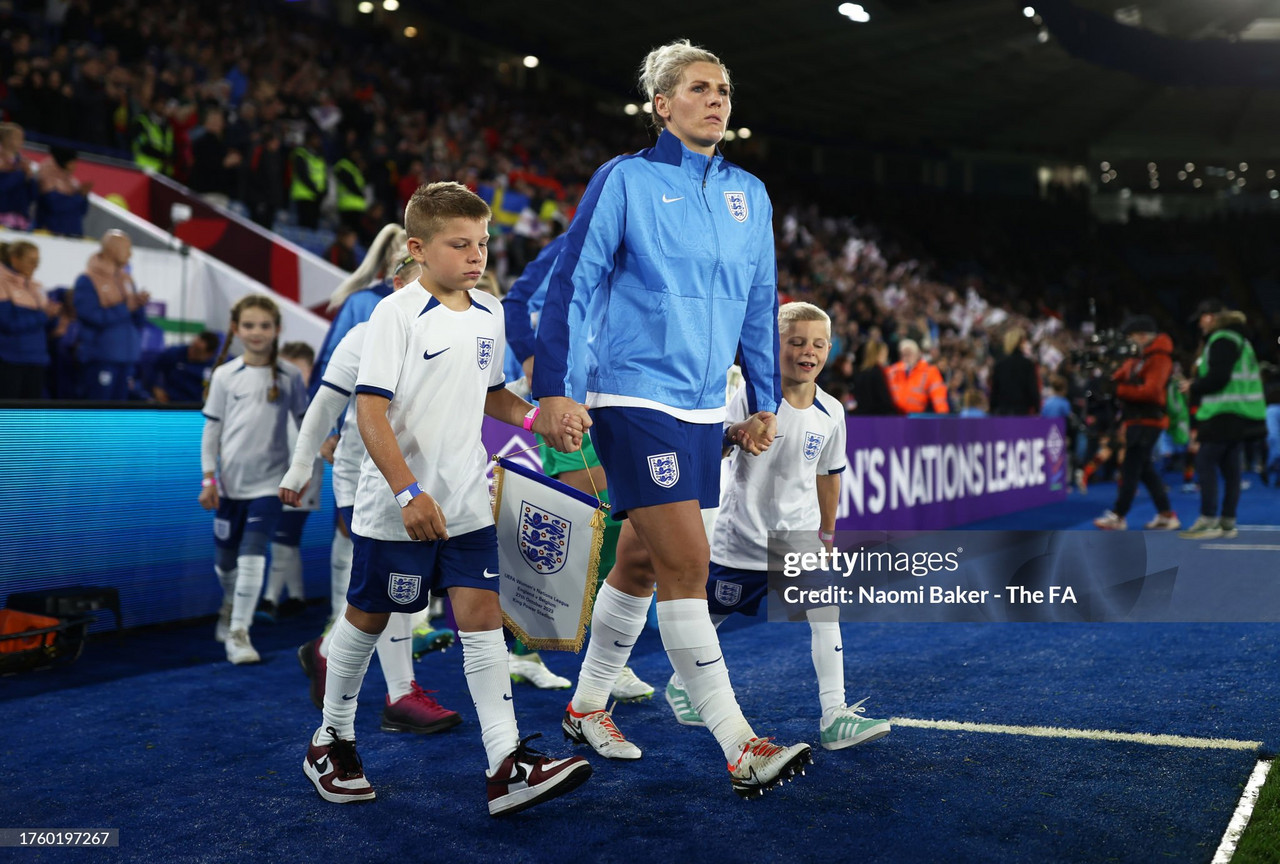

On June 4, Chelsea and England defender Millie Bright confirmed that she had withdrawn from selection in Sarina Wiegman’s Euro 2025 squad this summer. Speaking on The Rest is Football: Daly Brightness podcast, Bright has described the decision as “tough” and explained that she does not feel “100 per cent mentally or physically” ready for a major tournament.
The 31-year-old, who played a central role alongside captain Leah Williamson during England’s Euro 2022 triumph, admitted that choosing to step away for the summer was far from straightforward.
“It wasn’t an easy decision and one that I take unlikely,” she said. “For me at this moment in time, I just don’t feel 100 per cent mentally or physically in a position to go on and compete in a tournament.”
After consulting with friends, family and her immediate support network, Bright decided that using this summer to focus exclusively on regaining her peak condition, both physically and mentally, made the most sense - for both herself and the Lionesses.
She explained, “It was something that I’d spoken about with friends, family, the people around me, and I gave it a lot of thought.
"But ultimately, I thought this was the best decision for the team, but also for myself and using this summer to really just zone into mentally, physically, getting myself back in tip-top condition and just happy again, I think, all round, just feeling like myself.”
While Bright’s decision - coming on the heels of retirement announcements from fellow England stalwarts Mary Earps and Fran Kirby, both instrumental in England’s Euro 2022 victory - creates noticeable gaps in Wiegman’s squad, the defender remains confident in the depth and quality of the Lionesses’ talent pool.
“I think with the Lionesses and the squad, they have an unbelievable pool of players to choose from,” she said.
Acknowledging the demanding nature of tournament football, she added: “I know how much it takes to be at a tournament and the things that you have to tolerate mentally, physically.
"The demands of it are incredibly high and I would see it as a little bit selfish to take up an opportunity in a position from somebody else when I’m not 100 per cent there.”
Despite her decision, Bright pledged her unwavering support to the team as the defending European Champions head out to Switzerland this summer. She asserted, "It’s obviously hard, but I’m going to be the girls’ number one supporter and I know they’re going to go on and smash it."
-
On Mental Health Support within the Women's Game
Later in the podcast, Bright and her co-host, former Lioness Rachel Daly, tackled the topic of mental health support - or the lack thereof - within women’s football.
In response to a fan question regarding whether players feel comfortable discussing their wellbeing openly in a changing-room setting, Bright spoke candidly.
The centre-back praised her teammates for their support off the pitch as she said, “I don’t actually know. I’d say players are really good at checking in on each other, but I’d still say when you’re in that environment - like when you go into training - you’re in training mode.”
“So I don’t think, and I can only speak from my experience, but when I go into club, like, obviously everyone’s really close, but then you’ve got your little group - your mates that you always go to every day.
"We would always make sure to ask, ‘Do you want a coffee?’ and that’d be our time to check in."
However, Bright admitted that opening up about mental health during training sessions can be challenging: “It’s actually hard to have those sorts of conversations when you’re at training. Because also, as a player, you don’t want to speak to someone,” she revealed.
Bright also admitted her worry that admitting to struggles might be perceived negatively by coaches. She acknowledged, “I don’t want to speak to someone if I think that’s going to get back to the manager, because I would certainly panic and be like, ‘If my manager thinks I’m not in a good place, then I’m not going to play,’ or they think I’m not capable."
For that reason, she has always preferred seeking therapy privately: “I also think as a person, when you remove yourself from a work environment, you’re more likely to open up.
"But I’ve always got therapy outside of training. I’ve never done it through training. I’ve always done it personally and in a private setting. That’s just my personal preference. I don’t think I would ever go at club. I don’t know. When I go there, I feel like I get into my role," she said.
Bright’s decision to withdraw from this summer's England squad underlines the physical and psychological demands placed on elite players, as well as a growing awareness of the importance of mental health provision in women’s football.
While her absence will be felt at Euro 2025, her focus on long-term wellbeing reflects a broader shift toward openness and self-care that many see as vital for sustaining peak performance.
Listen to or watch The Rest Is Football: Daly Brightness wherever you get your podcasts.
