


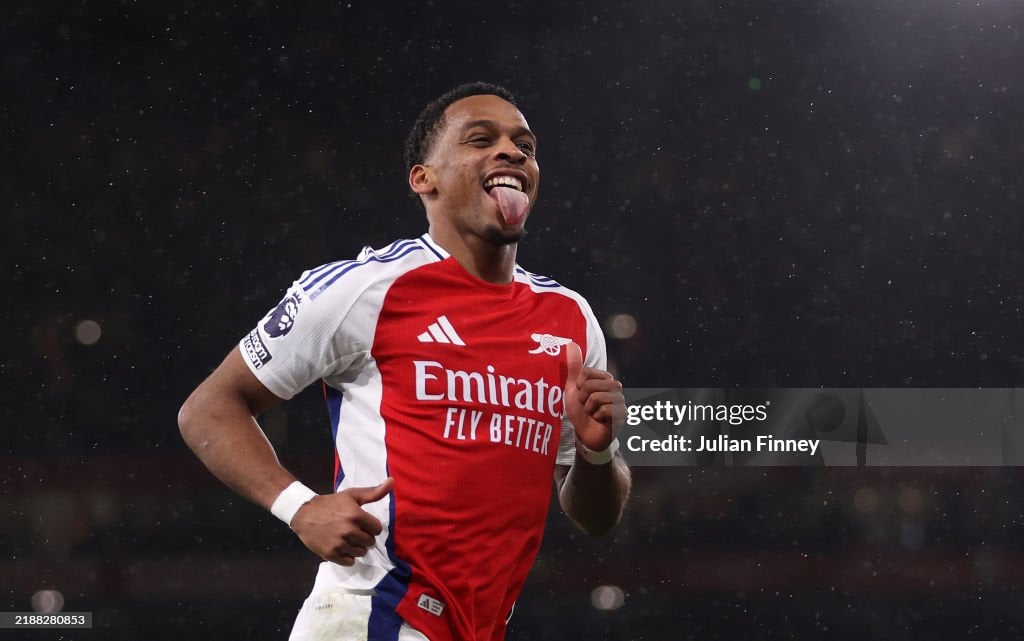

When Arsenal announced the signing of Jurrien Timber from Ajax in July 2023, it felt like a statement of intent. The club was not only building a squad for the present but also investing in a defender who represented the future of modern football. Timber was young, versatile, and already experienced at the highest level with Ajax and the Dutch national team. His ability to play as a right back, a center back, or even as a left back made him an ideal fit for Mikel Arteta’s system, which thrives on flexibility and control.
His debut against Manchester City in the Community Shield gave fans a taste of what was to come. Timber looked comfortable in possession, assured under pressure, and sharp in defensive duels. Arsenal went on to lift the trophy, and supporters left Wembley believing they had found a player who could transform the backline. Yet fate intervened quickly. Just one week later, in the opening Premier League game against Nottingham Forest, Timber suffered a devastating ACL injury. It was a cruel twist that ruled him out for almost the entire season.
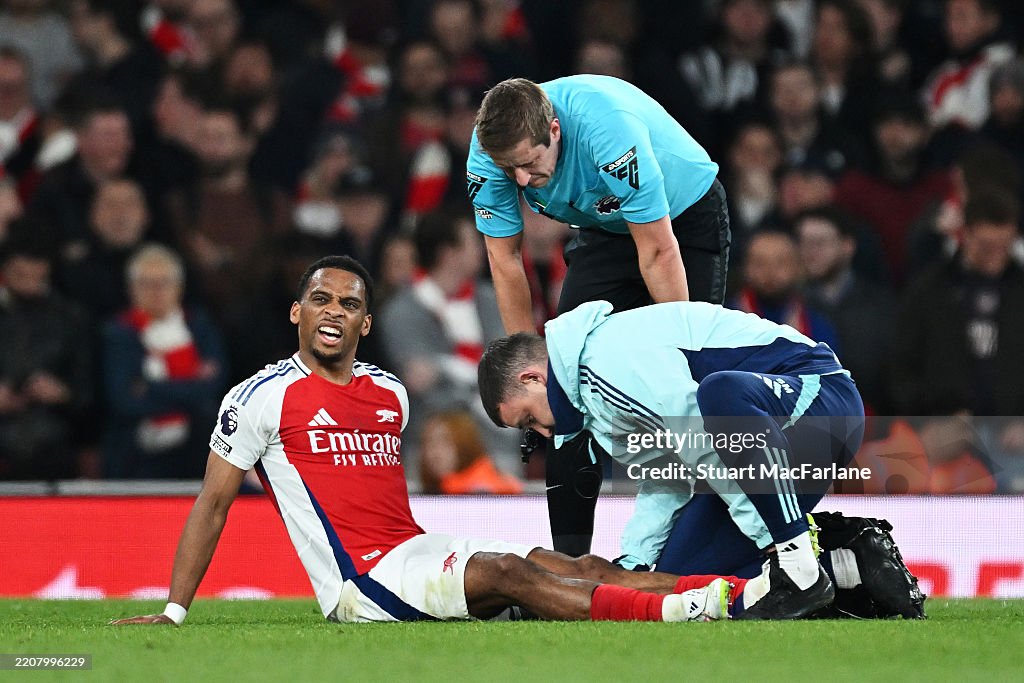
Now, with his recovery complete and his reintegration into the squad underway, Timber is effectively a new signing once again. His return could be one of the most significant developments in Arsenal’s quest to take the final step from challengers to champions.
Performance Review
Timber’s time on the pitch for Arsenal has been brief, but the signs have been hugely encouraging. In the Community Shield he started at left back, a position not typically associated with him at Ajax, yet he looked natural. He inverted into midfield when Arsenal had the ball, created passing options for Declan Rice and Martin Ødegaard, and kept Riyad Mahrez and Bernardo Silva quiet when defending transitions. It was an assured performance that highlighted his tactical intelligence.
Even in the short minutes against Nottingham Forest before his injury, Timber showed his defensive awareness and composure on the ball. His ability to anticipate danger, step into tackles, and then recycle possession without panic immediately stood out. These were the qualities that had made him a regular starter at Ajax, where he averaged some of the highest passing accuracy numbers in the Eredivisie and consistently ranked among the league leaders for ball recoveries.
At Ajax, Timber was known as a leader despite his age. Coaches and teammates praised his calm demeanor and ability to handle pressure. He played both as a right back and a center back, often tasked with bringing the ball out from defense. His dribbling ability, combined with his short passing range, allowed Ajax to maintain their possession-heavy style. These traits translate perfectly into Arteta’s Arsenal, where defenders are expected not only to defend but also to contribute actively to the build-up phase.
The only lingering question mark is fitness. Recovering from an ACL injury is never straightforward. Some players return quickly to their previous levels, while others take time to regain confidence and sharpness. Early reports from Arsenal’s medical team suggest Timber has returned in excellent shape. His preseason appearances have looked promising, with no signs of hesitation in his movement or duels. If that continues, Arsenal will have regained the player they thought they signed last summer.
Tactical Fit
Few players in Arsenal’s squad offer the tactical versatility Timber provides. He can operate in three different positions and give Arteta solutions that no other single defender in the squad can provide.
At right back, he presents a different profile compared to Ben White. White is excellent at overlapping and combining with Bukayo Saka, but Timber is more comfortable stepping into midfield and helping Arsenal dominate possession. Against teams who sit deep, Timber’s ability to create an extra midfielder could be decisive. Against pressing sides, his composure on the ball makes Arsenal harder to disrupt.
At left back, Timber offers the balance Arsenal lacked last season. Zinchenko provides creativity but leaves gaps defensively. Tomiyasu is defensively strong but less involved in the build-up. Timber combines both qualities. He is defensively reliable, quick across the ground, and strong in one-on-one duels, while also able to progress the ball into midfield. This gives Arteta the chance to deploy a left back who does not force a trade-off between defense and attack.
At center back, Timber adds another dimension. He may not be as physically dominant as Gabriel, but his anticipation and intelligence allow him to neutralize danger. With Saliba already excelling at stepping into midfield, Arsenal could pair Timber with him in a back three or use him on the left of Gabriel in a traditional back four. His ball-playing ability ensures Arsenal lose nothing in build-up play regardless of his position.
The real tactical value of Timber is the fluidity he brings. Arteta wants his side to shift shapes seamlessly during matches. Timber’s versatility allows Arsenal to start with one formation and then adapt without substitutions. He can invert from fullback into midfield, stay wide to stretch the pitch, or drop centrally to form a back three. Few defenders in the league can provide such adaptability.
Future Role
Timber is only 23 years old, which makes him a long-term piece of Arsenal’s project. With William Saliba, Gabriel, and Ben White already established, Arsenal’s defensive unit looks strong, but Timber has the potential to elevate it further. His age profile means he will grow alongside Rice, Ødegaard, Saka, and Martinelli, forming part of a core that could define the next five years.
In the immediate future, Timber will likely rotate across positions depending on injuries and tactical needs. Arteta has shown he values defenders who can play multiple roles, and Timber fits that philosophy better than almost anyone in the squad. Over time, however, he could establish himself as a guaranteed starter. His natural intelligence and technical quality suggest he is more than just a utility player.
The key will be availability. If Timber remains fit, there is no reason he cannot become one of the best defenders in the Premier League. His skill set is rare, and his understanding of positional play is advanced for his age. He has the potential to become not just a contributor but a leader in the defensive unit.
In European competition, where tactical adaptability is even more valuable, Timber could be especially important. His ability to switch roles during games could give Arsenal an edge against elite opponents. Over the long term, Timber is likely to be a cornerstone of the side, provided his recovery is managed carefully.
Importance to Arsenal’s Future: 8 / 10
Timber earns an 8 out of 10 rating for his importance to Arsenal’s future. His return offers something Arsenal did not have last season: a defender who combines technical ability, defensive solidity, and tactical versatility in equal measure. He can solve problems across the backline, adapt to Arteta’s evolving system, and grow into a leadership role over time.
The only reason he is not rated higher is the uncertainty that comes with his injury history. But if Timber stays fit, he could be one of the most important players in Arsenal’s push for titles. His impact may not always be measured in goals or assists, but in control, composure, and the ability to unlock tactical solutions that make Arsenal more complete.
