



Arsenal are looking into the possibility of expanding the capacity of the Emirates Stadium.
The ground was meant to be the gateway into the modern era for the Gunners when they departed their beloved Highbury Stadium in 2006, but the times have quickly caught up with the club.
The Emirates Stadium is a 60,704 seater stadium, now dwarfed in terms of capacity by the London Stadium of West Ham and the Tottenham Hotspur Stadium opened in 2016 and 2019 respectively.
According to the Guardian, Kroenke Sports & Entertainment would like to push the capacity of the ground up to 70,000 spectators, but that project could come at considerable cost. If the plan were to materialize, the Gunners might have to pack up and relocate themselves temporarily to another home.
Wembley Stadium has been touted as the top choice of an alternative home for Arsenal. However, the club do not need to look too far away from their surroundings to see why this could go wrong.
-
Arsenal’s brief relocation to the Old Wembley
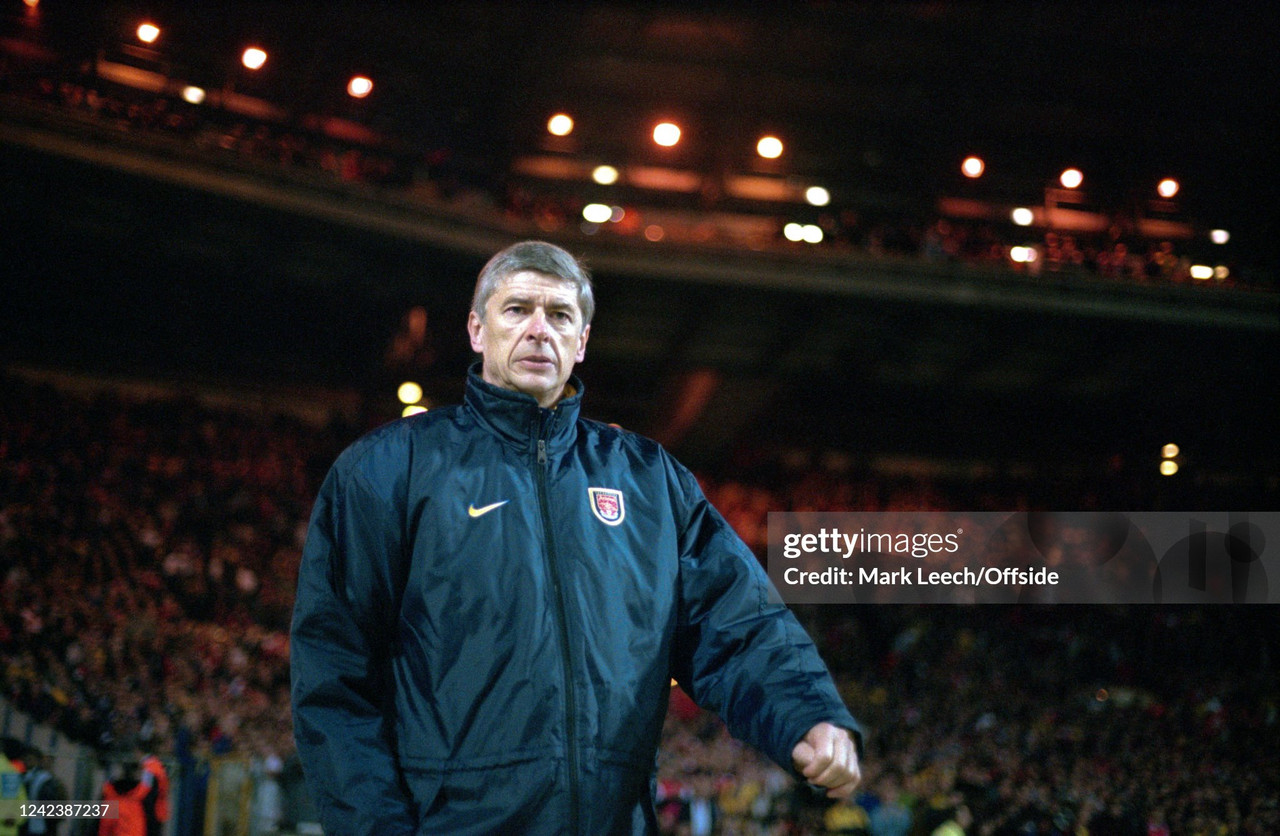
After the historic double in 1998 with Arsene Wenger at the helm, Arsenal were back in the continental competition for the first time in seven years. But this campaign came with a twist.
Home games did not take place at Highbury Stadium. The ground’s capacity maxed out at 38,419 spectators, and the higher advertising hoardings that UEFA demanded be used in their tournaments meant that the number of possibly usable seats reduced even further. Wembley was a last resort.
However, it was also a strategic move served at looking into a future away from the beloved home of the Gunners since 1913. The proposal of the Emirates Stadium was ambitious, and crowd figures in significant excess of the maximum capacity at Highbury would highlight the wisdom of a move.
While some wanted to build confidence in guarantors that a new ground would provide the right return on investment, David Dein was among the advocates for a partial stadium share with Wembley. It would be used on European occasions while Highbury remained the primary home of the Arsenal.
Whatever was the verdict, Wembley would play an important part in the modernising project of the Gunners. However, there was still work to be done to deliver at the highest level on the field.
Back in the big time, Arsenal needed every advantage possible, but they had lost a big intangible.
-
Financial fulfilment, sporting struggles
Wenger was ahead of the game in the Premier League, but Arsenal struggled on the continent. They only beat Panathinaikos at ‘home’ in their group for the 1998/99 campaign, losing 1-0 to Lens and drawing 1-1 with Dynamo Kyiv. A third placed finish was not enough to progress to the next phase.
The same story occurred in the following season. ‘Home’ advantage was immaterial in a 1-0 defeat to Fiorentina and a 4-2 loss to Barcelona as Arsenal fell into the UEFA Cup with a third place finish.
Wembley would undergo reconstruction and Arsenal had to go back to Highbury for their home fixtures in the 2000/01 season. As if by magic, even with limited capacity, their home form drastically improved with wins against Shakhtar Donetsk, Lazio, and Sparta Prague to top their group.
For the first time, the Gunners got into the second group stage of the Champions League. Even though they were eliminated, they remained unbeaten at Highbury in the competition, earning a 0-0 draw against Lyon and forcing a 2-2 stalemate against Bayern Munich, the eventual winners.
The Wembley experiment was a financial success and part of the plot that paved the way to the transition to the Emirates Stadium. But the decision was to the detriment of sporting excellence.
Arsenal are on the cusp of something special under Mikel Arteta, who has laboured to bring back a connection between the supporters and players. They would be very wise to avoid throwing that away.
