



Disaster struck at Chelsea this past week, as the relationship between the now-former Blues’ boss, Enzo Maresca, and the club’s hierarchy broke down in a very public way, leading to the Italian’s departure after just 18 months at the helm.
Although Maresca was appearing increasingly frustrated in press conferences and post-match interviews, and the club's form had been inconsistent as of late, the exit still came as something of a surprise to the Stamford Bridge faithful and has left them wondering what is next.
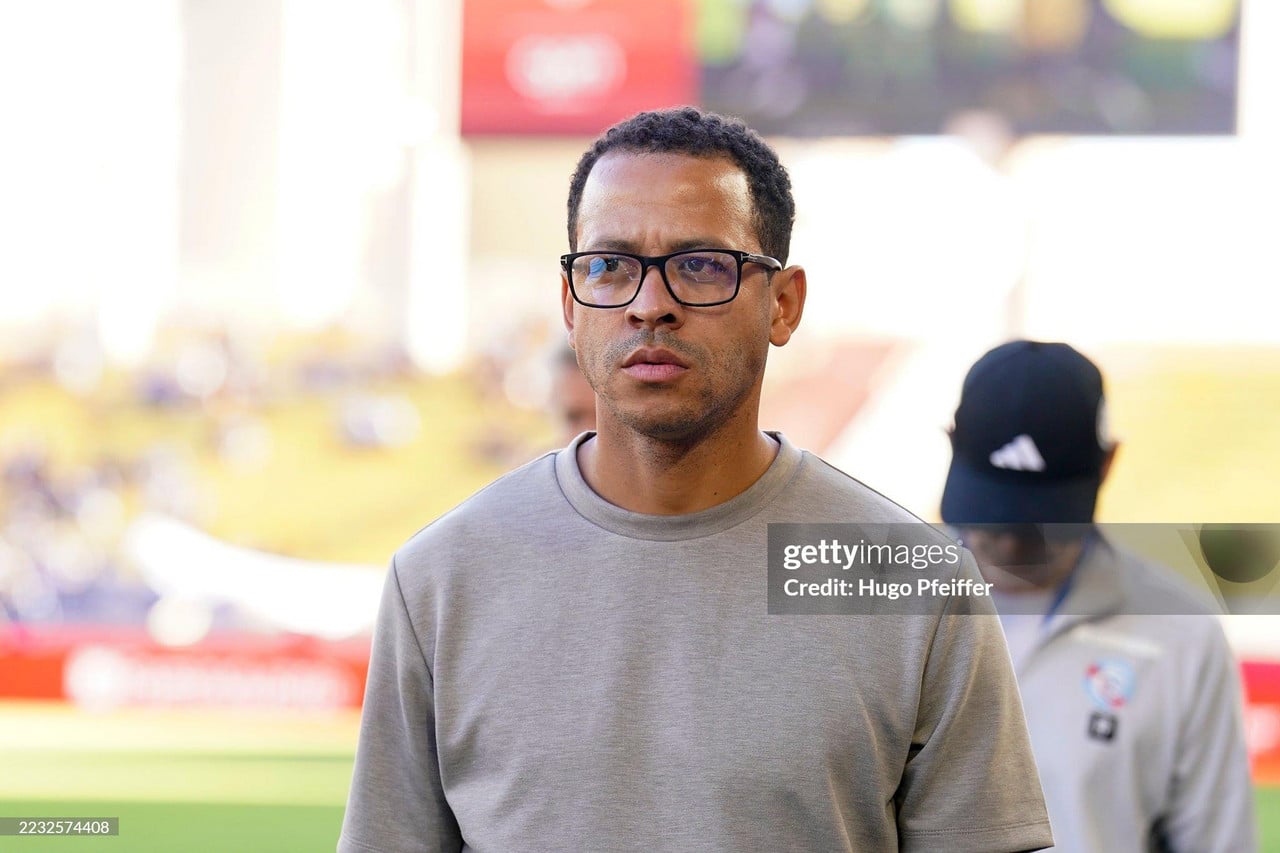
Well, it would appear that Strasbourg manager Liam Rosenior is the leading candidate to take up the role. The consortium known as BlueCo, led by Todd Boehly, owns both Chelsea and Strasbourg.
Since BlueCo acquired the French side, they have been utilised as a proving ground for younger players on Chelsea’s books, with the likes of Mike Penders, Kendry Páez and Mamadou Sarr all on loan at the Ligue 1 outfit. Furthermore, impressive forward Emmanuel Emegha, who joined Strasbourg in the summer of 2023, will join Chelsea this summer. So it is only natural that the same thing would apply to head coaches, too.
However, the clubs’ connection, while in some ways beneficial, has caused concern among the more ardent Strasbourg fans, who feel that the multi-club model compromises traditional club values.
Since joining Le Racing, Rosenior has led them to the UEFA Conference League, overseen the development of a myriad of young talent and won plenty of plaudits from fans and pundits alike across the continent.
So, who is Liam Rosenior? And why his potential appointment at Chelsea is one of the more intriguing in many a year.
-
The man
Rosenior is not your archetypal sports personality; he is a deep thinker about all things, not just football. Towards the end of his footballing career, which saw him play for Fulham, Reading, Hull City and Brighton, he began contributing to The Guardian.
His writing did not focus solely on football, but rather on social issues interwoven into the game.
He wrote passionately about the need for a cultural shift within football to allow players to feel comfortable coming out as gay in the men’s game. Additionally, he penned an incredibly poignant open letter to Donald Trump during the president’s first term, focusing on Trump’s language and actions regarding black men and women in the USA.
His cultural intelligence and empathy for others are clear. Speaking to The Athletic, Rosenior discussed where that comes from: “My mum was a social worker; she fostered children when I was 16. You have to have empathy when you’re bringing children into your family.”
This seems to have put him in good standing coaching-wise, too. In the same interview, he talked about how his upbringing taught him to respect and understand different cultures and how he took that into Strasbourg: “My dad is from a Sierra Leone background, my mum’s white, working class from South London, my upbringing was a mixture of cultures, a mixture of heritages, a mixture of understanding, different ways of living, but from my childhood I understand we’re all the same, but sometimes things can be interpreted in a different way from what it actually is.
“Coming here (Strasbourg) at first, we had a 25-man squad, 20 of the players were of West African/French backgrounds,” Rosenior said. “If I walked into a group like that and said, “Right, you have to be in at nine o’clock in the morning, you have to eat at 9:15, it’s not going to happen. Not because they’re disrespectful, it’s just not the way they have been brought up. You have to adapt the way that you work to the people that you work with. It allows people to be comfortable with the culture that you’re setting, you allow people to be themselves.”
Rosenior’s parents and background have evidently shaped him and his worldview. His father went a step further and influenced his career. Leroy Rosenior, Liam’s father, was also a footballer who had stints at clubs like Fulham, QPR and West Ham.
Liam remembers fondly watching his dad play “Football was in the blood in our family. For my brother Daron and me, growing up, the highlight of our week was always Saturday. That was when we watched Dad play,” Liam wrote for Coaches Voice.
Rosenior Sr, much like his son, after his playing career went into coaching and holds the record for the shortest time in charge of a club, lasting a mere 10 minutes (yes, 10 minutes) at Torquay United. Furthermore, his father was awarded an MBE for his services in fighting against discrimination in both football and society.
Liam’s own playing career was solid, if unspectacular. A dependable full back who bounced between the Championship and the Premier League, so to see him rise through the managerial ranks as rapidly as he has is something of a surprise. Still, hearing him speak, it is clear why players gravitate to him.
“Every person who is involved in something needs to feel like they’re important,” Rosenior said to The Athletic. That is an attitude most managers don’t take, and in a squad as big as Chelsea’s, instilling that feeling will be paramount to achievement.
This perspective appointment is unlike any other Chelsea have undertaken in their history: a man who puts humanity before tactics, culture before formations.
Despite this, the tactical side of the game is still important, and here is what we may see from his Chelsea side.
-
The tactics
Rosenior, tactically, is not too dissimilar to Maresca, which makes sense given that they were both employed by the same consortium, looking to create connective tissue between the clubs.
Like the Italian and many other modern managers, Rosenior wants his side to control the game through possession. He likes to build from the back, with the goalkeeper and centre-backs active in the build-up.
He is very willing to hold on to the ball in his own defensive third until the opponents engage, with his side averaging 228 defensive touches per 90 minutes last season, one of the highest in Europe.
This is done primarily to invite the press from the opposition, to draw players out of position, play it around them, and then attempt to exploit the numerical advantage gained in the middle of the pitch. One way Rosenior seeks to create a numerical advantage is by having his full-backs invert and move into midfield.
This style is a risky way to play, and throughout his time at Strasbourg, he has seen one or two mistakes, something which, when speaking to The Athletic, Rosenior embraced those errors: “I don’t mind players making mistakes.
“Mistakes are a good thing, because you can be educated as to why they happened.”
Off the ball, Rosenior likes his sides to win the ball quickly after losing it, wanting to regain possession, to, in his eyes, regain control of the game.
One way his teams attempt to win the ball back is by leaving specific passing lanes open to the opposition. Primarily to players who are perhaps weaker on the ball, and then swarming them with two or three players.
However, the Englishman can be pragmatic; this is not a live-or-die philosophy. When required, his teams will sit deep and be patient, or they will look to be more direct.
But typically, the style is one that requires a lot of energy. It worked well over in France, as the squad Rosenior was working with had an average age of 22.7, the youngest in Europe’s top five leagues. As is the BlueCo philosophy, Chelsea’s average age in their squad is also young, just 23.7, the youngest in the Premier League by some way.
So the players he will have at his disposal at Stamford Bridge should be prepared and ready to adapt to his style immediately.
But how big is the task at hand?
-
The challenge
You have to go back some years to find a stable version of Chelsea. Not since the heady days of Thomas Tuchel has there been a genuine sense of a club on an upward trajectory.
And that marries up with BlueCo’s acquisition of the club back in May 2022. Their philosophy of buying young talent, while delivering one or two gems, has, without a doubt, created consistent inconsistency and fostered an environment that makes it difficult for any manager to succeed.
At times during this ownership, Chelsea have felt like a shell of their former selves. Where they were once cool, calm and composed gatekeepers of the Premier League, they have, at times, become a frantic mess.
The task at hand for Rosenior goes way beyond football. Chelsea require some love.
That goes for the players within the squad and the club itself, so hiring a man who says he is “not afraid to tell my players I love them” might be Boehly’s best move since buying the club.
Someone who has demonstrated such high levels of emotional intelligence and is one of the standout young English head coaches in the game right now is ideal for this job.
