


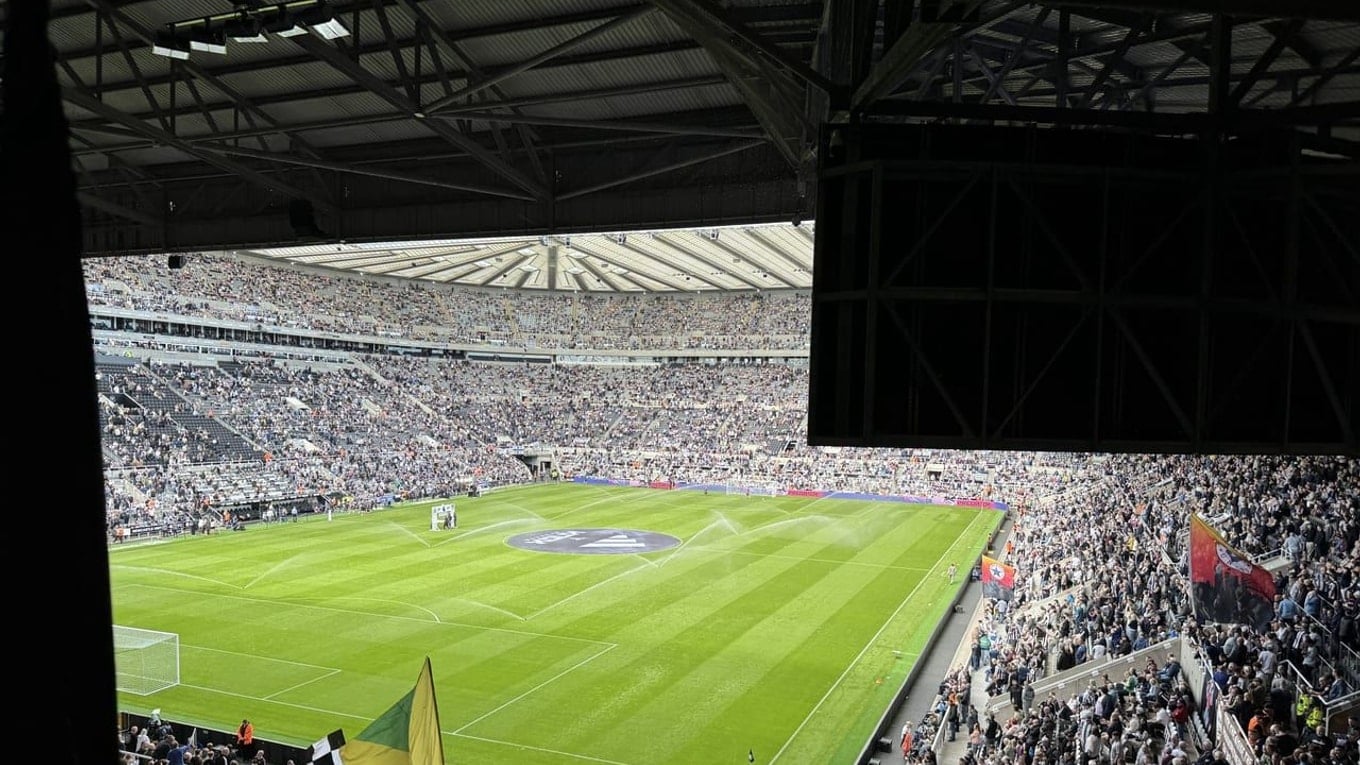

Every weekend in the Premier League, a referee pulls a red card out of his top pocket and half the stadium immediately assumes the dismissed player misses the next three matches. Ten minutes later on television commentary, viewers learn he will actually return next Sunday after sitting out a midweek Carabao Cup tie, while another player sent off at the same ground a fortnight earlier vanished for four or five games. That confusion stems from treating every straight red card as one single offence.
Under Football Association Disciplinary Regulations and IFAB Law 12, the length of an automatic suspension depends entirely on which specific sending-off code the match official files to Wembley after the final whistle, how many times that player has already walked down the tunnel early that season, and whether he reacts badly after seeing red.
How Many Games Is a Red Card Ban in the Premier League?
In the Premier League, two yellow cards in one match or a straight red card for denying an obvious goal-scoring opportunity carries a one-match ban. Foul and abusive language brings a two-match ban, while violent conduct or serious foul play triggers an automatic three-match domestic suspension.
| FA Sending-Off Offence (Law 12) | Card Type | Standard Automatic Ban | Repeat Red Card Escalator |
|---|---|---|---|
| Receiving a second caution in the same match | Two yellows = Red | 1 domestic match | +1 match per prior red card in season |
| Denying obvious goal-scoring opportunity (DOGSO foul / handball) | Straight Red | 1 domestic match | +1 match per prior red card in season |
| Offensive, insulting or abusive language / gestures | Straight Red | 2 domestic matches | +1 match per prior red card in season |
| Serious foul play (reckless studs-up tackle endangering safety) | Straight Red | 3 domestic matches | +1 match per prior red card in season |
| Violent conduct (off-the-ball strike, headbutt, throat grab) | Straight Red | 3 domestic matches | +1 match per prior red card in season |
| Spitting at or biting an opponent or any other person | Straight Red | 6 domestic matches (min) | Subject to further FA misconduct charges |
Breaking Down 1-Match, 2-Match and 3-Match Straight Red Cards
Not every straight red card carries a three-game punishment. When PGMOL referees submit their post-match misconduct reports, The FA maps each dismissal onto a fixed automatic tariff:
- One-Match Ban (DOGSO or Two Yellows): Pulling down a striker clean through on goal outside the penalty area, handling a goalbound shot on the line, or collecting a second yellow card for time-wasting or stopping a promising attack all carry a single-match suspension. When Arsenal centre-back William Saliba hauled down Evanilson near the halfway line at Bournemouth in October 2024 and VAR upgraded his yellow card to a straight red for denying an obvious goal-scoring opportunity, Saliba served just one game (missing the home clash with Liverpool) rather than three because no excessive force was involved.
- Two-Match Ban (Offensive, Insulting, or Abusive Language): Swearing directly at the referee or assistant referee, or making an obscene gesture toward supporters or officials, triggers a two-match suspension. Brighton captain Lewis Dunk became the first Premier League player in over a decade sent off via a straight red specifically for abusive language toward referee Anthony Taylor at Nottingham Forest in November 2023, sitting out two matches as a result.
- Three-Match Ban (Serious Foul Play or Violent Conduct): The difference between these two three-game offences comes down to whether the player was challenging for the ball. Serious foul play occurs when a player uses excessive force or brutality while competing for the ball in play, such as a high studs-first lunge into an opponent's shin. Violent conduct happens when a player uses or attempts to use excessive force against anyone while not challenging for the ball (whether play is live or stopped), including slaps, headbutts, kicks off the ball, or grabbing an opponent by the throat (unless negligible force is proven).
Players can talk or shove their way into much heavier bans after the red card comes out. Once dismissed, a player falls outside standard match-play cautions and lands squarely under FA Rule E3 improper-conduct charges. In August 2023, Liverpool captain Virgil van Dijk received a one-match DOGSO red card for fouling Alexander Isak at Newcastle United, refused to leave the pitch promptly while berating referee John Brooks, and had an extra match plus a £100,000 fine bolted onto his suspension. Even worse, West Ham winger Mohammed Kudus turned a standard three-match violent-conduct red card at Tottenham Hotspur in October 2024 into a five-match ban and £60,000 fine because he shoved a second player after the initial offence.
The Repeat Offender Rule: Extra Bans for Multiple Red Cards
Collecting multiple red cards inside the same English domestic campaign triggers an automatic escalator that catches aggressive tacklers out every spring. Under FA regulations, a player's second, third, or fourth dismissal in the same season carries an automatic surcharge on top of the standard tariff:
- Second red card of the season: Standard ban for that offence plus 1 extra match.
- Third red card of the season: Standard ban for that offence plus 2 extra matches.
- Fourth red card of the season: Standard ban for that offence plus 3 extra matches.
Both two-yellow dismissals and straight red cards count toward that seasonal red card tally! Look at Tottenham midfielder Yves Bissouma during the 2023/24 campaign. In October 2023 at Luton Town, Bissouma was sent off for two yellow cards (the second for simulation) and served a 1-match ban. Two months later at Nottingham Forest, he received a straight red card for a high studs-up challenge on Ryan Yates (serious foul play = 3 matches). Because Luton already counted as his first dismissal of the season, The FA automatically added +1 repeat-offender game, handing Bissouma a four-match suspension instead of three.
Why Red Card Bans Carry Into the FA Cup and Carabao Cup
Since 2019/20, accumulated yellow card suspensions (5, 10, or 15 cautions) have been strictly competition-specific: pick up five Premier League bookings and you only miss a Premier League fixture. Red cards work the exact opposite way.
Any red card received in the Premier League, the FA Cup, or the Carabao Cup applies immediately to the club's next competitive first-team domestic match across all three English competitions! When Arsenal's Declan Rice and Leandro Trossard were each dismissed for two yellow cards in Premier League fixtures against Brighton and Manchester City in autumn 2024, Trossard was able to clear his one-match suspension three nights later against Bolton Wanderers in the Carabao Cup Third Round and walk straight back into Arsenal's Premier League starting XI against Leicester City on Saturday.
Domestic red cards never carry over into UEFA Champions League, Europa League, or Conference League matches (nor do UEFA red cards block a player from domestic weekend games). However, if a player gets sent off in Matchweek 37 or 38 in May with unserved games remaining on his suspension, those remaining matches carry directly into the opening competitive domestic fixtures of the following season, even if he transfers to another English club, or under FIFA RSTP Article 12 even if he transfers abroad to LaLiga, Serie A, or the Bundesliga!
How Wrongful Dismissal Appeals Work (And Why Two Yellows Cannot Be Appealed)
Can a club appeal a harsh red card? Only if the referee showed a straight red card. Under FA fast-track procedures, a dismissal for two yellow cards can never be appealed on merit (even when television replays prove the second caution was blatantly wrong), with one sole exception: mistaken identity (famously used in March 2014 when referee Andre Marriner sent off Arsenal's Kieran Gibbs at Chelsea after Alex Oxlade-Chamberlain tipped a shot past the post).
For straight red cards (excluding spitting or abusive language), clubs face razor-tight deadlines:
- Notification deadline: Must reach The FA by 13:00 on the first working day following the match.
- Evidence submission: Written arguments and broadcast angles must be filed by 13:00 on the second working day, heard before the club's next fixture.
- Legal bar ("Obvious Error"): An Independent Regulatory Commission does not re-referee subjective 50-50 calls; the club must prove the referee made an obvious error that no reasonable official viewing the footage would have made.
Successful appeals wipe the suspension clean immediately: Liverpool overturned Alexis Mac Allister's straight red card against Bournemouth in August 2023, Manchester United overturned Bruno Fernandes' three-match ban after he slipped tackling James Maddison in September 2024, and Arsenal won their appeal after 18-year-old Myles Lewis-Skelly was shown a straight red card for tripping Matt Doherty seventy yards from goal at Wolves in January 2025. Clubs still think twice before filing speculative claims: if the Commission rules an appeal was frivolous with zero realistic prospect of success, it holds explicit power to extend a three-match ban to four matches before Friday team sheets are submitted.
Related Football Rules & Qualification Guides
