


“A football team is like a beautiful woman. When you do not tell her, she forgets she is beautiful” – Arsene Wenger
There is no question about it either; when a football team plays well, it is as beautiful and elegant as anything you’ll ever see. The movement and energy put in by the players leaves eager eyes in admiration and astonishment. Rightly known as ‘the beautiful game’, football continues to inspire viewers all over the globe, no matter what age.
Seeing the spectacle of a vivid yellow wall at the Westfalenstadion or even simply seeing the sight of your teams players marching out of the tunnel really gives you a feeling like no other, a unique buzz.
However, the magic begins when the players get the ball at their feet and get the ball moving. In this modern game, the pace of the game can be blistering. With the likes of Barcelona’s Tiki Taka system, observing a game of football can be a sensational sight, with any possibility. A wider range of formations and tactics gives the manager a range of opportunities. However as some features remain, many change, and get lost in history; one of these fading sights is the classic Trequartista role.
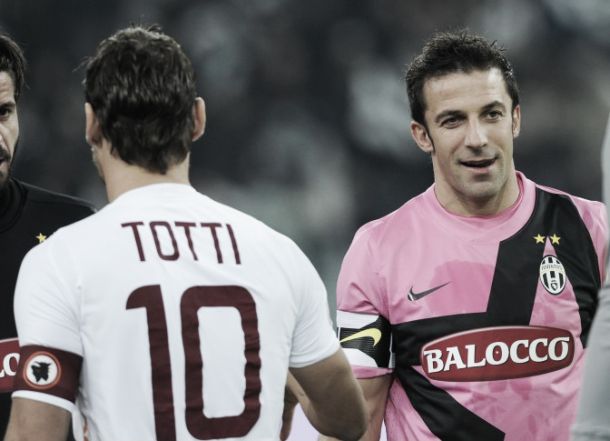
Firstly, what is a trequartisa? The word trequartista roughly translates into three quarters, or playmaker. The perfect trequartista will be able to find space in between the oppositions midfield and defence, and exploit this space playing penetrating balls through to his teammates. To be a trequartista, you have to have exceptional technical ability. Although passing ability is the fundamental part of playing in this role, you are expected to have wonderful accuracy and technique with everything you do. They aren’t as burdened with goal scoring responsibility as a striker, however the skill involved in this role will regularly produce outstanding goals. Some of the best examples of trequartista’s were/are some of the best players to have played the game: Francesco Totti, Alessandro Del Piero, Zinedine Zidane, Michel Platini and Juan Roman Riqueime. Although elusive, the trequartista often proves to be the match winner. But why is the trequartista, the classic number 10 role, a fading sight in European football?
Perhaps the pace the game is played at has increased too much. The trequartista is naturally lazy, and relies on the defensive line or anchor man to do the dirty work, and obtain the ball. While they’re fighting for possession, the trequartista scans his area, looking for a spot where he can recieve the pass. However, with a variety of formations, the modern game is much more attacking, meaning the opposition need to match their numbers in defence; this may mean another anchor man or deep lying playmaker needs to be added to the midfield, denying the opportunity to play between the lines. This increase in defensive strength cancels out the agility and speed of thought needed in a number 10.
Perhaps the defensive lines are too tight, making it virtually impossible for the trequartista to find the space needed, a crucial part in his duties. Managers need versatility, so his squad can rotate with ease, reducing the probability of injuries.
A modern example of a modified trequarista is the one and only Zlatan Ibrahimovic; note the word modified. Recognized as a target man, the powerful Swede has a high degree of physical strength and towers above his opposition at 6 foot 5 inches. These features are almost contradictory to the best trequartista’s, who were often nimble, agile and relatively small. However, many of Zlatan’s attributes are complementary to the trequartista’s; Drifting into any vacant space to receive the ball, holding the up play no matter how much pressure defenders are puting on him, and maneuvering his way around the field.
Over the past 50 years, we have seen an abundance of different formations used. From the classic 4-4-2 used by Manchester United, to the 3-4-3 occasionally used in Guardiola’s system at Barcelona. As the game changes, so will the tactics and the accommodation for the old fashioned number 10 role will perhaps be opened once more. The sight that once had youngsters exhilarated may return, to excite another generation.
