


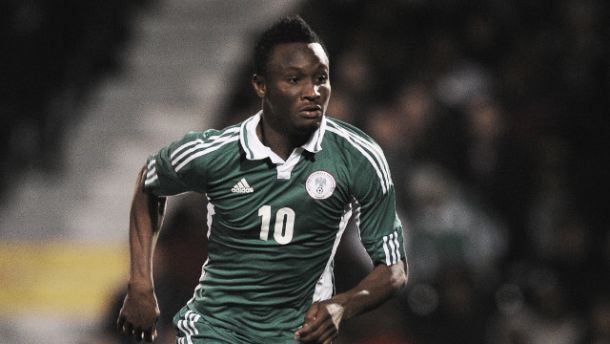

Mikel Obi will be making his first World Cup appearance for Nigeria after missing South Africa four years ago due to injury. The daunting task of Mikel’s sojourn in South America is incomprehensible.
Back in Nigeria, Mikel has been seen as the answer to Nigeria’s midfield problem more so, as J J Okocha peaked and retired from international football but Mikel never filled those boots- and it’s not because he isn’t talented or equipped to do so.
Being the revelation of Holland 2005 at the U-20 FIFA World Cup under the watchful eyes of Coach Samson Siasia, Mikel sold his craft to the World and it was instantly accepted. A new midfield jewel has just been found. Only Argentine wizard, Lionel Messi stood above Mikel. Nigeria would eventually lose to the Argentines in the final, and Mikel would eventually place second, next only to Messi as he won the Silver ball as the second most valuable player of the tournament but his talents were undeniable.
The changing point in Mikel’s-soon-to-blossom career was his move to Chelsea after a battle with Manchester United. New to London and the buzz, Mikel had issues settling down. His lifestyle on and off the pitch was a huge concern to many.
In September 2006, Mikel made his first start for Chelsea in the UEFA Champions League against Levski Sofia and took a powerful shot which the goalkeeper failed to save and Didier Drogba pounced on the rebound. Mikel received many positive comments for his performance in the match. However, since being sent off in a match against Reading in October 2006, Mikel was fined on three separate occasions by Chelsea for turning up late to training.
At the time, Chelsea manager José Mourinho was believed to have strong reservations about his lifestyle outside of Stamford Bridge and the club were reportedly considering offloading the player. Mikel was dropped for over a month during which his father Michael voiced his concerns over his son's behaviour.
However, after improved punctuality and showings at training sessions, Mikel earned a recall for Chelsea's Champions League group away game against Werder Bremen in November 2006. Mikel scored his first goal for Chelsea in their 6–1 FA Cup victory over Macclesfield Town in January 2007.
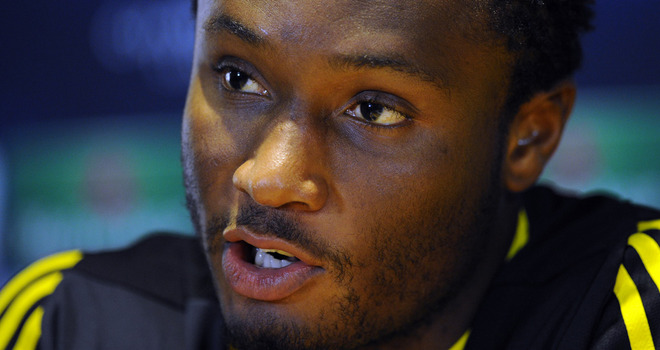
In subsequent games, Mourinho deployed Mikel as a starter in a holding role in key games where he impressed greatly, notably in the Chelsea versus Tottenham FA Cup sixth round replay, the Champions League quarter-final games versus Valencia, the Champions League semi-final games versus Liverpool and also the victorious FA Cup Final against Manchester United.
Mikel's height and great strength, allied to good ball control and an unusually wide range of passing, allows him not only to disrupt opposing attacks, but also to spread the play effectively. Mikel would eventually supplant the French midfielder Claude Makélélé in the lineup following his departure to Paris Saint-Germain.
Fast-track to present day, Mikel’s style of football has not changed. Infact, the ‘unusually wide range of passing’ has seemingly dried up. Football fans in Nigeria blamed Jose Mourinho for this lack of development as a creative player. They believe that had Mikel continued playing as a creative midfielder. He would have been one of the best in his craft.
The irony is that Mikel is allowed to play the creative role for the national team. A glimpse of his ‘old magic’ was orchestrated at the 2013 Confederation’s cup in Brazil. Mikel reveled and even scored a screamer against Uruguay.
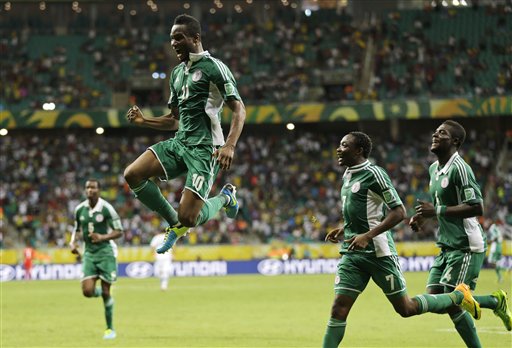
Keshi encourages Mikel to venture forward more and try to spread the ball around most especially to the fast paced wingers like Victor Moses and Ahmed Musa.
In the team’s last tune up match against USA before heading to Brazil, Mikel played as a creative midfielder and was holding the team together for 45 minutes. After his substitution for the second half, the entire midfield collapsed and creativity was flat. It shows that without Mikel in the Nigerian team, it can’t function but even at that, where does Mikel fit in at best: an anchorman like in Chelsea or as a distributor of the ball?
Former International Emeka Ezeogu believes that Coach Stephen Keshi should continue to employ Mikel in defensive midfield role.
”Mikel is too slow; he doesn’t have pace and not an explosive player so he needs to play in the defensive midfield role” he told Nigeria’s only 24-hour Sports Radio, 88.9 Brila FM and 365footballnews.com in May.
With the exclusion of Sunday Mba, Nnamdi Oduamadi, Joel Obi and Nosa Igiebor, the onus now is on Mikel to deliver. But for someone who has been in the little black book of Nigerians, a disappointing outing for the Super Eagles in Brazil will have a missive blow-back on Obi Mikel.
