




Gareth Southgate’s in-game management has been a debating topic for much of his England tenure. How to respond to opponents’ tactics, when to bring fresh legs into the team and whether to play with a little more risk have all been questions asked of his touchline tendencies.
However, it is fair to say that Southgate is proving to be getting his moves just right as England head into Sunday’s Euro 2024 final against Spain in Berlin. The manager’s critics have been out in force during England’s time in Germany, but there can be few qualms with how he is guiding them through the latter stages of the tournament.
There is no set way to win an international competition, it is all very different to the club game in which systems and styles — and money — often dictate where teams finish at the final reckoning. Instead, tournament football, condensed into a short four-week spell is mainly about moments: creating and seizing them.
What England have done on their run to the final has been the grasping of such moments. Normally these do-or-die pieces of play tend to go against England — there have been too many down the years to count — but it appears that, for once, they are managing to conjure these special denouements with regularity and poise.
A lot of that is down to the changes that Southgate has made during the games. In the semi-final win over the Netherlands, England had dominated the first half but found the second 45 minutes more heavy going as Ronald Koeman switched things up and made his team more compact.
It was down to Southgate and England to respond, and they did, again. Not for the first time, England switched formation during a game in a further sign of their flexibility in both system and approach.
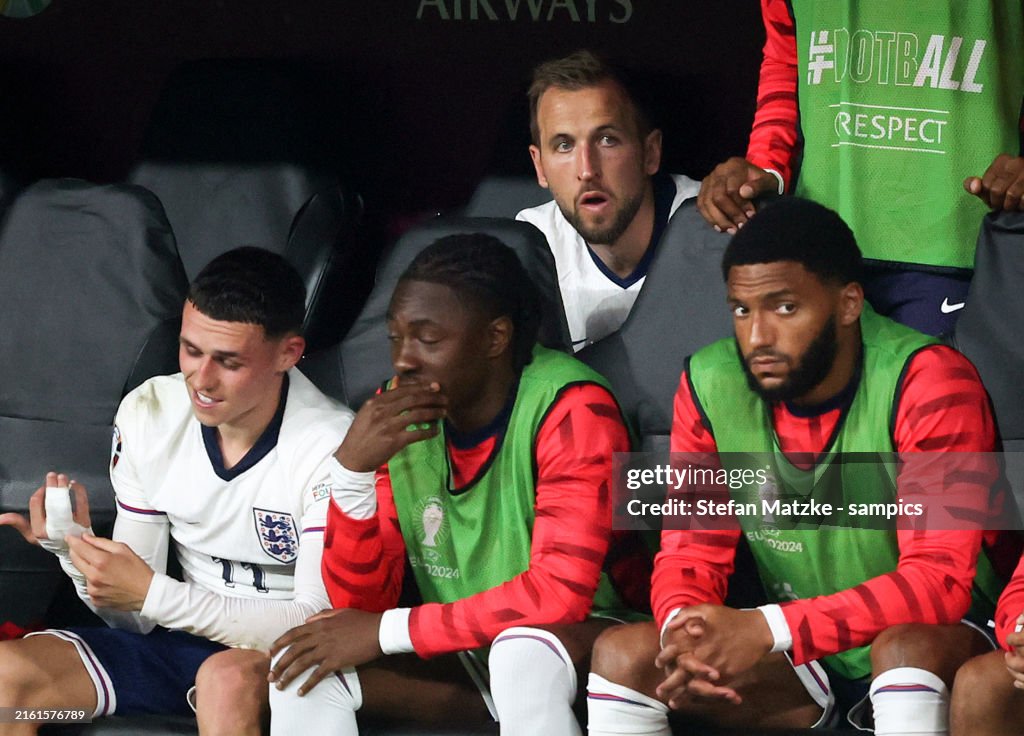
And, also, it was Southgate’s changes that proved decisive. He might have acted sooner, with extra time becoming a real possibility, but instead waited until the 80th minute before taking off captain Harry Kane, who had converted the penalty for England’s equaliser to take him to three goals for the tournament, and Phil Foden.
Removing two of the side’s biggest names and most accomplished attackers was a big call. However, Kane was tiring and it did not seem likely that he would be able to breach the Dutch defence late on from open play. Likewise, there were signs of Foden’s influence diminishing after he had been inspirational in an electric first-half display.
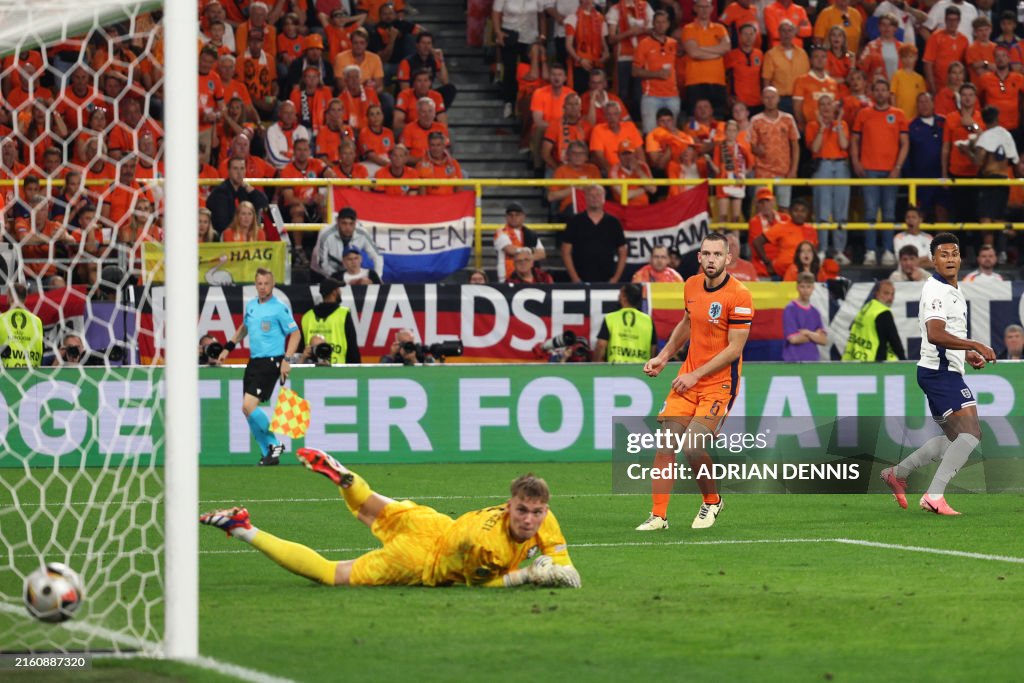
So, two logical but, nevertheless, brave changes. Watkins and Cole Palmer came on in their place and as the stadium clock was just about to tick over the 90-minute mark they combined for England’s winning goal.
It’s not the only time Southgate’s substitutions have reaped rewards during the knockout stages. In the quarter-finals against Switzerland, Trent Alexander-Arnold was sent on in extra time and scored the winning penalty in the shoot-out.
In the last-16 tie against Slovakia, Ivan Toney’s header a little more than a minute after coming on in stoppage time teed up Jude Bellingham’s overhead kick to take that match into extra time. It is not coincidence that England are finding deep reserves when needed. This is not luck, rather design.
Southgate has been flexible and brave with his calls
England’s squad is deep and the list of attackers that Southgate has brought with him means there are always options. If not Kane and Foden, then Watkins and Palmer. If not Watkins and Palmer, then Toney and Anthony Gordon. If not Toney and Gordon, then Eberechi Eze and Jarrod Bowen.
Southgate has long advocated the idea of ‘finishers’ as opposed to substitutes. It is something that he took from his meetings with Eddie Jones, the former head coach of the England rugby national team. The mantra being that the players who finish a game have just as much of a role as those who start it.
Everyone in the England squad has a role to play and Southgate and his coaches demand that every member of the 26-man cohort is prepared and ready for their moment. Even just across the past three games, Toney, Alexander-Arnold and Watkins have all taken the opportunities that have come their way. Simply, England would not be here without them.
“Ollie has trained like that every day and has been ready for his moment, no matter how frustrated he might have been, and the whole group have been excellent”, Southgate said after the 28-year-old’s match-winning cameo.
The collective mindset that has been a cornerstone of Southgate’s England has long borne fruit, but the strength of character and resilience they have exhibited en route to this final has been even more notable than previous tournaments.
England were in strong positions in both the World Cup 2018 semi-final and the Euro 2020 final. On both occasions they were outmanoeuvred by the opposition, Croatia and Italy respectively, and failed to press home their advantage.
As they have approached the business end at Euro 2024, it has increasingly felt that England — and Southgate — have backed themselves more. Their performances for the large part have not been great but possessing a winning knack and deft hand with substitutions often seals glory on the international stage.
England now face their toughest task: the tournament favourites Spain who have looked irresistible when progressing through the more difficult side of the draw. Southgate and his players have not come up against such opponents so far this tournament and it will perhaps be a greater test than their previous semi final and final ordeals.
However, England are reaching their potential in Germany at just the right time. The timing of their form is looking good and defiance until the last is becoming a speciality of theirs.
