


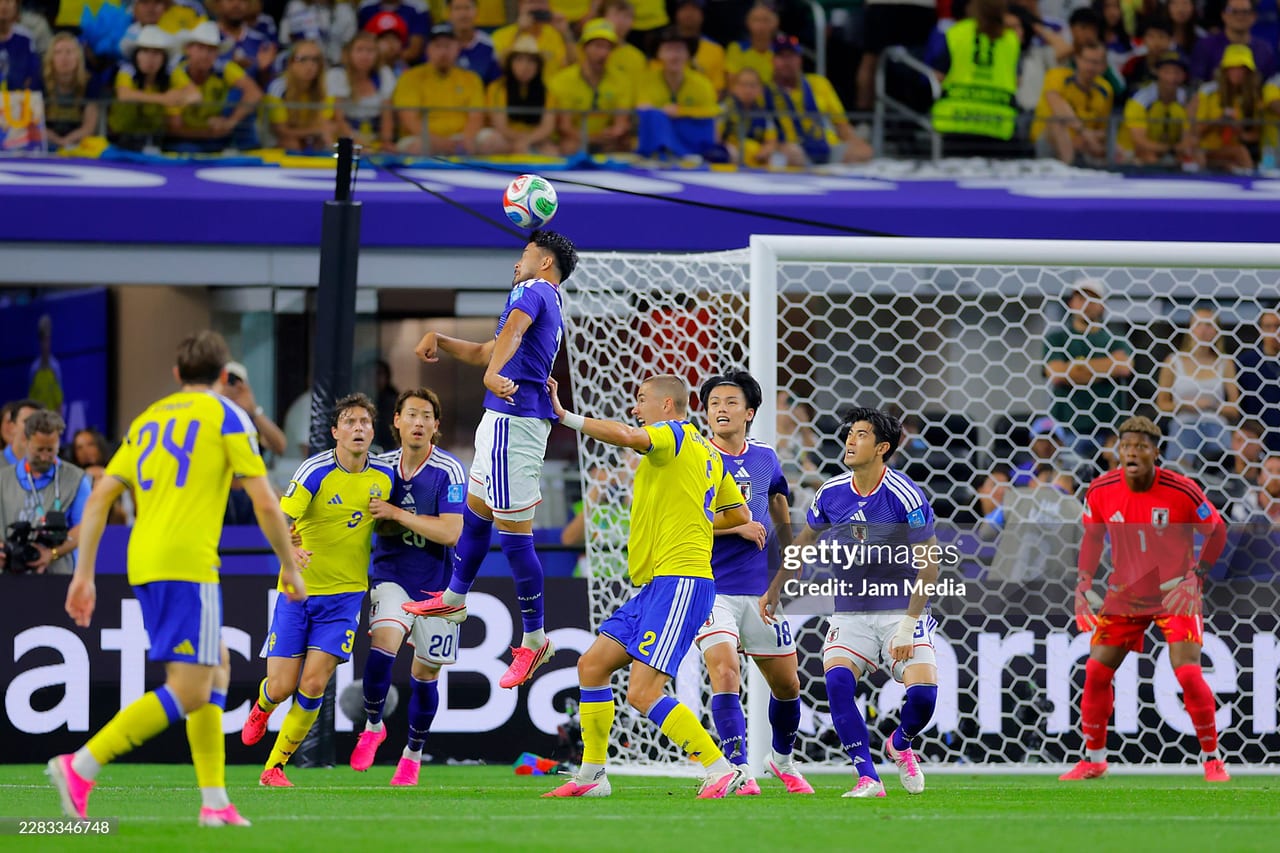


Japan and Sweden played out an entertaining final game in Group F, as both teams proved dangerous and evenly matched.
The first half was a tense one, with both teams having strong chances to open the scoring. Daizen Maeda broke the deadlock early in the second half, before Anthony Elanga evened the score minutes later with a well taken strike.
Sweden pushed late on for a winner, but couldn't find a way through an organised Japanese defence.
A draw felt like the fairest result, especially considering that both teams have more or less guaranteed their qualification for the next round. The next round fixtures may not be as straightforward for both teams: as things stand, Japan will play Brazil in the Round of 32, while Sweden could meet France on the opposite end of the bracket.
Story of the match
Japan had their sights set on immediate qualification after an unbeaten start to the tournament, and had potential to top their group if they bettered the Netherlands' result in their final match.
Head coach Hajime Moriyasu opted for more rotation within his squad - Le Havre defender Ayumu Seko was rewarded with a spot in the back three after featuring off the bench against Tunisia.
The other big change was forward Daizen Maeda - who did not feature in the Tunisia game - coming in for Kaishu Sano.
Meanwhile, the changes Graham Potter made to his Sweden side suggested heavily that he was searching for a positive final result to see out the group phase.
Jacob Zetterstrom replaced the veteran Kristoffer Nordfeldt between the sticks, whilst there were also first starts for Elliot Stroud and Anthony Elanga - who scored the only goal in the 5-1 defeat to the Netherlands.
It was the Swedes that had the better start to the match, winning a pair of corners within the first minute and putting Japan under pressure from the off. Elanga's introduction into the team shifted Sweden into a 3-4-3 shape, a slight change from their usual 3-5-2.
Japan lacked the early possession but were potent on the counter and looked to force mistakes from their opponents. Maeda made good use of his pace to get in behind the Swedish defence, and nearly won his side a penalty early on.
Both sides were operating at a high attacking tempo, but Japan were edging their opponents ever so slightly due to their superior ball progression. Neat, passing moves through the centre of the pitch set up good chances for their attackers, and it was Maeda again who came close, steering a headed chance just wide of the post.
Creatively, Sweden were struggling - Elanga looked to be their only creative outlet, and Japan's brilliant man marking in the midfield left their strike partnership of Viktor Gyokeres and Alexander Isak largely isolated.
An injury to defender Isak Hien forced Sweden into an early change - midfielder Lucas Bergvall came into the match, with Victor Lindelof moving into a deeper role to cover. Japan also made a switch in their defence, with Shogo Taniguchi replacing skipper Ko Itakura.
Keito Nakamura had been dangerous down Japan's left flank, and produced the best chance of the half: a stinging effort from just outside the box which had to be parried away by an outstretched Zetterstrom.
There was very little to separate the two sides as half time approached. Japan were playing with a calm patience and outnumbered their opponents in terms of goalscoring chances. Sweden had not threatened nearly as much as they will have hoped, but were still posing a challenge to their opponents - particularly from set pieces.
The Samurai Blue were far and away the better team at the beginning of the second half, and broke the deadlock after ten minutes via Maeda - thanks to a brilliant first time pass from Ritsu Doan.
It had been coming, and Japan's quick first time passing moves were causing all sorts of problems. The run by Maeda was well timed and left the Celtic forward with plenty of space to get his goal away.
Sweden level the game
Now a goal down, Sweden were starting to build momentum of their own and were keeping good possession in the attacking third - but lacked the finishing touch as their opponents were able to clear and frustrate them.
Out of nowhere, they had their equaliser: Elanga producing a quality curled finish from the right hand side. It caught goalkeeper Zion Suzuki completely off guard, with not a single Japanese defender able to reach it.
Moments later, Isak found space to shoot from outside the penalty area, and this time Suzuki was able to palm the effort clear and behind for a corner.
Sweden were the ones pushing for a late winner as the game entered its final stages. A foul by Shogo Taniguchi resulted in an attacking free-kick and subsequent corner, which was nearly converted by substitute Ken Sema.
Japan were uncharacteristically frantic with their build up play as they desperately looked to move the ball out of their own half. Tanaka dropped deeper into a makeshift back four, which helped to offer a man advantage against Sweden's press.
With tiredness now a factor, Japan were happy to sit back in an organised low block and invite some late Swedish pressure on their goal. Elanga nearly added a second from a similar angle, but Suzuki got down well to clear the danger.
The Parma keeper was called on again from the resulting corner, showing great reactions to tip Isak's header over the bar and see out the draw.
The full time whistle confirmed Japan's second place finish, whilst Sweden will surely qualify as one of the best third placed teams.
Player of the match - Ao Tanaka
Key to nullifying Sweden's potent attacking threat was taking midfielder Yasin Ayari out of the game, who has been sublime for the Swedes thus far.
Enter Ao Tanaka, who showed relentless determination and energy to win back possession in key areas of midfield, as well as marking Ayari as often as he could to prevent easy passes to Sweden's attacking players.
The Leeds United midfielder showed no fear and was not afraid to stick his foot in and commit challenges. He even ventured forward on a handful of occasions and looked to carve out chances of his own.
Tanaka is a unique midfield profile and should be utilised as much as possible as Japan begin preparations for their next round matchup.
