


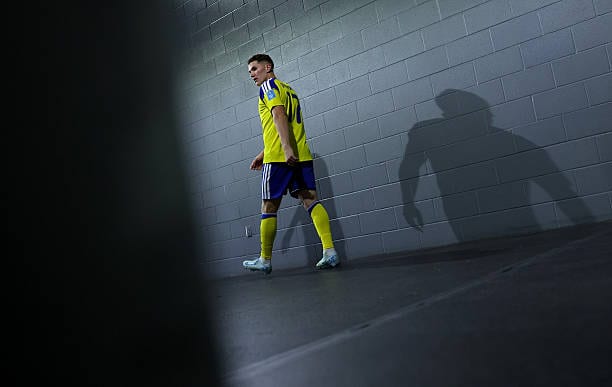

Sweden's route to the knockout stages has been anything but straightforward, but Viktor Gyökeres has once again demonstrated why he has become the focal point of Graham Potter's attack.
When Sweden dismantled Tunisia 5-1 in their FIFA World Cup opener, it appeared Graham Potter's side had arrived in North America ready to surprise the tournament. Viktor Gyökeres found the scoresheet, Alexander Isak dazzled alongside him and Sweden looked every bit the dark horse many expected them to become.
Less than two weeks later, the mood surrounding the Blågult had changed dramatically.
A humiliating 5-1 defeat to the Netherlands exposed the defensive frailties that had lingered beneath Sweden's exciting attacking football. Suddenly, qualification was in doubt heading into a decisive final group match against Japan.
Yet when the pressure reached its highest point, Gyökeres once again demonstrated why his influence extends far beyond goals.
Although Anthony Elanga ultimately scored the goal that secured Sweden's passage into the Round of 32, Gyökeres produced another tireless display that highlighted why Potter continues to build his attack around the Arsenal striker.
A Dream Beginning
Sweden could scarcely have asked for a better start.
Facing Tunisia in Monterrey, Potter's men played with an attacking freedom that had been absent throughout much of qualifying. Yasin Ayari struck twice, Isak tormented defenders throughout the evening and Gyökeres added his own goal as Sweden recorded a historic 5-1 victory, their biggest World Cup win since defeating Cuba 8-0 in 1938.
More importantly than the result itself was the chemistry developing between Sweden's two Premier League stars.
Potter praised the understanding between Isak and Gyökeres after the match, noting how naturally the pair combined to stretch Tunisia's defensive line. Rather than competing for the same spaces, the two forwards constantly rotated positions, allowing Sweden to attack with pace and unpredictability.
Gyökeres was particularly effective dropping into deeper areas before driving forward with possession, creating room for Isak to exploit behind the defence.
It was exactly the kind of performance Arsenal supporters have grown accustomed to seeing over the past season.
A Harsh Reality Check
If Tunisia represented Sweden's ceiling, the Netherlands exposed their floor.
The Dutch overwhelmed Potter's side almost immediately in Houston, racing into an early lead before eventually running away with a comprehensive 5-1 victory.
Gyökeres endured a frustrating afternoon as Sweden struggled to establish any sustained possession. The Arsenal striker spent much of the match chasing long balls and attempting to relieve pressure rather than threatening the Dutch goal.
While Elanga scored Sweden's only goal, the result left Potter with significant questions to answer before facing an unbeaten Japan side.
The defeat also demonstrated an important truth about Sweden's tournament.
For all the headlines surrounding Gyökeres and Isak, their success depends heavily on the team's ability to remain defensively organised. Even two elite forwards cannot compensate when their defence repeatedly gifts opponents opportunities.
Potter acknowledged as much afterwards, insisting Sweden would learn from the defeat while maintaining confidence in the attacking talent available to him.
Potter Keeps His Faith
Many managers would have reacted to such a heavy defeat by changing their attacking approach.
Potter did the opposite.
Ahead of the decisive meeting with Japan, the Sweden coach again emphasised the threat posed by Gyökeres and Isak while insisting his team simply needed to defend more effectively against one of Asia's strongest sides.
Japan, meanwhile, openly acknowledged where Sweden's greatest danger lay.
Reuters reported that Hajime Moriyasu's side planned specifically to contain the Isak Gyökeres partnership, recognising that allowing either forward space would almost certainly prove costly.
That respect alone says plenty about Gyökeres' growing reputation.
Doing the Dirty Work
Sweden's 1-1 draw against Japan was not Gyökeres' most spectacular performance.
It may, however, have been among his most valuable.
The game itself offered limited opportunities. Japan controlled long periods before Daizen Maeda gave them the lead early in the second half.
Sweden responded almost immediately through Anthony Elanga, whose outstanding curling finish rescued the point that ultimately sent Potter's side into the knockout rounds as one of the tournament's best third placed teams.
Gyökeres rarely found himself in obvious goalscoring positions.
Instead, he occupied Japanese defenders, pressed relentlessly from the front and linked effectively with Isak whenever Sweden managed to build attacks.
His intelligent movement also helped create the space from which Elanga produced the equaliser, a goal assisted by Gyökeres.
These are the performances that often go unnoticed.
Forwards are judged primarily by goals, yet tournament football frequently demands something different.
Against Japan, Gyökeres sacrificed individual statistics for collective success.
Sweden are still playing because of it. Through three group matches, Gyökeres has offered a reminder that his evolution as a striker is about far more than finishing.
His physical presence allows Sweden to progress up the pitch.
His pressing sets the tone defensively.
His link up play continues to improve alongside Isak.
And perhaps most importantly, opposition coaches are forced to dedicate enormous attention to stopping him, creating opportunities for teammates.
Elanga's emergence has benefited directly from that attention.
Ayari flourished in the opening match partly because defenders were preoccupied elsewhere.
Even when Gyökeres is not finding the net, he remains central to Sweden's attacking identity.
The Knockout Challenge
Sweden's qualification represents another significant achievement for Potter.
Only months ago the nation appeared destined to miss another major tournament before the Englishman guided them through the playoffs and into the World Cup.
Now they have survived one of the competition's toughest groups despite conceding five goals against the Netherlands.
The challenge only becomes greater from here.
As they qualified as a 3rd place team, Sweden will face elite opposition in the Round of 32 (Likely France), meaning Gyökeres and Isak must once again shoulder enormous responsibility if the Scandinavians are to continue their remarkable journey.
If the group stage has shown anything, it is that Gyökeres does not need to dominate the headlines to influence matches.
One goal against Tunisia, countless selfless runs, relentless pressing and an unwavering willingness to battle defenders have helped drag Sweden into the knockout stages.
There will undoubtedly be tougher tests ahead.
But whether he is scoring spectacular goals or creating space for teammates, Viktor Gyökeres has already justified his reputation as the leader of Sweden's attack. In tournament football, that influence often matters just as much as the numbers beside a striker's name.
