



They may sound like the make-up of a mantelpiece, but these are, instead, subtle – and, potentially, significant – alterations to the framing and scenery of the upcoming European club season.
Shifting thresholds and ensuring clocks don't stop even reads like housekeeping of the literal kind.
The two paragraphs below cover the crux of the two adjustments, which will apply to the 2026/27 Champions League, Europa League and Conference League.
Four yellow cards, as opposed to three, accumulated across different games – from the start of the competitions' league phase to the conclusion of the quarter-finals – will now lead to a player or team official being handed a one-match suspension.
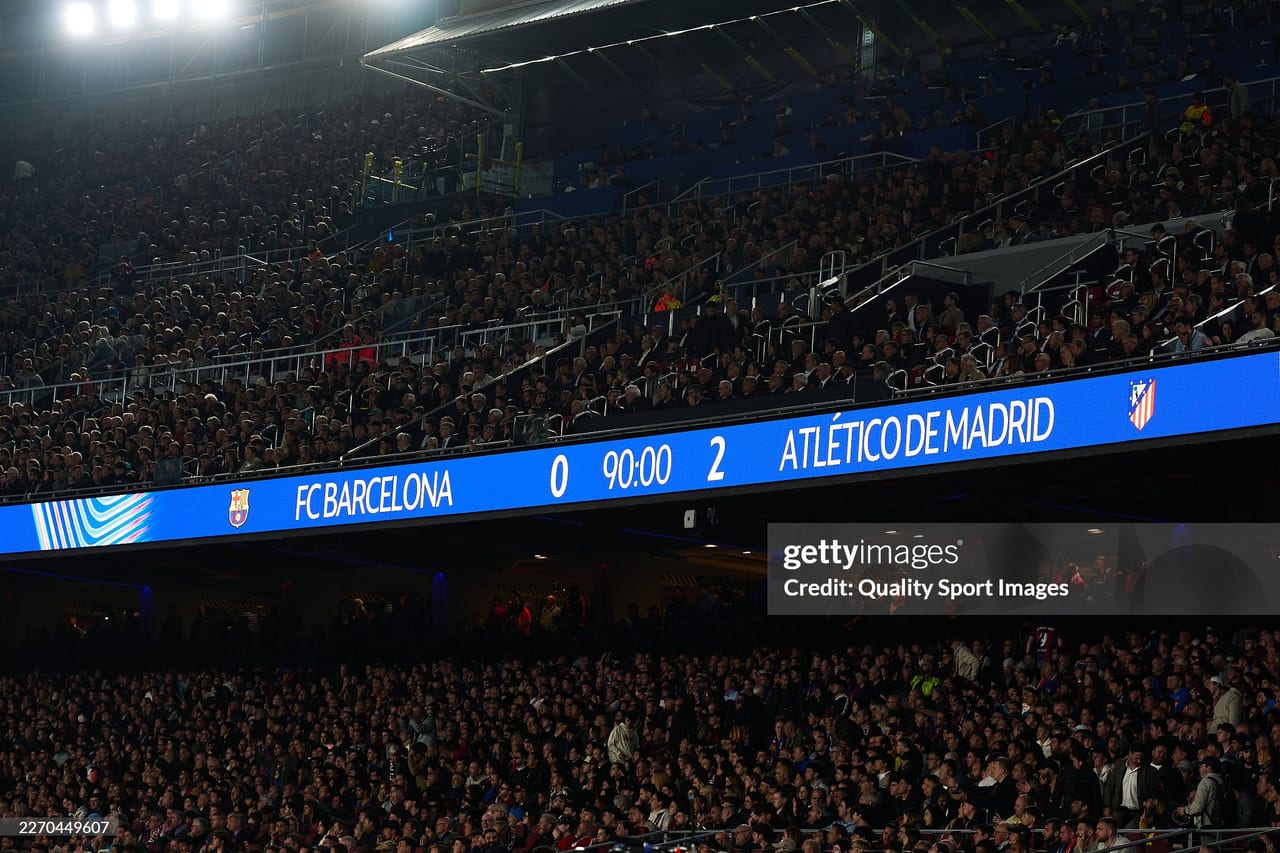
Meanwhile, stadium clocks will also no longer have to stop after 45 minutes of each half in normal time or, when applicable, after 15 minutes of each period of extra time, meaning match-going supporters will be able to more easily keep track of how much stoppage time has elapsed.
The clocks alteration will be applied across all of UEFA's competitions, including this season's Women's Champions League.
Why the card threshold has risen
The yellow cards development appears, chiefly, a move to bring the disciplinary tightrope that players and officials have to walk up to speed with the restructuring of UEFA club competitions that was introduced from the start of the 2024/25 campaign.
This saw the six-game group stage replaced by the eight-game league phase in the Champions League and Europa League, while the Conference League also switched to a league phase but kept its opening round to six matches.
As a UEFA communication to member associations regarding the changes said, the increase in matches, paired with the yellow card threshold staying at three, "disproportionately heightened the risk of incurring suspensions from a cumulation of yellow cards".
In the Champions League and Europa League, clubs will have played at least 12 games in the competition proper upon the end of the quarter-finals. That total will be 14 if they progressed from the league phase to the round of 16 via the knockout play-offs.
The raising of the booking threshold from three to four will apply to all three competitions, despite the number of games in the first phase of the Conference League, which does also include a knockout play-off round, remaining the same.
This is seemingly in the interests of consistency and ensuring that players who transfer mid-season between clubs in different UEFA competitions do not see their disciplinary context change, given they will carry any suspensions or accumulated cards with them.
How the suspensions stack up
Any player or team official who reaches the four-yellows threshold and is suspended for a game will acquire a further one-match ban for every two further bookings (totalling six, eight, and so on) prior to the conclusion of the quarter-finals.
For clarity, the yellow cards that accumulate for such suspensions only include those that do not lead to a red card.
So, for instance, two bookings in a single game that cued a red card – and an immediate one-match suspension – would not count towards any subsequent one-match ban for accumulated yellows.
However, if a player is booked and then later in the same match receives a straight red card, that yellow card will remain on their record and could contribute to a later suspension for accumulated bookings.
Riveting stuff. But, still, potentially important.
The reality is that this tweak is likely to have some form of impact on matches, especially in physicality terms, and may even aid the broader spectacle.
Simultaneously, the prominence of cynical challenges may increase. Players now have one more yellow they can 'take for the team'.
Stadium clocks keep ticking
On the clocks front, the move to allow those within the stadium to continue beyond regular time and display stoppage time as it elapses echoes a tweak that has already been implemented in England's Premier League and Football League and aligns with guidance that came from The International Football Association Board (IFAB) earlier this decade.
Previously, stadium clocks would be required to stop on 45 and 90 minutes within the respective halves, meaning keeping track of added time was often difficult for match-going supporters.
Article 51.03 of the 2026/27 Regulations of the UEFA Champions League now states: "Stadium clocks may be used to show the amount of time played or remaining. Additional time in each half should be displayed as additional minutes, not continuously running time (i.e. 45 + x, 90 + y). The same applies in case of extra time (105 + x, 120 + y)."
Further context on the thinking behind this decision is offered within the UEFA communication referenced earlier in this piece.
It describes the previous stopping of clocks upon the conclusion of regular time as "a long-standing provision, dating back to times when matches were not being followed in real time in the stadium via mobile devices, and the use of images in the technical areas surrounding the pitch was forbidden.
"Taking account of the technological and regulatory developments of the past years, the provision in question appeared outdated and detracted from the stadium experience for fans."
Perhaps the previous approach was, at least partially, designed to avoid confusion – ensuring those in attendance wouldn't see a clock that had ticked beyond regular time and, as a result, misinterpret which half was being played.
As the above communication indicates, the prevalence of technology nowadays, including the ability to receive in-match notifications via mobile devices, makes such considerations less relevant.
The emphasis on not displaying "continuously running time" ought to offer a further protection against any confusion, too. It should be clear when a half has progressed from regular time to stoppage time.
This move feels healthy in terms of transparency, too, particularly given fans in the stadium can persistently feel all too cut off from VAR processes, for instance.
Key dates and English contenders
The league phase draw for the 2026/27 Champions League is scheduled for Thursday 27th August, while those for the Europa League and Conference League will take place on Friday 28th.
The competitions are set to kick off on Tuesday 8th September, Wednesday 16th September and Thursday 15th October respectively.
As many as nine Premier League teams could be represented across the three.
Arsenal, Manchester City, Manchester United, Aston Villa and Liverpool have all secured a Champions League place.
AFC Bournemouth, Sunderland and Crystal Palace will each compete in the Europa League, while Brighton & Hove Albion will earn a Conference League spot if they see off either CFR Cluj of Romania or Norway's Tromsø IL in their qualification play-off later this month.
The 2026/27 Champions League final is due to take place at Atlético Madrid's Estadio Metropolitano on Saturday 5th June, with the Europa League final at Eintracht Frankfurt's Waldstadion on Wednesday 26th May and the Conference League final at Beşiktaş Park in Istanbul on Wednesday 2nd June.
