



Last week, Brighton and Hove Albion's new boss, Fabian Hürzeler made it clear how he envisions the Amex Stadium to be for visiting teams.
“I think it’s most important to make the Amex our castle, our fortress,” he said, capturing his desire for Brighton to build a truly intimidating atmosphere.
However, securing a stadium - let alone making it a formidable asset - has been anything but straightforward for Brighton.
In this article, VAVEL explores the Sussex side's journey from the Goldstone Ground to the Amex Stadium, uncovering the trials and triumphs the Seagulls have faced along the way and how these experiences have shaped the club's atmosphere over time.
This overview explores the club's challenging journey, from finding its feet to forging its fortress at the Amex today.
-
A brief history
Founded in 1901, Brighton & Hove Albion's journey to finding a lasting home ground has shaped the club's identity and the atmosphere today.
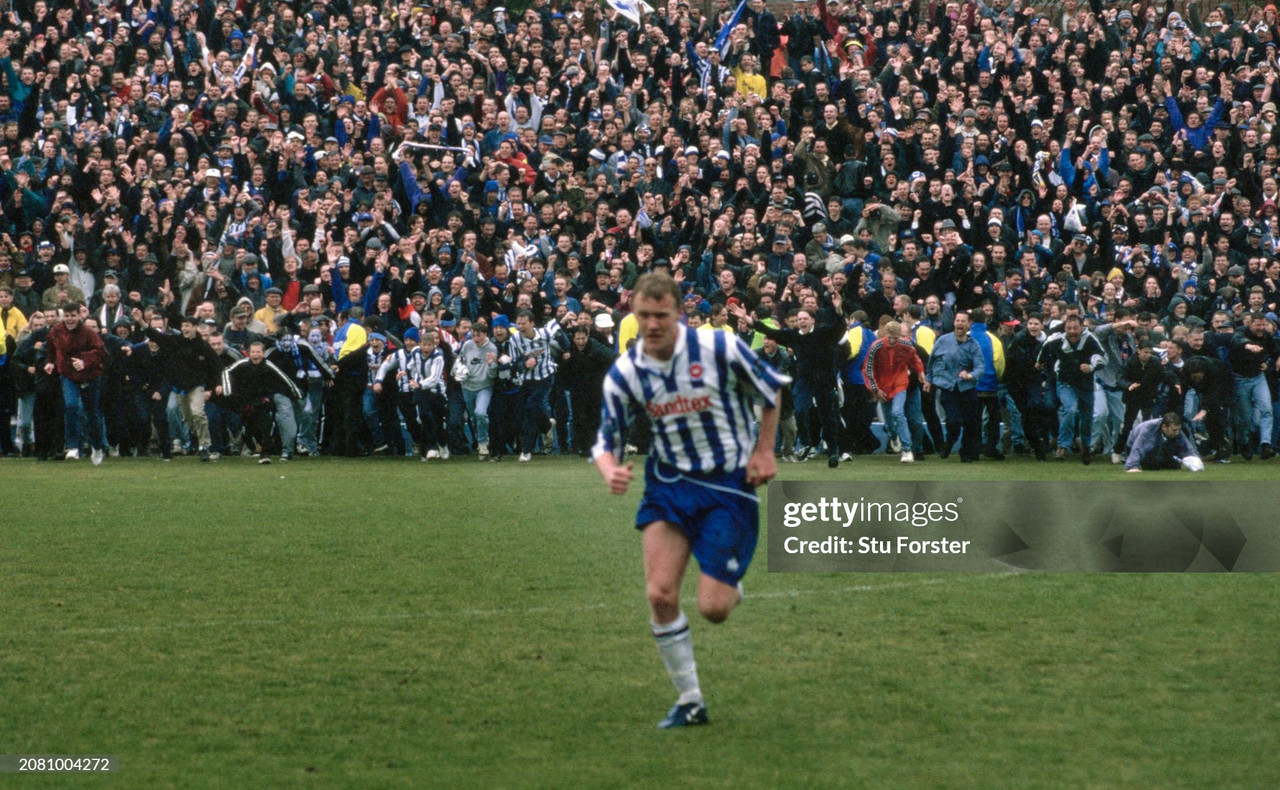
For nearly a century, the Seagulls called the Goldstone Ground their home. The iconic venue, located on Old Shoreham Road in Hove, housed the club from 1902 until 1997.
Known for its traditional football atmosphere, the Goldstone was beloved by fans and had a unique charm.
This stadium saw some of the club’s finest moments, especially during the 1970s and '80s when Brighton rose through the divisions, reaching the top flight in 1979.
Over the years, for most Albion fans, the Goldstone became more than just a stadium; it symbolised the Seagulls' connection to the community. It was a home even during tough times on the pitch.
The iconic North Stand behind the goal at the Goldstone became Brighton's key source of noise. As Albion supporter Warren Morgan remembers, it was "little more than a corrugated metal shed above some concrete terracing with metal crush barriers."
Yet, in a stadium that could push up to 36,000 supporters at capacity, this fully standing, packed-out "shed", was Albion's atmospheric epicentre.
Sadly, financial difficulties forced the club to sell the Goldstone in 1997. This sale, driven by the need to avoid bankruptcy, left fans devastated and without a permanent home.
-
Withdean days
For two seasons, Brighton were forced to play at the Priestfield Stadium in Gillingham, over 70 miles away from the city, which tested the fanbase's dedication.
During this period, supporters mounted passionate protests, underscoring the strong emotional ties to a home ground and marking a significant moment in the club's history of fan-led activism.
The days of having to travel over an hour out of the city to watch a home match underpinned the need to have a place to call their own again.
In 1999, the club found a temporary home closer to Brighton at the Withdean Stadium. The Withdean era, lasting until 2011, presented challenges due to the ground's small capacity and limited facilities as a converted athletics stadium.
The stadium was named the fourth-worst in the UK by The Observer in 2004, but it was back in the city of Brighton, and that was all that mattered.
Facetiously nicknamed the 'Theatre of Trees' due to its surrounding foliage, the stadium often featured as many as six stands - five of which were temporary - with each viewing area located about 50 meters from the pitch due to the athletics track.
Other unique features to a football stadium included the hammer-throw net and long-jump sand pit.
The capacity varied between 6,000 to 8,000; a huge drop off from the glory days of the Goldstone, initially running parallel with the club's fortunes on the pitch.
While it lacked the character and atmosphere of a football-specific venue, it nevertheless became a symbol of resilience for fans and players alike.
The restricted seating fostered a particularly tight-knit, dedicated crowd that supported their team through various league campaigns, culminating in promotion to the Championship during the club's final season there in 2010/11.
Due to the uniqueness of the stadium, the atmosphere often struggled. The main section of noise came from the south-west corner of the South Stand, the section closest to the away end behind the goal.
However, the biggest turning point in the club's history was around the corner in 2011, with the opening of The Amex. For the first time since 1997, Brighton finally had a home to call their own.
-
The new home
The Amex has played a central role in Brighton & Hove Albion’s resurgence since it opened in 2011. Built to give Albion a place to call home, the Amex started with a massively boosted capacity of 22,500, immediately enhancing the club’s matchday experience.
The modern venue, located in the village of Falmer just five miles northeast of Brighton, gave the Seagulls a foundation to grow their fanbase, competitive status, and, along with it, their atmosphere.
As supporters flocked to the new stadium, its atmosphere quickly became integral to the team’s identity, giving Brighton a true home-side advantage.
Just like in the old days of the Goldstone - though, of course, much nicer than the 'corrugated shed' - the focal point of noise instantly came from the North Stand.
Two main pockets of chanting emerged in that stand behind the goal, one under the main screen and the other beneath the police box, closer to the West Stand.
The stadium’s impact has been significant as Brighton climbed the ranks in English football.
By the 2016-2017 season, the team earned promotion to the Premier League; a momentous achievement for the club and a testament to the impact of the Amex.
This promotion marked the stadium's evolution from a Championship venue to one of Premier League quality.
To meet the increasing demand and requirements of top-flight football, the club expanded the Amex’s seating capacity to approximately 30,750 by 2018.
As the club now enters its 13th season in the stadium, and eighth in the Premier League, the ground has become a symbol of the club’s growth, embodying the spirit and ambitions of the city of Brighton.
However, as with any stadium, questions have arisen about the atmosphere at the Amex in recent seasons, particularly in light of the club's trajectory and the influx of tourism, fair-weather fans and day-trippers.
Many wonder whether the Amex truly functions as the fortress it should be and what can be done to enhance matchday noise and rally the players.
-
Hürzeler's call for noise
In recent seasons, Brighton & Hove Albion have struggled to create a vibrant atmosphere at the Amex Stadium, partly due to a mix of loyal fans and casual visitors.
In response, the club has adjusted its pre-match music routine, now playing the anthem "Sussex by the Sea" right before kick-off to boost excitement.
The club has been playing the 117-year-old anthem as the players walk out since they adopted it following their Charity Shield victory in 1910.
However, it was felt that the atmosphere-building song lost its impact when played too long before kick-off, especially as it was interrupted by the obligatory Premier League anthem that coincides with the teams lining up for handshakes, causing the atmosphere to gradually fade.
It is hoped that this season's shift will lead to fans singing louder than ever as the players kick off, enhancing the atmosphere throughout the stadium.
Brighton's new boss Hürzeler has stressed the importance of transforming the Amex into a daunting fortress, stating: “It should be an experience for our visiting team that they have never encountered here before, where it’s ruthless, where the atmosphere is really against them."
Having experienced the raucous and lively atmospheres of German football, which are seen as vital for rallying players and establishing a strong home advantage, it is no surprise that Hürzeler is eager to replicate that experience at his new club.
To further this goal, the club is considering relocating the away section to diminish the perceived advantage for visiting teams.
Since the opening of the Amex, the South Stand behind the goal has been entirely occupied by away supporters, which has often been thought to provide the visiting team an advantage, especially when attacking that goal in the second half.
Due to the layout of the stadium, there had always been the feeling that the away team occupy a quarter of the stadium.
This idea of away fan dominance can be supported by statistics. The Amex ranked third-highest in the Premier League for the percentage of their stadium given to the away team.
Equally, from an atmosphere point of view, many fans feel the atmosphere will be boosted if the away fans were placed closer to Albion's main band of singing supporters in the North Stand.
With this in mind, from the start of the 2025/26 season, Albion have announced they are looking to move the away section of the Amex.
Current rumours suggest the move will see them going to the south-west of the stadium, however this is yet to be confirmed by the club.
Whatever the case, after a long, hard-fought journey to finally secure a place to call home, Brighton & Hove Albion now face their next challenge; turning the Amex into the unyielding fortress that Hürzeler envisions, a place where Premier League rivals dread to play and where European football is a staple, not a dream.
