


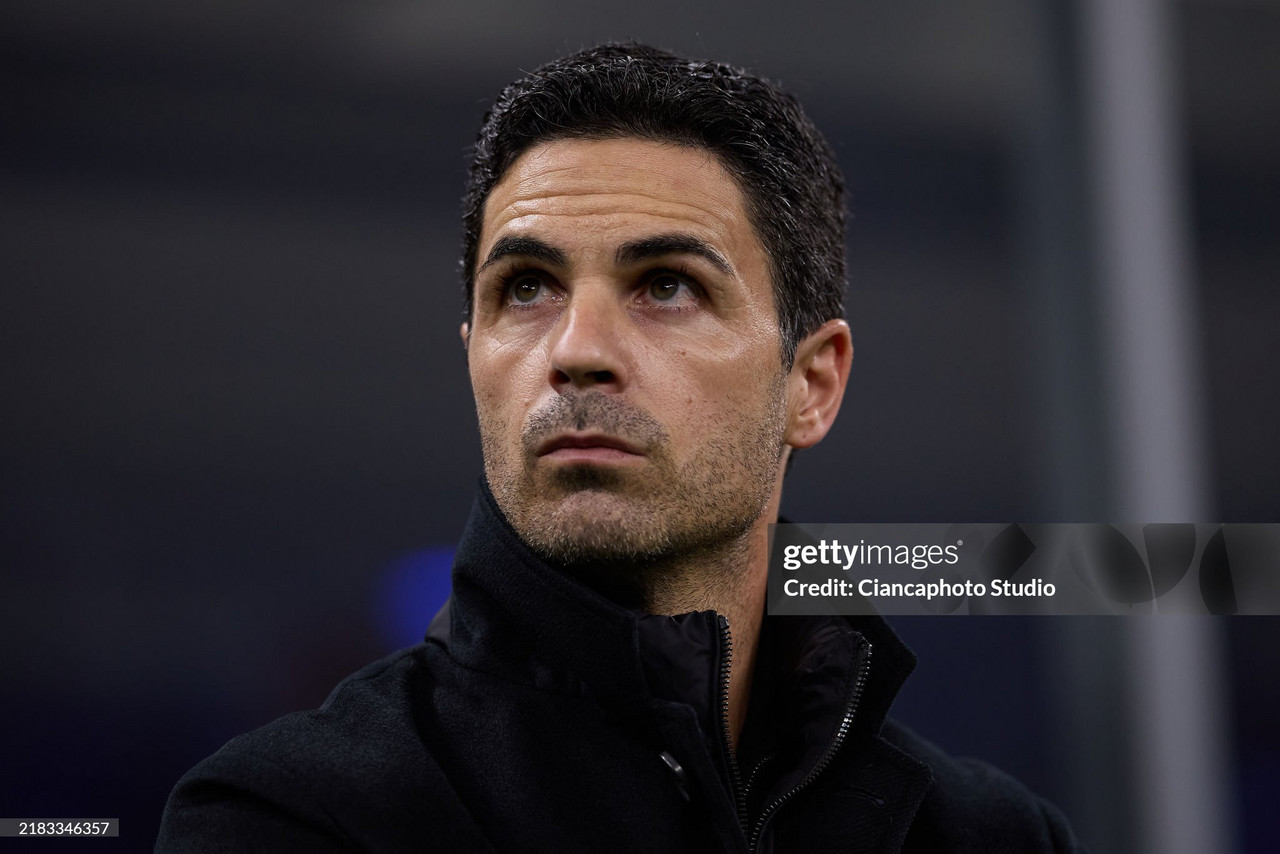

After there and a half years under the stewardship of Pep Guardiola at Manchester City Mikel Arteta decided to take the next step of his career and become head coach at Arsenal.
Arteta is one of many coaches in world football who have either assisted Guardiola or played under him such as Enzo Maresca, Vincent Kompany and Xavi Hernandez.
All of these coaches have adopted a style of play which emulates the Man City manager and his philosophy which is possession-based, maintaining control of games and condensing the size of the pitch.
Arteta has transformed Arsenal into one of the best teams in the world and looked towards the tactical blueprint of his previous boss to do so. However, during the last season and a half the former Everton and Arsenal midfielder has seemed to change his tactical approach.
This change got them to within two points of the champions last season after being five points away the season prior. So what is it Arteta has changed in his tactical thinking to get close to Man City and compete to win the league.
-
The original plan
The Guardiola blueprint is to shut his opponents down and keep them in their own half, or better their own box and prevent them from crossing the halfway line. In his words, attack is the best form of defence, because if you have the ball your opponents cannot score.
It would take a lot of work for Arteta to play this way when he first moved to Arsenal, patience was needed by both the board and fanbase. His first two seasons saw two eighth-place finishes along with a win in the FA Cup, but his ideas had yet to really come to fruition.
Arsenal were conceding over a goal a game and it threatened to eventually get worse, so Arteta had to find a way to get his team to be better without the ball and concede less before he could improve them with the ball. To which they would then be ready to challenge at the top of the league.
We first started to see a change in style for Arsenal at the start of the 2022/23 campaign and it was the first time they really put a challenge in for the league title.
They signed Gabriel Jesus and Oleksandr Zinchenko from Man City, and Arteta described the impact the pair would have as world-changing. Both of them knew the Spaniard from his time in Manchester, they knew the system from playing under Guardiola and most importantly they were winners.
With Zinchenko inverting from full-back and Jesus being used as a ball-playing false nine, it had the theme of a Guardiola side. There were indications that Arteta was following in the footsteps of his former boss.
After leading the way in the league for 248 days Arsenal went on to lose the title by five points, coming so close but falling at the last hurdle. People point towards the defeat at the Etihad at the end of the season as a defining moment and evidence that it was too soon for Arsenal, but clear progress was being made.
-
Signs of Arteta evolving
Following the disappointment they faced in the previous campaign, Arteta set his sights on challenging for the title again in 2023/24 but this time in a slightly different way.
Arsenal brought in Declan Rice, Jurrien Timber, Kai Havertz and David Raya that summer, all of these players bolstered the Gunners' defence and style of play. The team were now more resilient, with the priority being their clean sheet first, which in turn allowed them to win the game due to the quality they possessed in attacking areas, often leaving it late in games to score.
Arteta was starting to question whether it was that important to have complete control of the ball for the majority of the game, something Guardiola is fascinated by.
He seemed far less concerned about defending with the ball and became more comfortable defending without it, which saw a decrease in their average possession from the previous campaign.
As with any system or play in football, if you prioritise one thing it will often result in another aspect of your game taking a hit. With less possession, you create fewer chances in open play, which saw Arsenal finish sixth based on open play xG.
In answer to this, however, Arteta put more emphasis on set plays. With the help of set-piece coach Nicolas Jover, who came with Arteta from Man City, they saw an opportunity to make up the numbers where they lost them from open play. If they could perfect their set-pieces that would substitute for the lack of creativity in open play.
Arsenal were now more defensively resilient, keeping the most clean sheets in the league and also conceding the least amount of goals, while maintaining their threat on goal. As a result Arsenal went on to have better underlying numbers than Man City (an xG difference of +48.2 compared to City’s +44.9) something no other team had managed during Guardiola's time at Man City.
Unfortunately, it again resulted in another second-place finish this time by just two points. Much like the season before however, there were signs of progression. As well as Arteta showing that another route to the top was possible, and that you don't need to copy Guadiola's style to get there.
-
Does this style have a chance of winning?
The present day see's Arsenal nine points off the leaders Liverpool and four off Man City in second. There are still 27 games still to play in the season and in fairness to Arsenal they have had a tough start with plenty of away games against top-half teams.
We have seen on numerous occasions this season where Arsenal have prioritised a clean sheet over scoring goals, albeit at times they are forced to due to sending-offs during games.
Some have compared this Arsenal team to one of José Mourinho's Chelsea teams who won titles in a similar way. Grinding out games, maintaining clean sheets and winning games by one or two goals.
There is no denying that Arsenal could go on to win something this season, they have the players to do so, if they remain fit and a manager who has overseen progression from eighth to the challenging for the league on two occasions.
Arteta's style has diverted from wanting complete control in games to prioritising a defensive structure and prioritising other ways to score. Neither are yet to work for the former midfielder but it is surely only a matter of time before Arsenal do win a trophy.
While Arteta has changed some of his principles there still remains some elements of Guardiola in his philosophy, but what he has shown is that there is a different way to coach and be a success without following the trends.
