


The world of 1871 was very different from the one we inhabit now. Germany, as we largely know it today, was founded after victory in the Franco-Prussian War, the Great Chicago Fire caused over $5 billion of damages to the city, and the Royal Albert Hall opened its doors for the very first time.
Moreover, the growing interest in recreational activity also saw several sporting firsts, such as the first rugby union international between England and Scotland and the first Major League Baseball game.
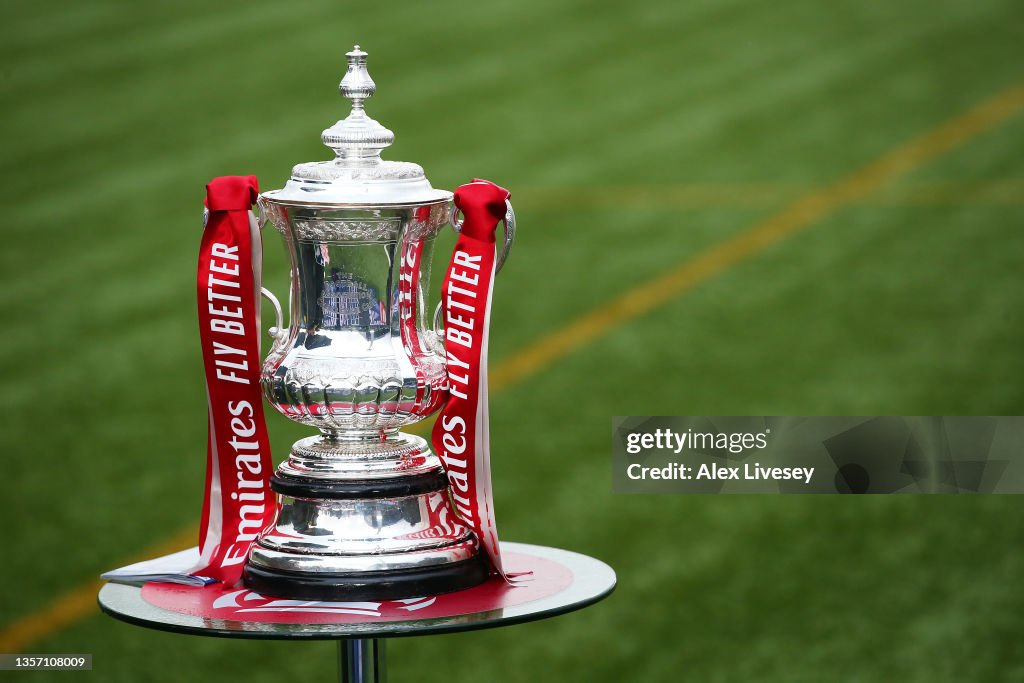
Alongside these came perhaps the most significant moment in the foundation of modern club football as the Football Association Challenge Cup was born.
Football was fragmented before the formation of the FA and mostly reserved for the fields of English public schools, where different areas would follow different rules.
Following Ebenezer Cobb Morley writing the Laws of the Game in 1863, which became the bedrock of how football would be played going forward, efforts were made to create a nationwide, comprehensive governance of football.
Eight years later the first major step in achieving that came through Charles William Alcock’s vision of a knockout tournament, as he famously proclaimed, 'It is desirable that a Challenge Cup should be established in connection with the Association for which all clubs belonging to the Association should be invited to compete.'
This is the story of that inaugural competition.
-
The first round
The FA Cup was born on what would become Armistice Day. Fifteen teams entered, all hoping to win the first piece of silverware in association football.
The November 11th 1871 hosted four first-round fixtures. Two kicked off at 15:00 - Hitchen FC and Crystal Palace (not the current Premier League team, a separate, older iteration) drew 0-0, while Barnes FC claimed the first-ever win in the cup with a 2-0 victory over an eight-man Civil Service FC. No red cards, they just lined up with eight players.
The third match kicked off at 15:20 and saw Maidenhead beat Marlow FC 2-0. The first goal to be scored, however, came in the latest match of the lot. At a 15:30 start, Jarvis Kenrick slotted home two minutes into his Clapham Rovers’ side 3-0 win over Upton Park FC (a team which never played at Upton Park).
There were a number of teething problems in these early stages. As stated, only four matches took place that day yet three further games were scheduled and did not commence.
Royal Engineers and Wanderers were both given walkovers to the second round after their opponents, Reigate Priory and Harrow Chequers, withdrew.
Scotland’s oldest club Queen’s Park - who are currently playing in the Scottish Championship - were invited to be part of the cup, given their prestige as the most dominant club in their country.
It wasn’t until 1987 that Scottish teams were prohibited from competing when the Scottish FA focused on developing the professionalism in its own domestic game. By then, the likes of Partick Thistle, Hearts, and Rangers had already been part of the ‘English Cup’.
Queen’s Park were drawn against Donington School, but, with the sides being based in Glasgow and Lincolnshire respectively, they failed to decide on a venue for the match and were therefore both awarded a bye into the next round. As were Hampstead Heathens because they were the odd ones out.
-
The second round
Fifteen became ten, with the second round fixtures sprawled over the winter period.
On December 16th, Crystal Palace beat Maidenhead 3-0. Wanderers - whose name derived from the fact that, though they were based in London, they never had a permanent home ground - edged past Clapham Rovers 1-0.
Barnes FC hoped to continue their good start against the yet-to-play Hampstead Heathens on December 23rd, but both sides could only share a goal each.
A peculiarity of the first tournament - and an important one to keep in mind for the latter stages - was that if a game ended in a draw then both sides would progress into the next round. However, on this occasion, a replay was held because, during the initial 1-1, the match was halted early due to poor lighting.
Though Barnes again hosted the replay on January 6th, 1872, they could not capitalise on the 15:15 sunlight and fell to a 1-0 defeat to the Heathens.
Meanwhile, old friends Queen’s Park and Donington School were unbelievably drawn together again. Truly a spectacle that would only be enhanced if Rod Stewart had been on hand to conduct it.
Unfortunately, neither side used the second bite of the cherry to sweeten things out. Yet again, no stadium was chosen as the distance proved just too costly for both sides. Donington eventually decided to withdraw, with the £2 per player travel fee (£301 in 2025) ultimately too much to muster.
January 10th saw the final fixture take place as Royal Engineers hammered Hitchen 5-0 to sew up the second round.
-
The (sort of) quarter-finals
Now at the third round stage, there were only five teams remaining, meaning one was able to receive a bye to the semis as the odd one out. That team was Queen’s Park.
The pioneers of the Scottish game had reached the English FA Cup semi-finals at the first attempt - a remarkable achievement for a side that had yet to play a single minute in the tournament.
Elsewhere, on 20th January 1872, Wanderers hosted Crystal Palace at Clapham Common, drawing 0-0. Both sides were therefore permitted into the semi-finals due to the aforementioned rule on draws.
The well-oiled Royal Engineers team continued their fine form, easily dispatching Hampstead Heathens 3-0. The Engineers were early adopters of the ‘combination game’, favouring passing the ball to one another as opposed to the long ball tactics most teams practiced.
And for all the byes thus far, Queen’s Park were also incredibly instrumental in developing this play style.
So much so that they, along with the Engineers, were the favourites to lift the now famous trophy despite being the only side north of the Scottish border - something that would unfortunately continue to plague their silverware ambitions.
-
The semi-finals
This is where the competition takes a more recognisable form to us 2025 fans. Four teams left, two matches, the winners advance to the final. Simple right? Wrong.
Royal Engineers and Crystal Palace were first up, taking to The Oval on 17th February, 1872 at 15:15. The famous cricket ground was the go-to stadium for footballing occasions in the late 1800s, hosting every FA Cup final until 1892 bar two.
The second tie also took place in Kennington, on 5th March at 15:35, as Wanderers played Queen’s Park. Yes, Queen’s Park actually played this time. Both semi-finals ended 0-0.
The unprecedented draws not only meant Queen’s Park had managed to be on the cusp of the final without having scored or conceded a goal, but it again proved problematic given the rule concerning drawn matches.
Though association football was still very much in its infancy and the admin had not exactly been clear cut so far, people knew you couldn't have a final consisting of four teams.
Replays were ordered instead. On March 9th, Royal Engineers ran away comfortable 3-0 winners in the second tie to book their place in the first FA Cup final and send Palace packing. Of course, the reverse leg between Wanderers and Queen’s Park was not as plain sailing.
The Spiders were unable to afford to make the lengthy trip down from Glasgow to London for a second time in quick succession and withdrew.
Wanderers had in fact attempted to take this into account during the first match, offering to play an extra thirty minutes to find a winner, but Queen’s Park refused. Perhaps frustrated that once again a side did not wish to make the journey to their home ground.
Who knows what would have happened if Queen’s Park could have made the journey again? What is known is that the pricey travel expenses led to Queen’s Park spearheading the creation of the Scottish Football Association, helping further modernise the game in Scotland.
This, in turn, led to the first recognised international meeting between the two nations later in the year.
If a Scottish team had won the very first FA Cup, the landscape of British football may be radically different from what we have today.
-
The final
And so it came to 16th March, 1872 - 153 years ago. Wanderers faced Royal Engineers. The club without a home against those representing Her Majesty’s corps of grafters.
A 15:05 kick-off this time, with both teams in colourful horizontally-lined kits. Wanderers lined up with two defenders and eight attackers, while Royal Engineers chose a more conservative approach of three defenders and seven attackers.
The slightly more forthright tactics proved successful as, fifteen minutes in, Wanderers took the lead through Morton Betts, who was playing under the pseudonym AH Chequer, or ‘A Harrow Chequer’ - a reference to Harrow Chequers, the side that Betts was originally meant to play for before their first round withdrawal.
Morley’s rules at the time dictated that teams swapped ends after each goal. Five minutes later Wanderers had the ball in the other net, from captain Charles W. Alcock, but the goal was disallowed for handball in the build-up.
As well as being FA secretary, Alcock was also playing for one of the finalists. Such participation in the game from senior figures was not uncommon at the time as they worked on helping the sport become professionalised, and his work in boosting football’s national appeal should not be underestimated.
He also played key roles in the founding of international football and, as an equally keen cricketer, the creation of The Ashes.
Wanderers continued to dominate the contest, with the Royal Engineers’ artillery unable to find a way through. Their goalkeeper, William Merriman, was overworked and put in a reportedly “perfect” performance.
In the end, despite fifteen forwards on the pitch, the game finished 1-0, and Wanderers were crowned the first champions of the FA Cup. The trophy, known as the ‘little tin idol’, was presented by Ebenezer Morley, the then FA President.
The cup was a resounding success. It firmly set Morley’s rulebook as the one that all teams would follow and greatly increased enthusiasm towards the FA. Participation in the cup grew year after year, quickly becoming the most prized trophy in these early stages of the modern game.
In 2012, to celebrate the 140th anniversary of the FA Cup, this final was replayed at The Oval. Although it was far from an exact recreation as Royal Engineers ran away 7-1 victors.
-
Epilogue
Due to the original premise of it being a challenge cup, Wanderers were given a bye straight to the final of the next year’s competition.
Royal Engineers were knocked out by eventual finalists Oxford University in the third round and, in much the same way, Queen’s Park reached the semi-final without playing a match before handing Oxford a walkover in the semis.
The lack of football wouldn’t prove to matter much to Wanderers, who defended their title by winning 2-0. Though this ‘winner stays on’ concept would only be used on this one occasion.
Oxford University would claim the FA Cup in the third edition of the tournament beating Royal Engineers, who again fell at the final hurdle. Though, at long last, Royal Engineers would claim the trophy the following year.
Wanderers would go on to claim five FA Cups in total, putting them level with Everton and West Bromwich Albion, with their last win coming in 1877/78 against Royal Engineers again.
Queen’s Park really showed what they could do in 1883/84 and 1884/85 by reaching two successive finals, dismantling opponents along the way, including a 6-1 demolition of Aston Villa in the former.
However, they were unable to get over the line in both finals, coming up against future Premier League champions Blackburn Rovers twice, losing 2-1 and 2-0 respectively.
Although the practices back then were so different from how we structure and consume football now, these are the foundations of the game and tournaments we still love to this day. So intrinsic is football to our culture now that it seems almost unbelievable that the organised game as we know it is merely over 150 years old.
Sometimes taking a step back in time can give a refreshing perspective on the multi-billion pound behemoth it has morphed into. Which may not necessarily be a bad thing for everyone. Queen’s Park would be able to travel to London quite comfortably now.
