



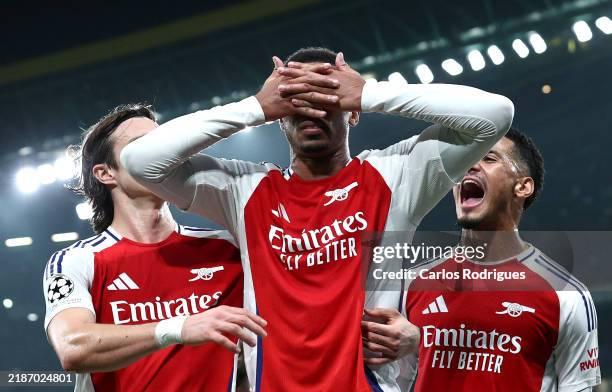

Arsenal entered the November international break with confidence and rhythm, but the mood shifted sharply when Gabriel Magalhães returned early from Brazil duty with a right thigh muscle injury. The details emerging this week paint a clearer picture. He felt discomfort during Brazil’s friendly against Senegal, ironically at the Emirates, and was withdrawn immediately. Further assessment in London confirmed a muscle issue in the adductor region, and the club medical team is now determining the exact extent of the damage. Regardless of the final diagnosis, the expectation is that Gabriel will miss several weeks of action, possibly stretching into the busy December period.
This is no small setback. Gabriel has been one of Arsenal’s most consistent and reliable performers across the last two seasons, and his partnership with William Saliba has become one of the most stable centre back duos in the Premier League. Their chemistry works because each compensates for the other. Gabriel brings aggression, aerial dominance, and leadership in chaotic moments, while Saliba offers composure, elite anticipation, and clean distribution. Losing such a presence is more than a personnel change. It disrupts the rhythm and hierarchy of the back line.
Arsenal’s strength this season has been control and structure. Much of that foundation comes from the certainty of the defensive pairing. Gabriel’s communication with full backs, his willingness to step out of the line, and his command on set pieces give Arsenal a competitive edge in both penalty areas. Without him, Arteta must rethink not only who plays, but how the team adjusts to preserve balance.
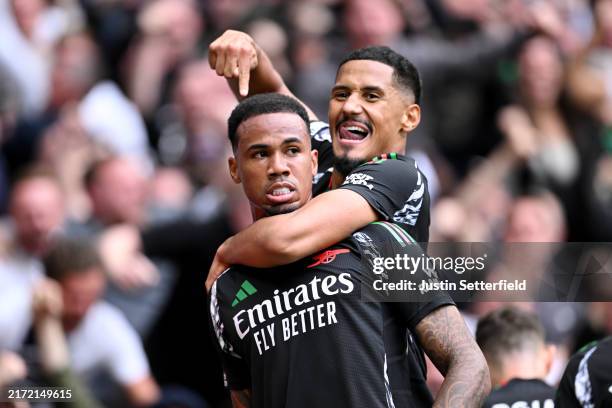
The timing is also unfortunate. Arsenal face a demanding run of league fixtures along with the continuation of their European campaign. Matches will come quickly, and rotations will be essential. In previous seasons, injuries to key defenders have altered Arsenal’s momentum. This time, the club aims to show they have grown strong enough to absorb such hits. The coming weeks may define whether their ambitions can withstand adversity.
Who Takes His Place in the Line Up
The immediate and most natural candidate to replace Gabriel is Cristhian Mosquera. The Spanish product has been eased into the team since his arrival and has grown more comfortable with Arsenal’s defensive principles. He is right footed, which may shift the balance of the defensive line, but he has shown he can play on the outside of Saliba without compromising build up structure. Mosquera is calm in possession, reliable in covering space, and physically strong when engaging forwards. While he lacks Gabriel’s commanding aerial presence, his skill set aligns closely with what Arteta wants from his centre backs.
Another option discussed internally is Piero Hincapié. His profile is slightly different. Hincapié is quicker across the ground and more aggressive in direct duels. He thrives when defending space rather than sitting in a low block. His mobility can be a valuable asset against teams who break quickly or rely on pace in transition. What he lacks is the long term Premier League experience that Gabriel offers. Deploying him will require strong communication with Saliba and clear instructions regarding positioning, especially in set piece moments.
There is also the possibility of using Ben White centrally. White has played centre back many times before and understands the demands of the role. The advantage of using White in this way is continuity. He knows Arsenal’s structure better than any external option, and his relationship with Saliba is well established. The drawback is that shifting White away from right back temporarily alters the dynamics of Arsenal’s build up, where Gabriel's combinations have been one of the team’s most reliable patterns.
Given all circumstances, the most likely initial solution is Mosquera, with Hincapié and White serving as secondary alternatives depending on opponent and tactical needs. This preserves the left sided balance Gabriel provides and avoids too many structural changes at once.
The Tactical Tweaks Arsenal Must Make
Arteta will not want to overhaul the entire system simply because one defensive pillar is missing. Yet certain adjustments are inevitable. The midfield structure must take on slightly more responsibility in shielding the defence. Declan Rice will become even more central to controlling transitions and preventing direct access to the back line. His awareness and timing in stepping into danger areas will be essential, especially if Arsenal field a replacement who needs time to adjust.
Set pieces will require deliberate attention. Gabriel’s absence removes one of Arsenal’s strongest aerial presences defensively and one of their most dangerous targets offensively. The team must reassign key marking roles, possibly asking Rice, Zubimendi, or even Gyokeres to take on heavier duties in the box. Small details in these moments can be the difference in tight Premier League games.
Communication must also improve. Saliba will need to take on greater vocal responsibility. He is used to reading the game quietly, but without Gabriel organizing the line, the burden shifts. Arteta will expect him to lead, guide distances between defenders, and dictate when to hold the line or step forward. These leadership qualities are part of his natural evolution and this period will test how far along he has come.
Finally, Arsenal may need to be more selective with pressing. Gabriel is excellent at stepping aggressively into challenges and winning first contact. Without that instinctive front foot defender, Arsenal might adopt slightly more patience in defensive phases. The emphasis may move toward delaying transitions rather than stopping them at source. This is a small but meaningful tactical alteration that could help protect the temporary partnership.
Can Arsenal Maintain Their Level Without Him
The short answer is yes, but it will demand collective effort and heightened concentration. Arsenal’s squad depth is stronger than it has been in years. The defensive options available are capable and stylistically suited to Arteta’s demands. The coaching staff have been preparing for scenarios like this, and those preparations now become essential.
However, the team must recognise that losing Gabriel is not simply replacing a body. It is adapting without one of their emotional and physical anchors. The coming weeks will reveal how mature this Arsenal side truly is. If they approach matches with control, discipline, and trust in the structure that has carried them so far, they can weather this period without losing ground. If lapses creep in, the absence will grow heavier.
Arsenal do not need perfection in Gabriel’s absence. They need steadiness. They need defenders who focus on the fundamentals, a midfield that protects intelligently, and forwards who help press and ease pressure. The squad has the tools. What comes next is about mentality and cohesion.
If Arsenal emerge from this stretch still competing at the top, it will be a powerful statement about how far they have come. Gabriel’s injury is a challenge, but not an excuse. It is an opportunity for the rest of the team to show that their ambitions rest on a collective foundation, not on one indispensable figure.
