


The German national football team is one of the most successful national teams in football history. Since its first ever official game in 1908 ‘Die Mannschaft’ (the team) has won four world cups and three European championships.
But there was another German national team that is often forgotten to history: The East German national team.
Formation
1949 Germany was in a state of turmoil. The majority of the country had been reduced to rubble and divided into four parts. The west was divvied up between the Allied powers Britain, America, and France with the east being controlled by the Soviet Union.
Once allies turned ‘frenemies’, by 1949 former British Prime Minister Winston Churchill stated that an “Iron Curtain” had descended between the western and the eastern powers.
With the division growing year on year and Germany being the beleaguered rope in the ideological tug of war, both West Germany and East Germany became their own separate sovereign nations.
The West German national team won the World Cup in their first tournament after separation, but the East German national team was on a very different trajectory.
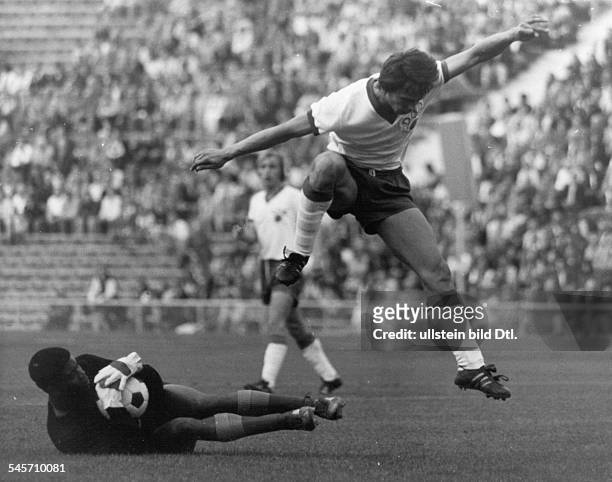
After political and social growing pains within the GDR, the East finally formed an official national team in 1952. In their first ever game they lost 3-0 to Poland, and that pretty much set the tone for how the East German national team was going to become.
Between its formation in 1952 and its dissolution in 1990 the East German national team qualified for just one of the nine World Cups in that period. But the one they did qualify for was a memorable one - The 1974 West German World Cup.
Brothers behind borders
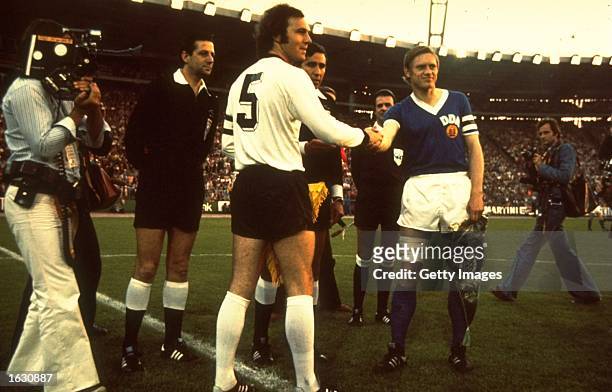
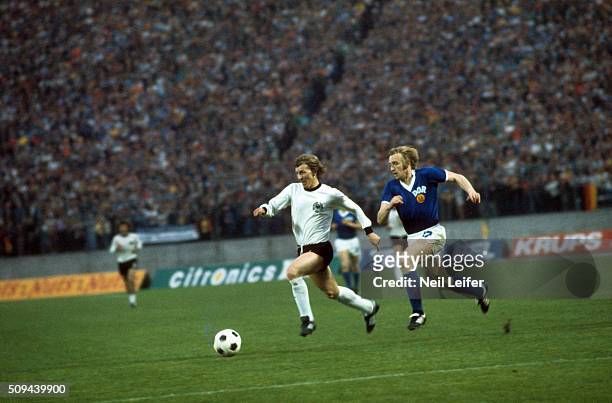
With the Berlin wall being put up just over a decade prior and Cold War tensions running high, it was fate that East Germany would be drawn into the same group as their western brothers.
In what was probably the best day of hardcore communist and Stasi sports washer Erik Mielke’s life, East Germany would go on to stun the reigning European champions.
Naturally, in a game that was about so much more than just football, the action on the pitch was pretty uneventful. That was until Magdeburg legend Jurgen Sparwasser poked East Germany into the lead against their far superior footballing neighbours with a quarter of an hour left on the clock.
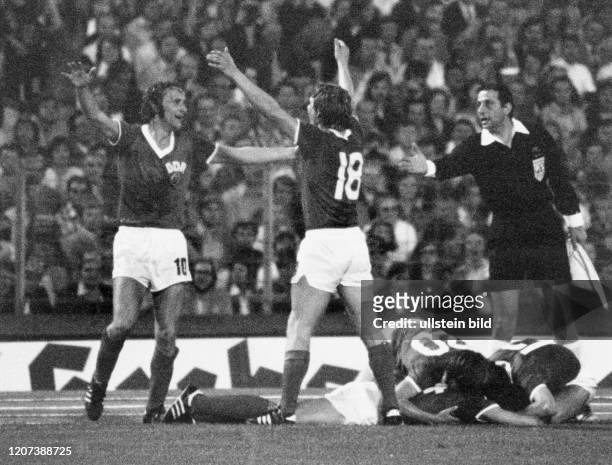
East Germany would hold on to claim a famous victory over the West and they would carry on their heroics and shock the world once again, going unbeaten and topping the group.
But unfortunately, that’s where it would end for the DDR. They would advance to the second group stage where they’d be put in a group of death that included Brazil, Argentina and the Netherlands, Cruyff and all, with them finishing bottom and winless.
Amatuer excellence
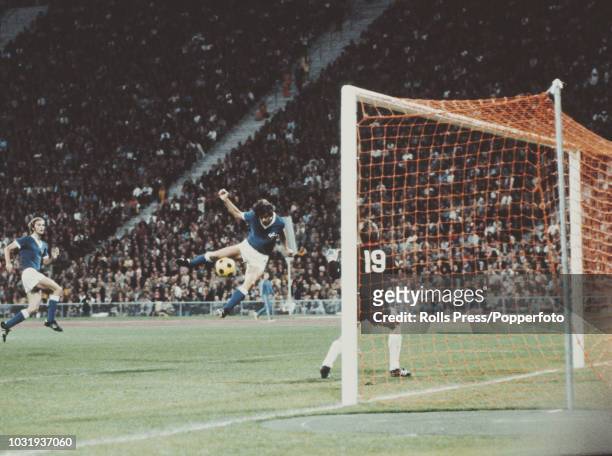
Despite the small amount of success in international tournaments, East Germany would have a lot of success in Olympic football.
They’d win bronze at the 1964 Tokyo Olympics, then they’d win bronze again eight years later in Munich. Four years later they’d go all the way and win gold at the 1976 Montreal Olympics before getting their final medal at the 1980 Moscow Olympics, claiming silver.
One of the reasons for their very respectable success in Olympic football was due to Olympic rules stating all players must be amateur. In East Germany, all football players were technically classed as amateurs so the DDR could effectively field their best team.
Tragedy and dodgy dealings
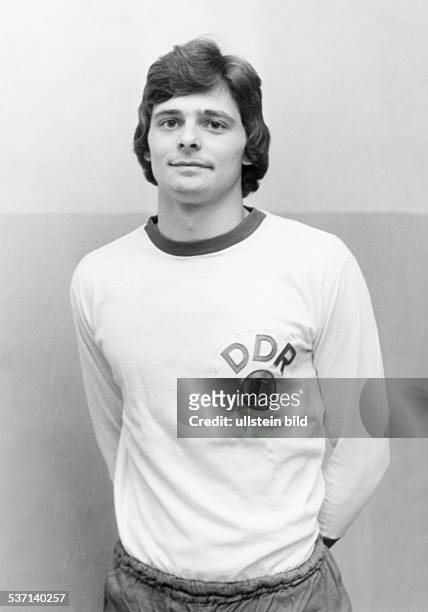
Unfortunately, as was the way with a lot of stories from communist East Germany, there was also a hidden dark side to the national team.
National team and BFC Dynamo midfielder Lutz Eigendorf was one of East Germany’s up-and-coming stars.
In 1979 he travelled with the BFC Dynamo team to West Germany to play a friendly against Kaiserslautern. On the way back to East Berlin the team stopped off in the town of Giessen, but Eigendorf had no intentions of staying with his teammates.
Eigendorf snuck away from the party and jumped in a taxi without any West German currency back to Kaiserslautern, destined for the headquarters of Kaiserslautern in the hope they’d let him play for the club.
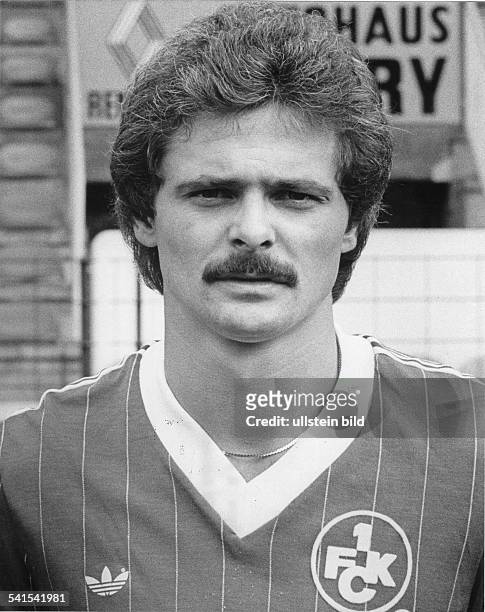
UEFA banned Eigendorf from playing for a year due to his defector status, and so he helped coach Kaiserslautern’s youth team. In that time he also became a very public critic of the regime in the East and lifted the lid on what life was like in the secretive state.
It wasn’t the first time a high-profile East German athlete had fled to the West, however. In 1977 one of East Germany's best sprinters, Renate Neufeld, fled to the West.
But Eigendorf’s case was particularly embarrassing as his club, BFC Dynamo, was run by the head of the secret police (Stasi), Erich Mielke. One of their best players fleeing didn’t exactly look great for their propaganda, and the Stasi were not happy about it.
Fast forward to 1983 and Eigendorf was playing for Eintracht Braunschweig and was under the ever-present eye of the Stasi, who had employed several West German informants to keep tabs on him.
Eigendorf was driving when a truck coming the other way suddenly turned its full beams on whilst Eigendorf was approaching a corner. He swerved, lost control and slammed into a tree. Eigendorf survived the initial impact but succumbed to his injuries two days later in hospital.
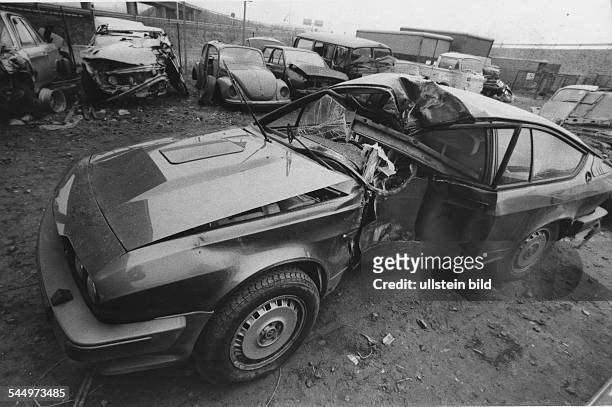
The finger was almost immediately pointed towards the Stasi, and when mourning BFC Dynamo fans made a banner in his honour the club appointed two Stasi agents to keep tabs on the club’s active support.
After German reunification, the possible murder of Eigendorf was investigated, and in 2010 a former Stasi agent revealed that he was ordered to kill Eigendorf but didn’t carry it out himself. Despite all this, there was no hard proof that pointed towards an angry Erich Mielke.
The East German national team was also heavily accused of doping. Many East German athletes were proved to be doping with over 9000 athletes found to have doped between 1968 and 1989.
In 1983 drug tests were carried out on several East German internationals at their respective clubs with “suspicious amounts of amphetamines” found in the samples. After the dissolution of East Germany, one player came out and said about the incident: “We were given pills and told that they were vitamins.”
However, like the Eigendorf incident, no hard facts that players were doping was ever found.
The East German national team would be disbanded after German reunification in 1990 and left a trail of fascinating history along with it.
