






Aston Villa walked away from Istanbul as Europa League champions after a very organised and controlled 3–0 win over SC Freiburg.
On paper, the scoreline looks easy, but the match is more complicated than it seems, especially in the first half, where Freiburg is looking like the sharper side early on.
But finals are rarely decided by who starts better. They are usually decided by who stays stable when things shift. Villa did that better than anyone on the pitch.
Freiburg started fast, but Villa slowly took control of the game
For the first 20 to 25 minutes, Freiburg’s intention was clear. They were pressing high, trying to squeeze Villa in their own half, and forced a few rushed clearances. There was a lot of energy, with a bit of nervous aggression from Villa in those opening phases.
But nothing really came from it.
Villa did not panic, even when they looked slightly uncomfortable on the ball. They kept recycling possession, even when it was not pretty. There were moments when you could feel the crowd getting impatient with them, but they stuck to it.
And slowly, the pressing started to fade.
It was not that Freiburg stopped trying; it is just that Villa made them run more than they could handle.
By the half-hour mark, you could already see gaps appearing between Freiburg’s midfield and attack. That was the first real sign the match was shifting.
The four-minute spell that completely broke Freiburg
This is where the final actually changed.
Tielemans’ goal in the 41st minute came at a time when Freiburg were still in the game. Nothing looked completely lost. But the problem was not just the goal itself; it was the timing of the goal.
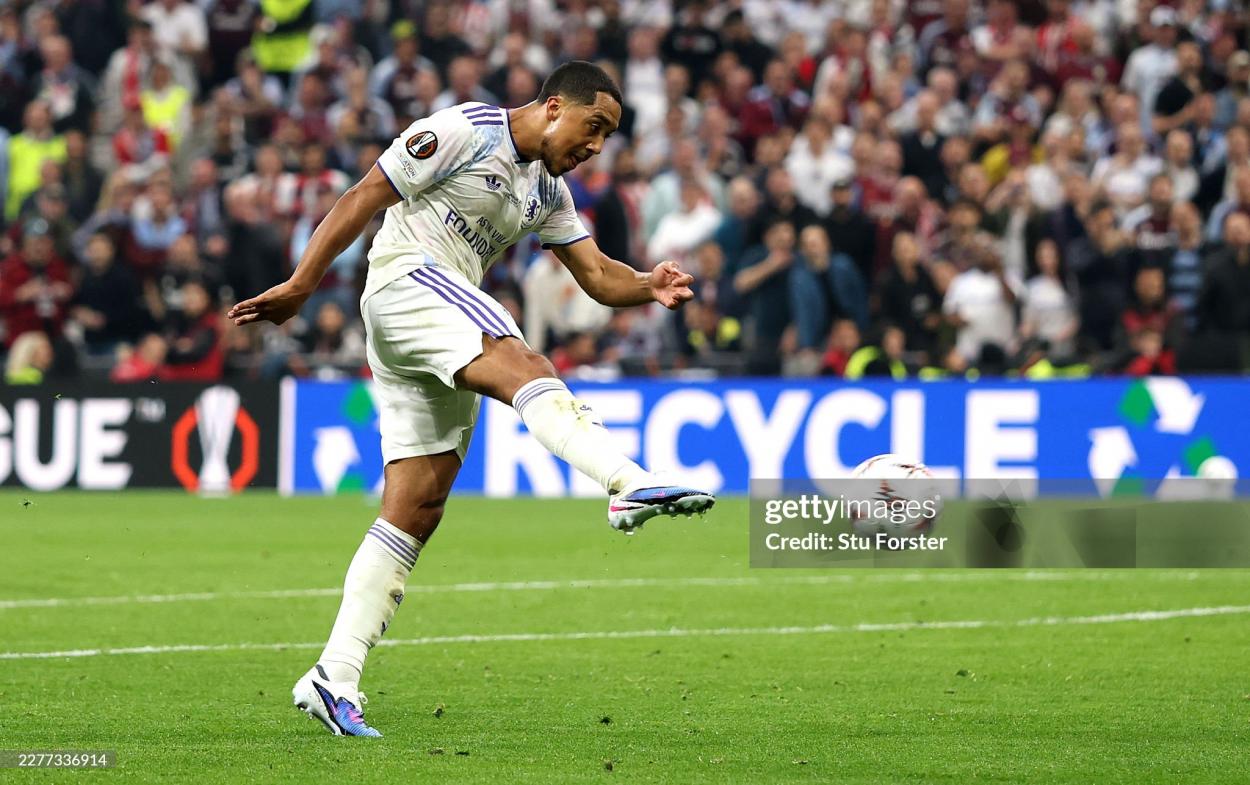
Freiburg barely had time to reset.
Before they could even settle again, Buendía made it 2–0 in the 45th minute. And that one really hurt them.
You could see it immediately. Heads dropped, players started arguing a bit, and the structure just went. It was not looking tactical anymore at that point; it was emotional.
Going into half-time 2–0 down in a final is one of the worst situations in football, especially for a team that relies on rhythm and pressing. Villa did not need to do anything special after that; they just had to stay calm.
And they did it.
Freiburg’s chase made the game even more open, and Villa punished it
The second half had to be different because Freiburg had no choice but to chase the game. They were pushing higher, trying to get more bodies forward, and that basically left them exposed in transition.
This is where Villa became very comfortable.
They did not force attacks; they just waited. Every time Freiburg overcommitted, Villa found space in behind or in the half spaces. It was not chaotic football from Villa, more like controlled opportunism.
Morgan Rogers’ goal in the 58th minute summed it up perfectly. Freiburg were already stretched, and once the ball went wide, their defensive shape just could not recover in time.

At that point, the match felt like it had gone.
Not officially, but emotionally, it was done.
4. Emery’s management was simple, but that was the difference
There was nothing flashy about Villa’s game management. That is probably what made it so effective.
Emery’s side did not try to dominate every phase.
They were selective. They absorbed the pressure when needed, and they attacked when the space was obvious. It sounds simple when you say it like that, but in a final, simplicity is often the hardest thing to maintain at that time.
Even after going 2–0 up, Villa was not overplaying. They did not chase a fourth goal or open the game unnecessarily. They just stayed organised.
Freiburg never really matched that discipline, and that became the difference.
Final Conclusion
This was not a final decided by domination; it was decided by control in key moments.
Freiburg actually had decent phases, especially early on, but they could not turn that energy into something lasting. Once Villa scored, everything shifted quickly.
The two goals conceded by Freiburg before half-time completely changed the emotional and tactical balance of the match. After that, Villa were in control without needing to do much.
And that was the difference in the end. Villa were calm when it mattered. Freiburg were not.
