


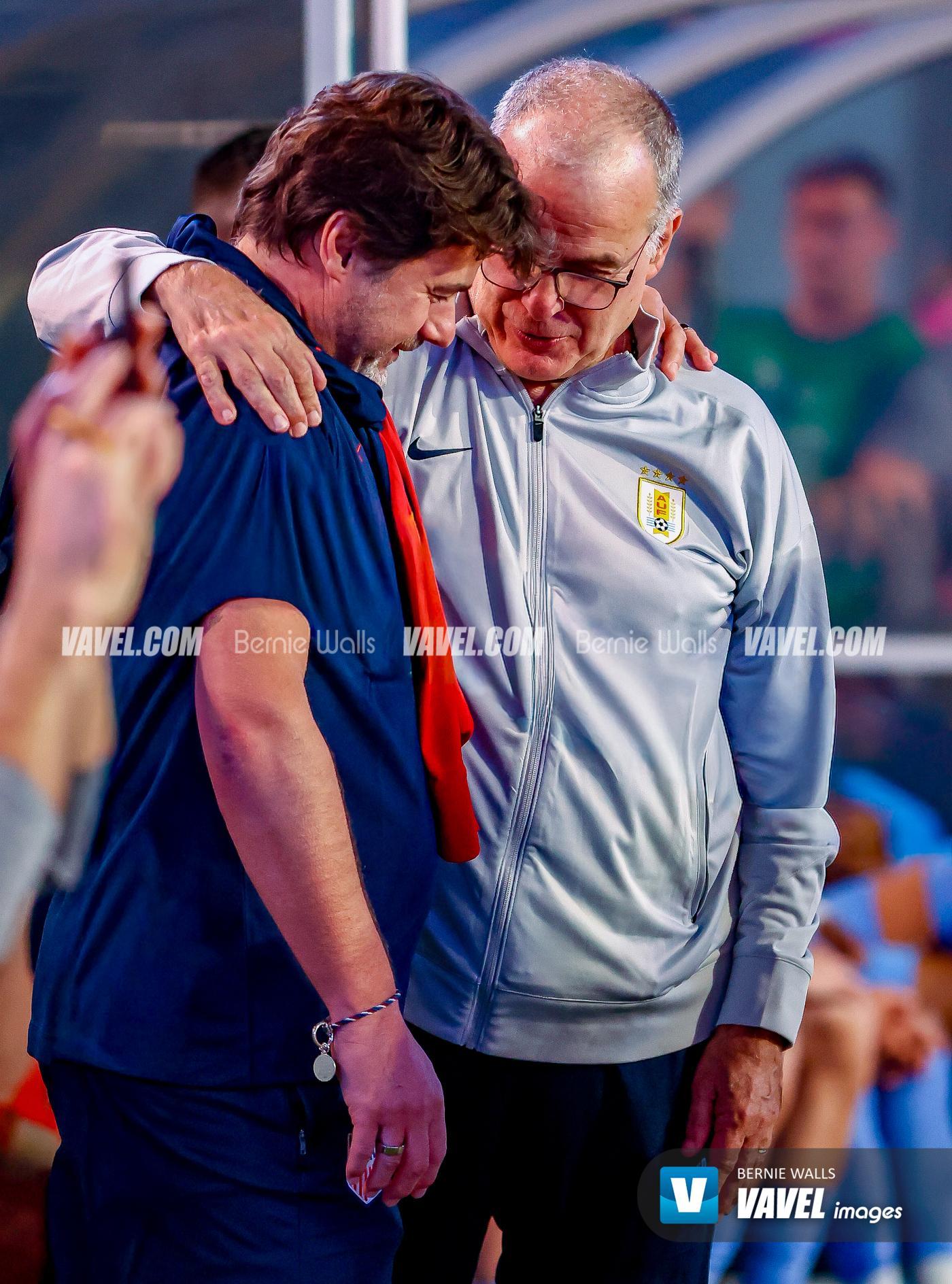

For nearly a decade, Mauricio Pochettino has been a name that won't go away in the Manchester United managerial conversation. He's been linked with the job at United on more than one occasion, through various ownership structures, footballing philosophies and a string of managers who have come and gone.
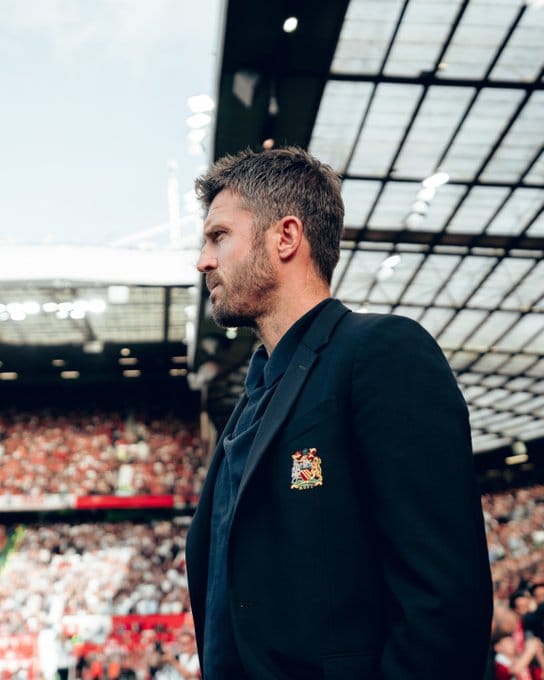
Now that Michael Carrick has left the club, the circumstances have finally aligned. United have reached an agreement with the former Tottenham Hotspur, Paris Saint-Germain and Chelsea boss, who is set to leave his post as manager of the United States men's team to take up the job in Manchester.
It's a move that's been talked about for years, albeit one that comes at a very interesting juncture in Pochettino's career.
Once a very promising managerial prospect in Europe, his credentials have certainly been all over the place since his astonishing time in North London. The Spurs days were impressive, but the spells at PSG and Chelsea have cast doubt on whether he can still deliver at that level.
For Man Utd, this could well end a 10-year search. The bigger question is whether they have the manager they've been waiting for or one whose best work is already done.
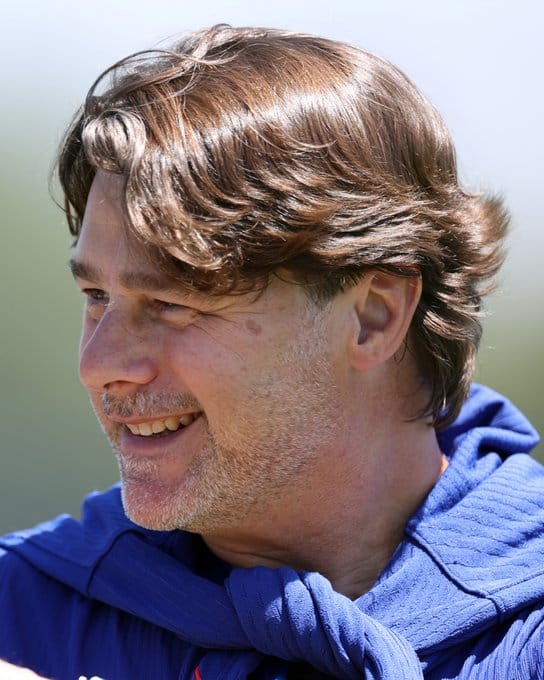
From Murphy to Manchester: The Making Of Pochettino
Born in Murphy (a small town in Santa Fe province) on 2 March 1972, Pochettino began his professional football career with Newell's Old Boys. He grew up in a farming family, found his footballing roots in Argentina, signed his first pro contract at 16, and quickly became part of a Newell's side that won the Argentine league in 1991.
He moved to Spain in 1994, with Espanyol providing the next phase of his career. He spent several years in Barcelona (winning the Copa del Rey in 2000) before moving to PSG in 2001.
He also played for Argentina on the international stage (20 caps, 2002 World Cup). He eventually returned to Espanyol, where he retired in 2006. However, it was in management that Pochettino would become one of the most recognisable names in football.
His first chance came at Espanyol in January 2009. He took over a team that were effectively at the bottom of La Liga and did a lot to stabilise them. In time, he forged a team identity around intensity, pressing and the development of young players.
That philosophy would go on to become a hallmark of his management career. Southampton gave him his first shot in English football in January 2013 upon Nigel Adkins' departure. He made an immediate impact, and the Saints finished eighth in the Premier League in his first full season.
His work on the south coast attracted interest from elsewhere, and Tottenham came to him in the summer of 2014. In North London, Pochettino was at the peak of his managerial powers.
He turned Spurs into real title contenders with a young side full of energy, discipline, and attacking quality. Harry Kane, Dele Alli and Christian Eriksen were the spearhead of that side, and they consistently challenged the top of the Premier League.
A third-place finish in 2015/16 was followed by a second-place finish the next season. Spurs continued to climb the table and eventually reached the Champions League final in 2019.
Although Liverpool eventually denied them European glory (they lost to Spurs in the final), reaching that stage was the peak of Pochettino's achievements. His exit later that year effectively ended a five-year spell that had seen him established as one of Europe's most sought-after coaches.
Has Pochettino Still Got What Man Utd Need?
The interest from Man Utd is nothing new. Pochettino has been linked with the Old Trafford job on more than one occasion, and the club have looked at him as a potential successor at various times in the past. Yet for one reason or another, the appointment never did happen.
The timing of it all is now under the spotlight. United have been in considerable flux since Alex Ferguson's departure in 2013, and each subsequent manager has failed to deliver the sustained success expected at the club.
The Carrick exit after that dreadful start to the campaign has once again forced the hierarchy to look in a new direction. Pochettino has a huge amount of Premier League experience, but his most celebrated successes are increasingly in the past.
His spell at PSG saw them win domestic silverware (the Ligue 1 title in 2021/22), but the club's ambition was to go one step further and win the Champions League. They had all the stars in the world (Lionel Messi, Neymar Jr, Kylian Mbappé) and couldn't do the job.
Chelsea offered another chance to show his credentials in English football. Arriving in 2023 following the club's disappointing 12th-place finish of the previous season, Pochettino took over an expensive but fairly inexperienced squad. His first season was anything but easy, with inconsistent results and questions about where the team was going.
Nonetheless, Chelsea finished sixth, reached the League Cup final, and earned a place in Europe. There was progress, particularly in the latter part of the campaign, but his exit in May 2024 meant the project never really got beyond that stage.
It's entirely reasonable to question whether Pochettino is still the manager that United need. However, dismissing his recent experience would ignore what he's achieved since leaving club football.
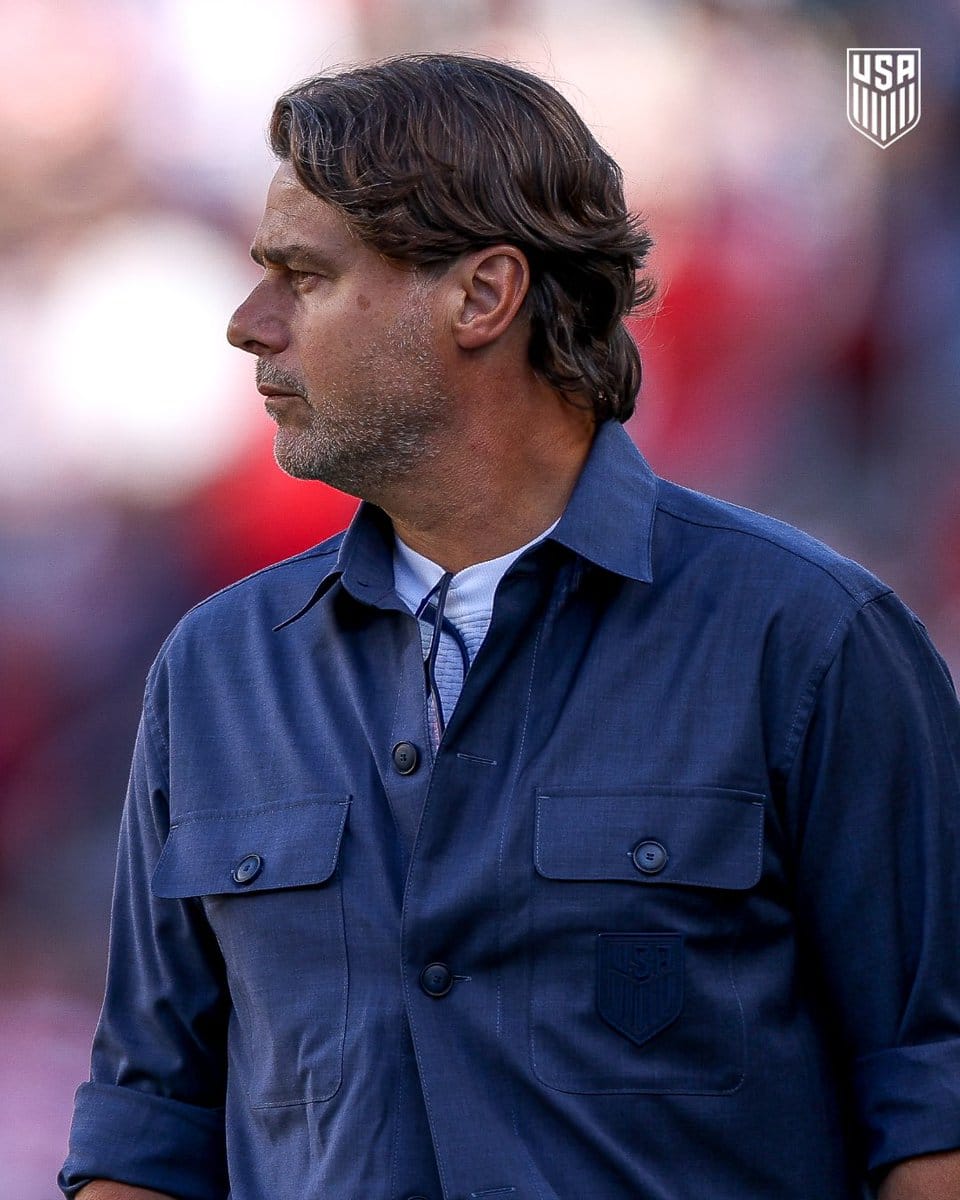
He was appointed US head coach in September 2024 with the job of preparing the team for a home World Cup in 2026. His tenure ended with a historic tournament run: the Americans won their group and achieved their first knockout win since 2002.
The US also agreed a new deal with him through to 2030 in August, which speaks volumes about the confidence that's being placed in his ability to lead. That experience could be very valuable at Old Trafford.
International management is a whole different ball game in terms of the challenges it presents to a club manager. You've got to build relationships, build a team identity, and you've got very limited preparation time.
Pochettino's ability to work with different people and develop a distinct style of play will be two of the key attributes required if he is to be successful at Manchester.
A Long-Awaited Opportunity, But A Different Manchester United
There's a very obvious appeal in the prospect of the appointment. Pochettino's philosophy is all about pressing, energy and attacking football. At its best, his teams are very difficult to play against, combining tactical discipline with the freedom to attack in possession.
Those attributes could give United a much clearer identity following another turbulent period. His track record of developing young players should also be of interest.
The Spurs side he built up over the years was in no small part the product of his ability to spot and develop young players, and that could be a very relevant skill for a United side that will need a certain level of consistency.
However, the challenge goes beyond what happens on the training pitch. United have had eight managers since Ferguson departed in 2013 (including the interim appointments), and the constant churn hasn't addressed the club's underlying problems.
Recruitment, footballing leadership, and long-term planning have all come under the microscope. As Gary Neville has so often said, simply changing the person in the dugout won't automatically fix issues in all the other areas.
Pochettino will need more than just his tactical nous to be successful. He'll need the backing of the hierarchy, a clear recruitment plan, and plenty of time to get his ideas on the ground.
There's also the very real situation he's inheriting. United are in the bottom three of the Premier League after one of the worst runs of form in their top-flight history.
This isn't a side that's just looking for a bit of a run to get into the Champions League places. It's a side that needs to be rebuilt and regain its confidence.
For a manager whose real achievement was developing a project over several seasons, the patience of the people above him was just as important as the players he had at his disposal.
Almost ten years after he first entered the conversation as a credible candidate for the job at Man Utd, Pochettino seems more likely than ever actually to get it.
The irony is that the opportunity comes when both sides have questions to answer. United are looking for a manager who can re-establish their identity, and Pochettino is looking to prove that his reputation as one of the very best managers in the world is still very much intact.
His Spurs years were a case in point as to what he can do in the right environment. His later experiences have offered real insight into the problems of delivering on the promise when expectations, resources, and circumstances don't quite match up.
The stars may finally have aligned for a partnership discussed for a decade. Still, the history of Manchester United's managerial appointments warns against assuming the right name automatically means the right solution.
Pochettino has spent years waiting for this opportunity. Now, he must prove that the wait has been worth it.
