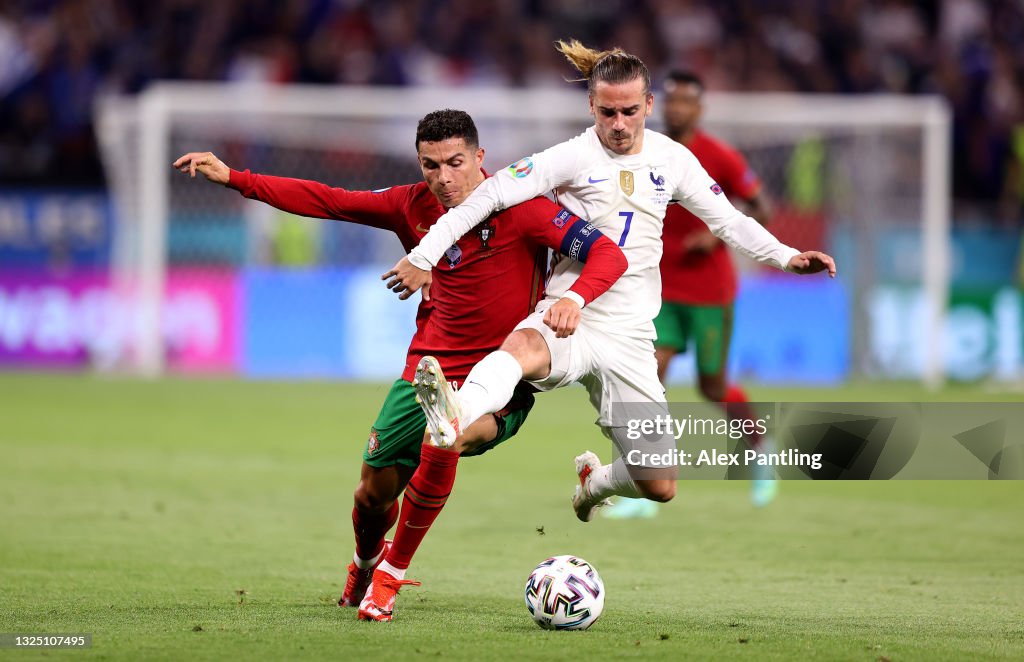
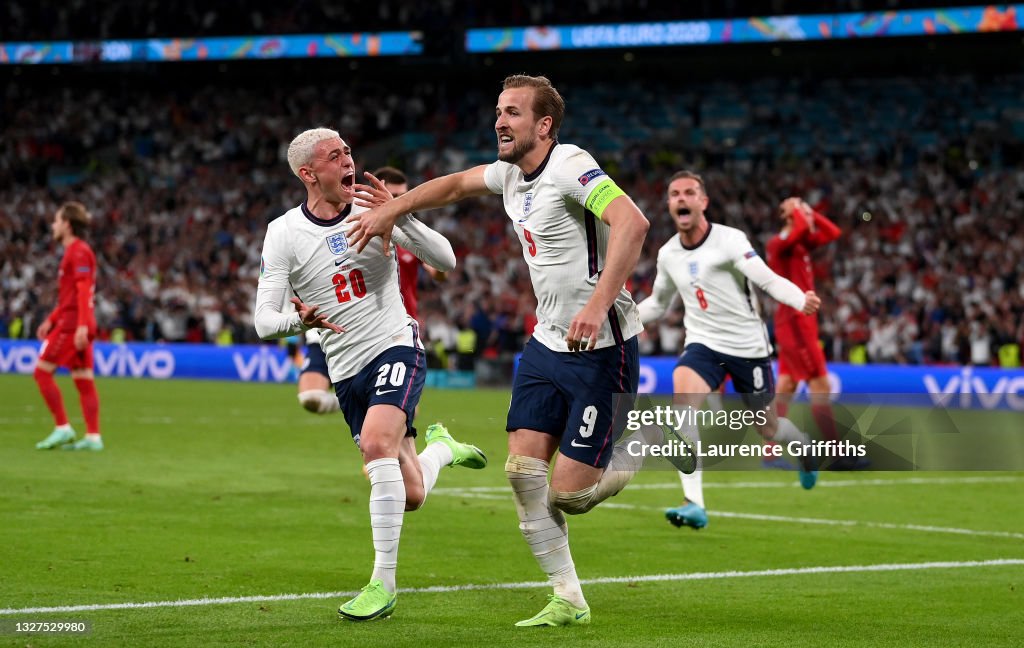

Dennis Bergkamp once said: "Behind every kick of a ball, there has to be a thought." A beautiful quote about giving each action a purpose.
What we're doing in this analysis is somewhat similar, as we look at each goal scored at Euro 2012, Euro 2016 and Euro 2020, and try to give each goal meaning in the grand scheme of things.
What the goal scoring trends tell us is that the knockout stages go a little bit crazy, but they also reveal the times when most goals are scored and which positions has scored the most and fewest goals across the last three Euro championships.
How many goals have been scored since Euro 2012?
If your suspicion is that there were a lot more goals scored at Euro 2020 than at the 2012 and 2016 championships, then you are correct.
One reason for this is that the tournament format changed ahead of Euro 2016, adding another eight teams to the group stages. That meant that there were 12 more matches in the group stages and instead of qualifying teams going straight to the quarter-finals, a round of 16 was added too.
| Euro 2012 | Euro 2016 | Euro 2020 | |
| Goals scored | 76 | 108 | 142 |
Euro 2012 had a total of 31 matches, from day one to the final in Kyiv, while the next two championships had 51 - just like this summer's Euros.
The result is almost double the amount of goals scored in Euro 2020, compared to Euro 2012. But if we look at the average goals per game, there was actually a significant dip at Euro 2016.
| Euro 2012 | Euro 2016 | Euro 2020 | |
| Average goals | 2.45 | 2.11 | 2.78 |
The data also shows that the knockout stages offer more goals than in the group stages. There is more desperation in the later stages to score, as teams only have one chance to progress.
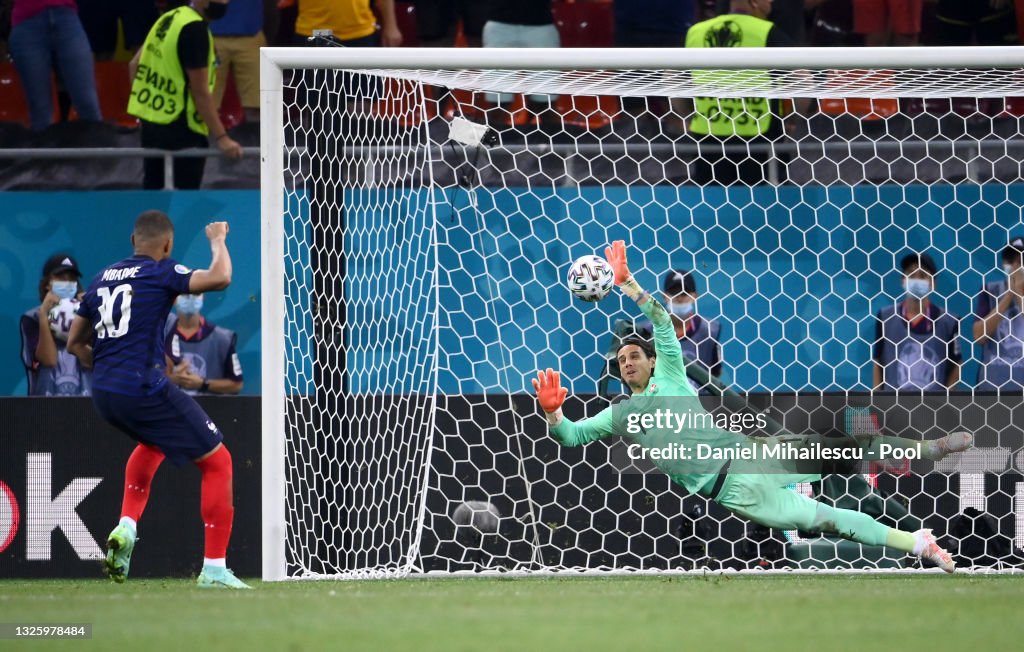
This has given us action-packed matches such as when France beat Iceland 5-2 in the quarter-finals at Euro 2016 and Spain sent Croatia home in a 5-3 win in the round of 16 at Euro 2020. And we can not forget Switzerland beating France on penalties after a 3-3 draw at Euro 2020.
| Group stages | Knockout stages | |
| Average goals | 2.32 | 2.78 |
Here is a fun fact for you: from the 133 matches played at the three Euro championships between 2012 and 2022, there were only nine that ended in a 0-0 draw in regulation time.
When are the goals scored?
The data behind when a goal is scored at the Euros is reassuringly logical.
Most goals across the last three championships were scored in the 15 minutes after the half-time break, as players have had a chance to mentally reset, replenish their energy, get a good team talk in, and are ready to change the game in their favour.
Equally logical is the fact that the least amount of goals have been scored in the first 15 minutes of games when teams often tentatively feel each other out, cautious not to get off to a bad start 1-0 down.
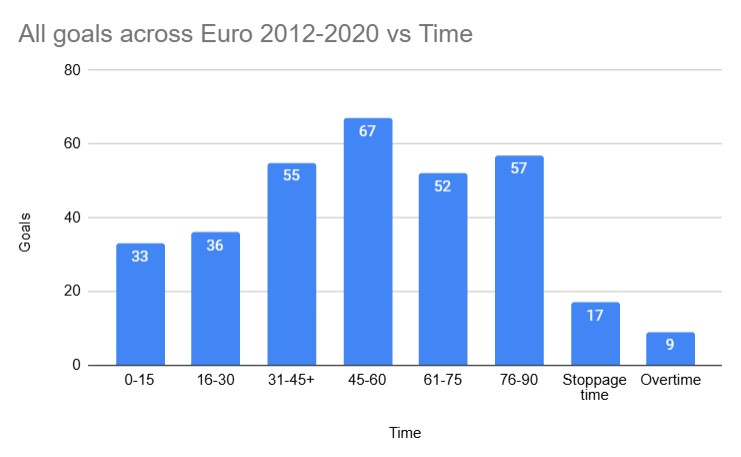
Late drama is common at the Euros too, which again makes sense because teams get desperate for an equaliser when the stakes are so high. This was most evident during Euro 2016, when nine goals were scored in stoppage time.

These positions score the most at the Euros
It is no surprise that forwards, like Cristiano Ronaldo and Romelu Lukaku, score the most goals, as they lead the way ahead of wingers and central midfielders in number of goals scored.
One funny detail, however, is that there have been almost as many own goals during the last three Euros as goals scored by full-backs, thanks to an especially calamitous Euro 2020 which had 11 own goals.
| Position | Centre-back | Full-back | Central midfielder | Winger | Forward | Own goals |
| Goals | 22 | 16 | 57 | 95 | 124 | 15 |
Which positions score goals have been quite consistent through the years, but Euro 2020 also saw a big spike in goals scored by full-backs.
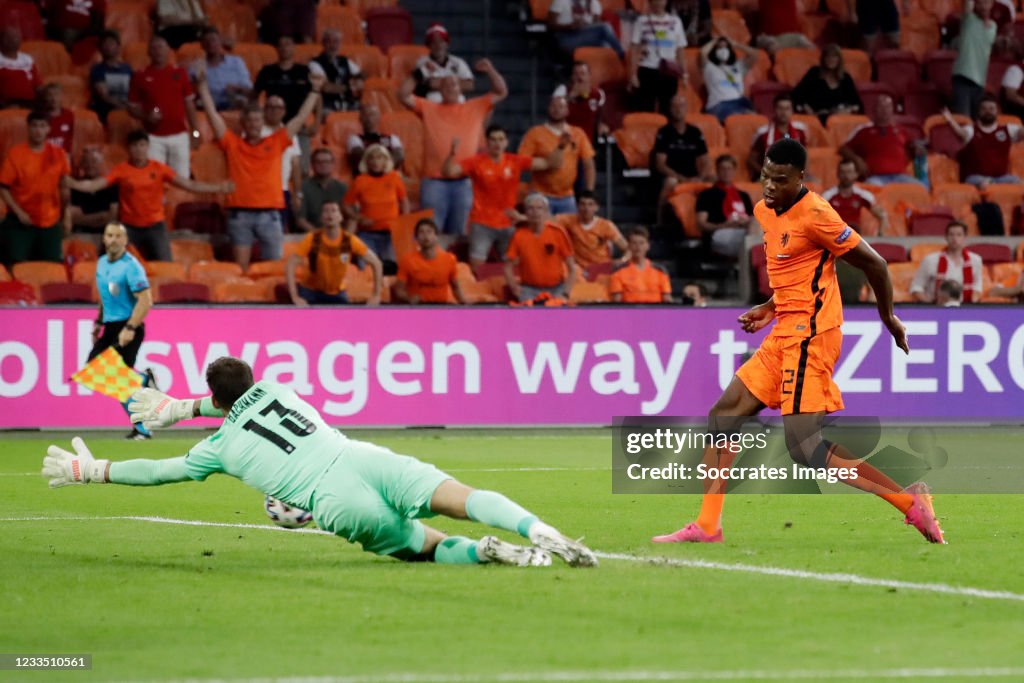
There was only one goal scored by a full-back during the entire Euro 2016, but 12 at Euro 2020. Part of the reason for this was that more coaches relied on formations with five defenders, which often meant full-backs turned into more attacking wing-backs.
Wing-backs Denzel Dumfries from The Netherlands and Denmark's Joakim Mæhle both netted two goals each at Euro 2020, for example.
| Positions | Centre-back | Full-back | Central midfielder | Winger | Forward | Own goals |
| Goals | 4 | 3 | 13 | 24 | 31 | 1 |
| Positions | Centre-back | Full-back | Central midfielder | Winger | Forward | Own goals |
| Goals | 13 | 1 | 20 | 32 | 39 | 3 |
| Positions | Centre-back | Full-back | Central midfielder | Winger | Forward | Own goals |
| Goals | 5 | 12 | 24 | 39 | 54 | 11 |
All in all Euro 2020, with an impressive average of 2.78 goals per game, saw each positions, except centre-backs, score more goals than in the previous two tournaments.
Another promising sign that Euro 2024 could be a goal fest too is that five out of the seven players who have scored the most goals in the last three Euros are all going to Germany.
| Top scorers since Euro 2012 |
| 11 - Cristiano Ronaldo |
| 7 - Antoine Griezmann |
| 6 - Romelu Lukaku |
| 6 - Alvaro Morata |
| 5 - Mario Gomez, Robert Lewandowski, Fernando Torres |
An average goal per game of 2.78 will be tough to beat though, but there is more than enough goal scoring potential in this summer's championship rosters to make it a memorable one.
Superstars Harry Kane, Kylian Mbappé, Ronaldo, Griezmann, Lukaku, Morata, Jude Bellingham and Patrik Schick are all lining up to take the Golden Boot home.